The most productive corporate offices in South Florida do not look the same. That is not a contradiction, it is the point. The best office setup for your team is specific to how your people work, what they produce, and what kind of environment consistently helps them do it well. A setup designed for a law firm produces a different space than one designed for a software company or a real estate investment firm, and it should.
What the best setups share is not aesthetic style but structural intentionality: every element of the space is there because it serves a function. This guide covers the five most effective corporate office configurations B.House has implemented across South Florida, and the principles that make each one work.
Which setup is right for your organization?
B.House's free discovery session maps your team's work patterns to the right office configuration, before you commit to a layout or a furniture budget.
→ Book at bhouse.design | (305) 644-8464
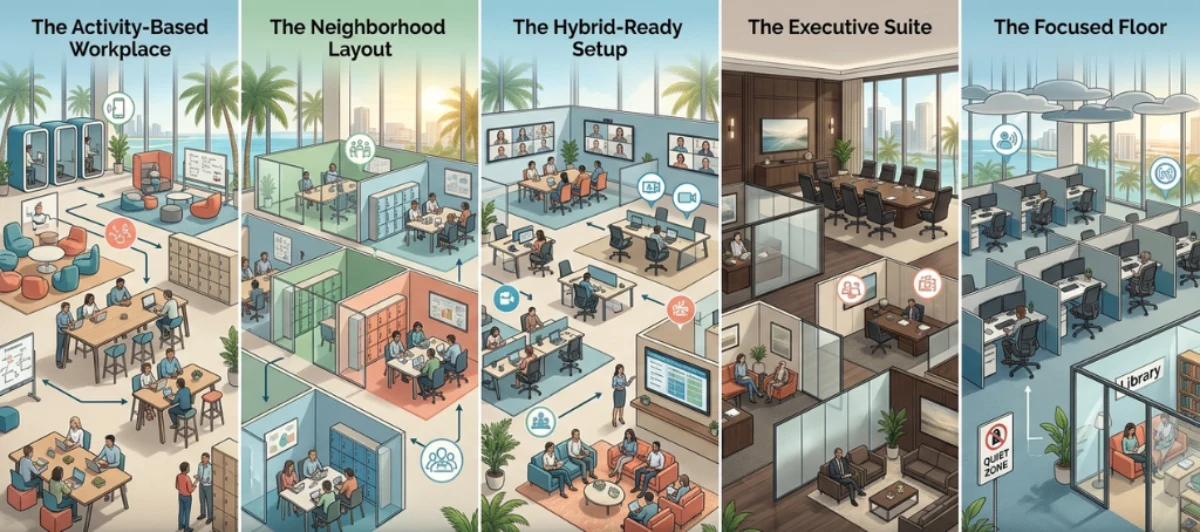
1. The Activity-Based Workplace: For Organizations with Varied Work Modes
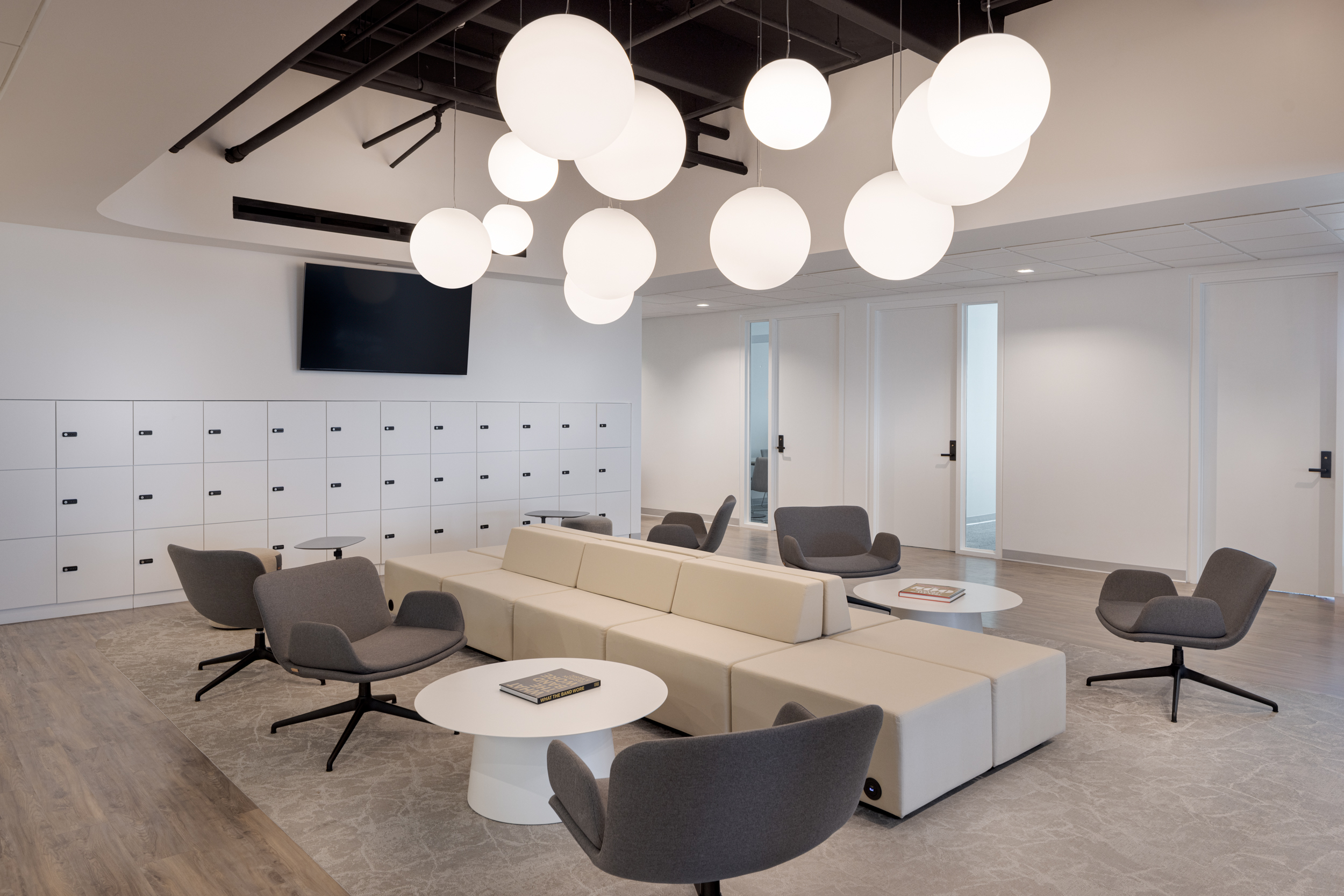
Activity-based working (ABW) removes assigned desks entirely. Employees choose from a range of work settings throughout the day based on what they are doing: ergonomic workstations in quiet zones for focused work, standing-height tables and lounge clusters for collaboration, small enclosed rooms for video calls and confidential conversations, and bookable conference rooms for formal meetings.
The productivity case for ABW is strong when it is implemented correctly. The core gain is eliminating the mismatch between work type and work environment, the cost that accumulates invisibly when a deep-focus worker is forced to concentrate while colleagues collaborate noisily two feet away. ABW lets the environment serve the work mode rather than the other way around.
B.House has implemented ABW environments for professional services firms in Brickell and technology companies in the Design District. The consistent requirement: genuine range. A floor plan with open workstations, a couple of conference rooms, and nothing else is not ABW, it is an open office. ABW requires investment in quiet zones, phone booths, and informal collaboration settings.
"The best activity-based office we built had seven distinct work settings on a single floor. Every single one was occupied daily."
2. The Neighborhood Layout: For Departmental Collaboration
The neighborhood layout assigns flexible territories to teams rather than individuals. Each department occupies a defined zone with shared workbenches, team-specific storage, and immediate access to small collaboration areas. Employees do not have a single assigned desk within the neighborhood, but they know which zone belongs to their team.
Neighborhoods preserve the social cohesion that fully unassigned offices can erode. Employees can reliably find their colleagues, and the zone creates a sense of team identity and ownership. They work especially well in organizations where cross-departmental collaboration happens in formal meetings but day-to-day work is primarily within teams.
From a furniture perspective: modular benching that can scale up or down as team size changes, combined with small 4-person meeting rooms or enclosed booths at the perimeter of each neighborhood. The benching should include integrated power and storage. The adjacency between workstations and meeting infrastructure is what makes the neighborhood model fluid.
Not sure whether your team needs neighborhoods or ABW?
We can help you decide — bhouse.design
3. The Hybrid-Ready Setup: For Organizations Managing In-Office and Remote Staff
Hybrid work is now the operating baseline for most South Florida knowledge companies. A hybrid-ready setup acknowledges that occupancy varies daily and designs the space to function well at 40% occupancy as well as at 85%.
Structural differences from a traditional assigned-desk office:
- Workstation-to-employee ratio of 0.6–0.8 rather than 1:1
- Higher proportion of collaboration and meeting space per floor area
- Video conferencing infrastructure in every meeting space, not just formal conference rooms
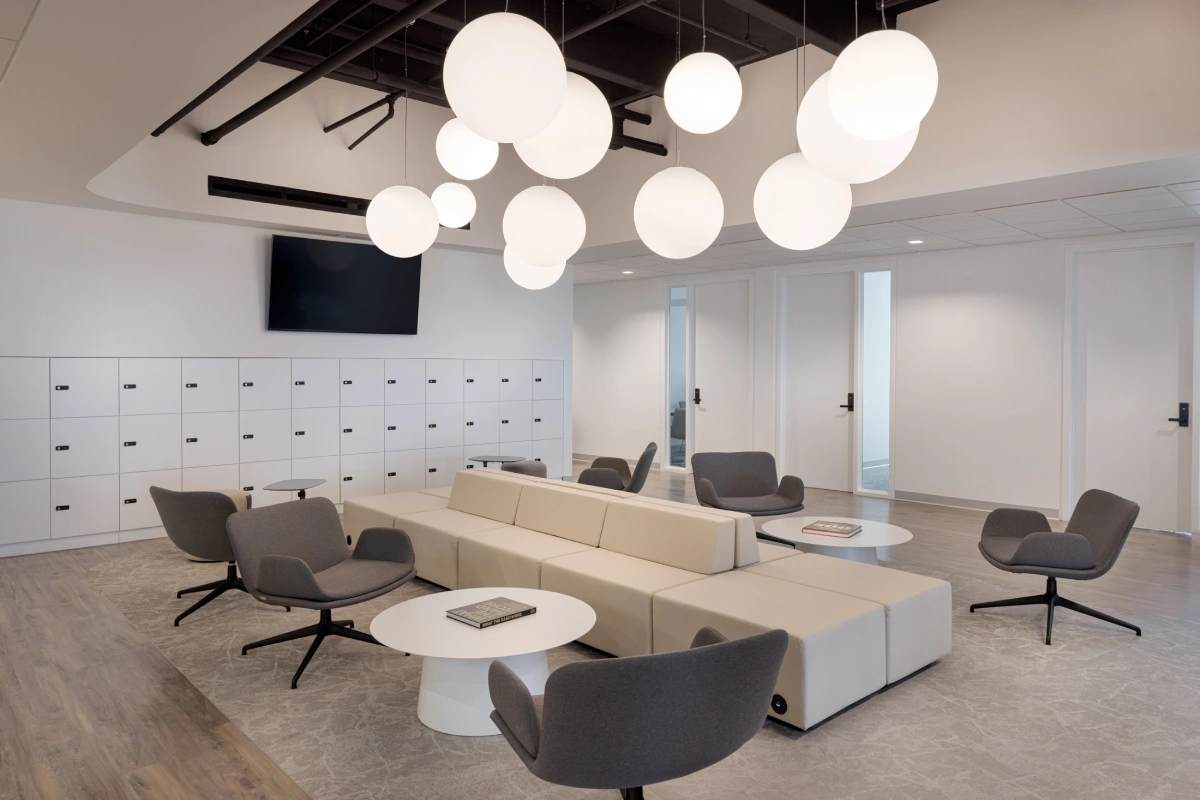
- Flexible personal storage, lockers or mobile pedestals for employees without assigned desks
- Booking systems for workstations and collaboration zones
The design imperative in a hybrid setup is making the office worth the commute. When employees can do individual work effectively at home, the in-office experience needs to offer something home does not: high-quality social interaction, spontaneous collaboration, and access to better collaboration infrastructure. The quality of your collaborative furniture and meeting spaces determines whether employees choose to come in, or stay home.
4. The Executive Suite: For Client-Facing and Leadership Functions
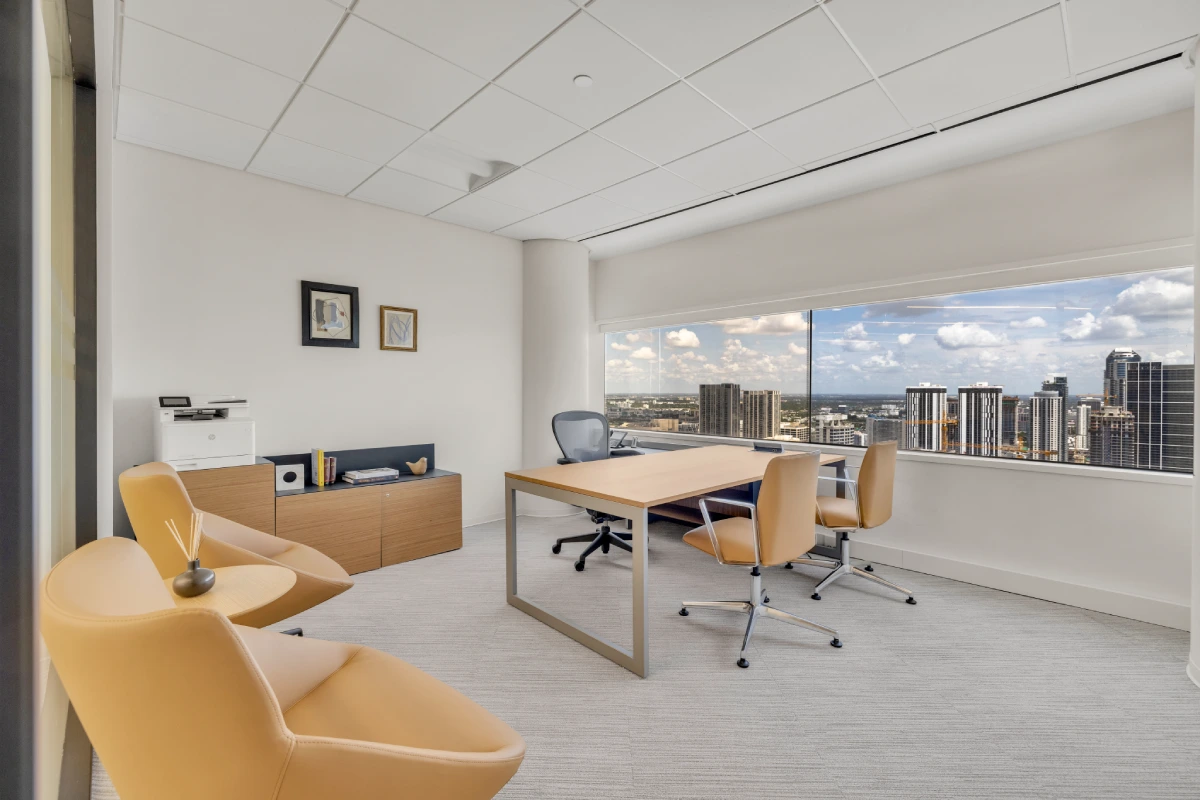
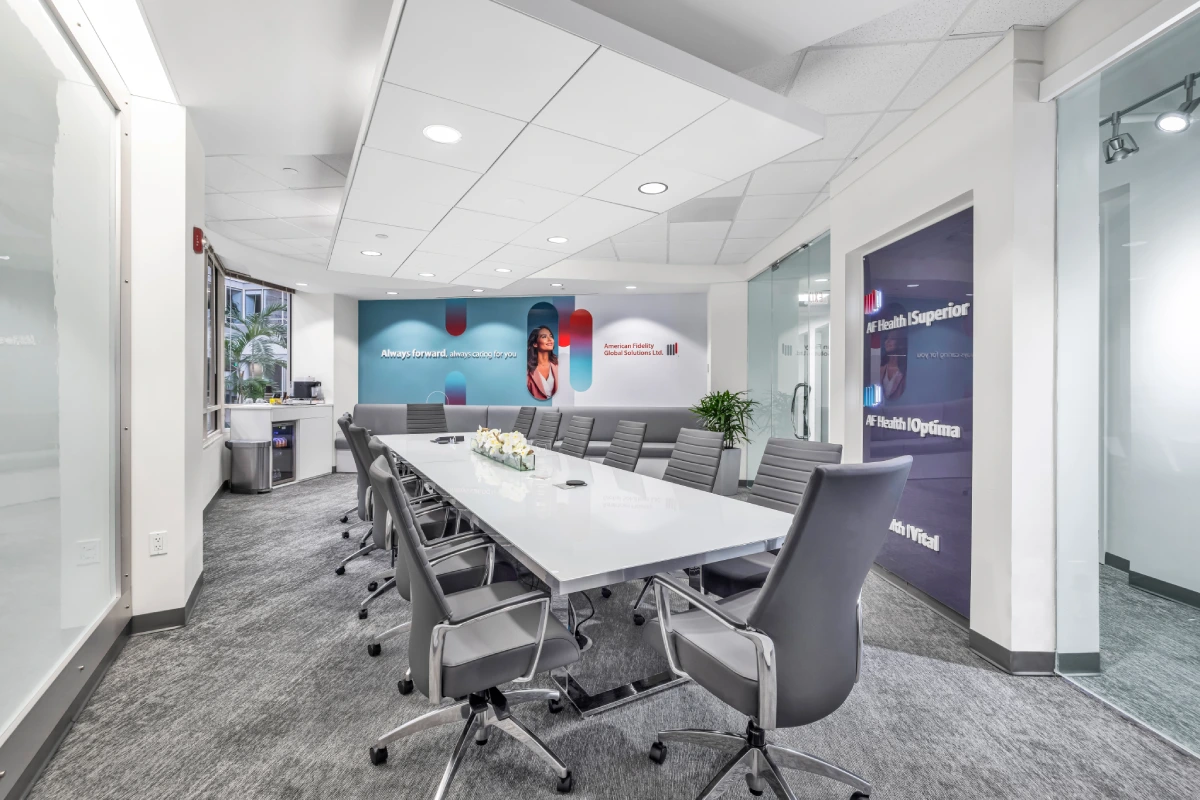
For organizations where physical space plays a role in client relationships, law firms, wealth management, executive search, architecture and design firms, the executive suite remains one of the most effective corporate configurations. This is not about hierarchy. It is about meeting the specific functional and communicative requirements of client-facing work: confidentiality, credibility, and the impression of institutional quality.
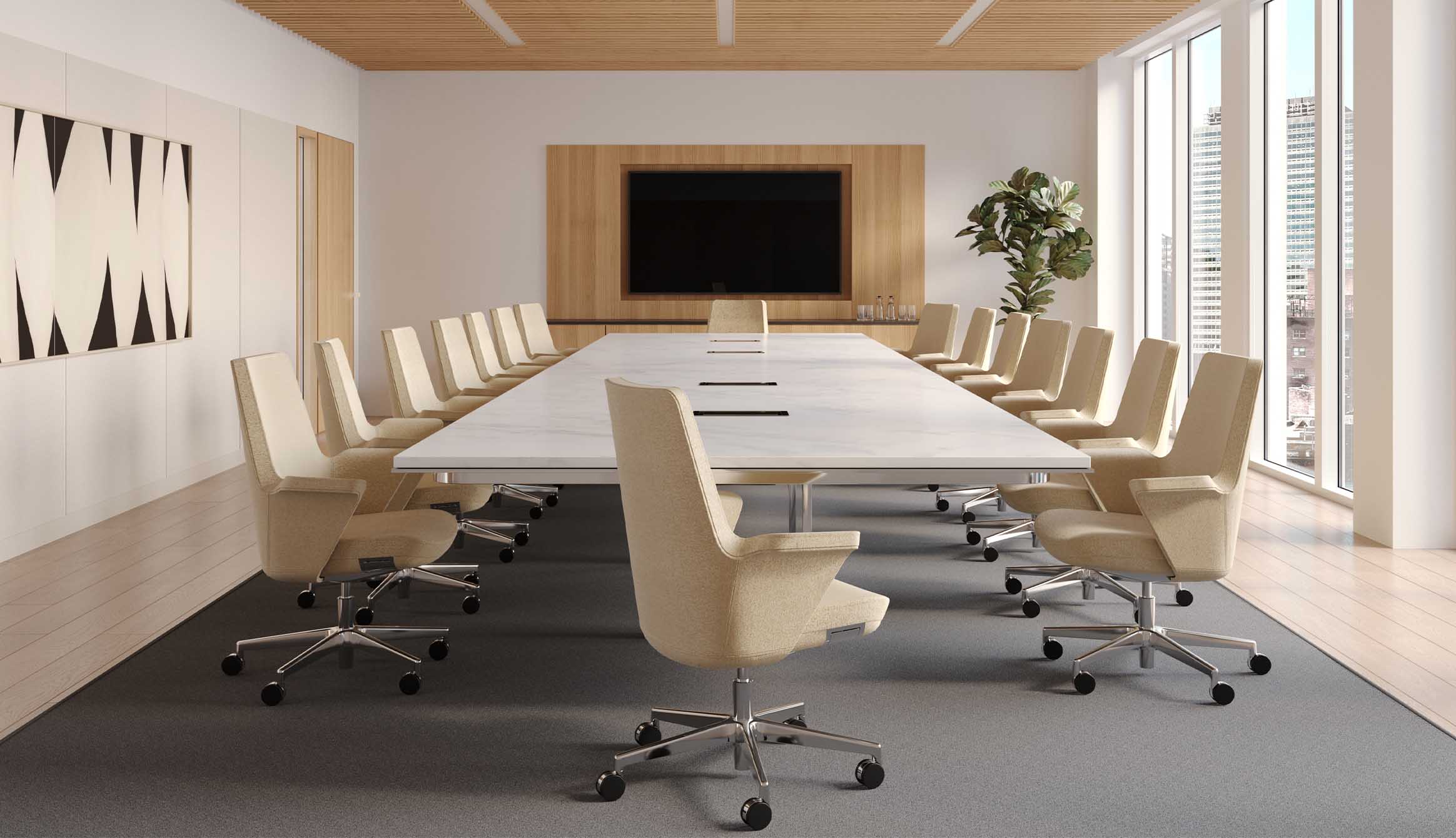
Furniture selection is where executive suites earn or lose their effectiveness. The specific materials, proportions, and finish quality of the conference table, the seating, and the reception area communicate something to a client before a single word is spoken. B.House has furnished executive environments for firms in Brickell and Coral Gables where client feedback explicitly cited the office environment as a factor in their decision to retain the firm. That is a measurable, real return on furniture investment.
5. The Focused Floor: For Deep Knowledge Work
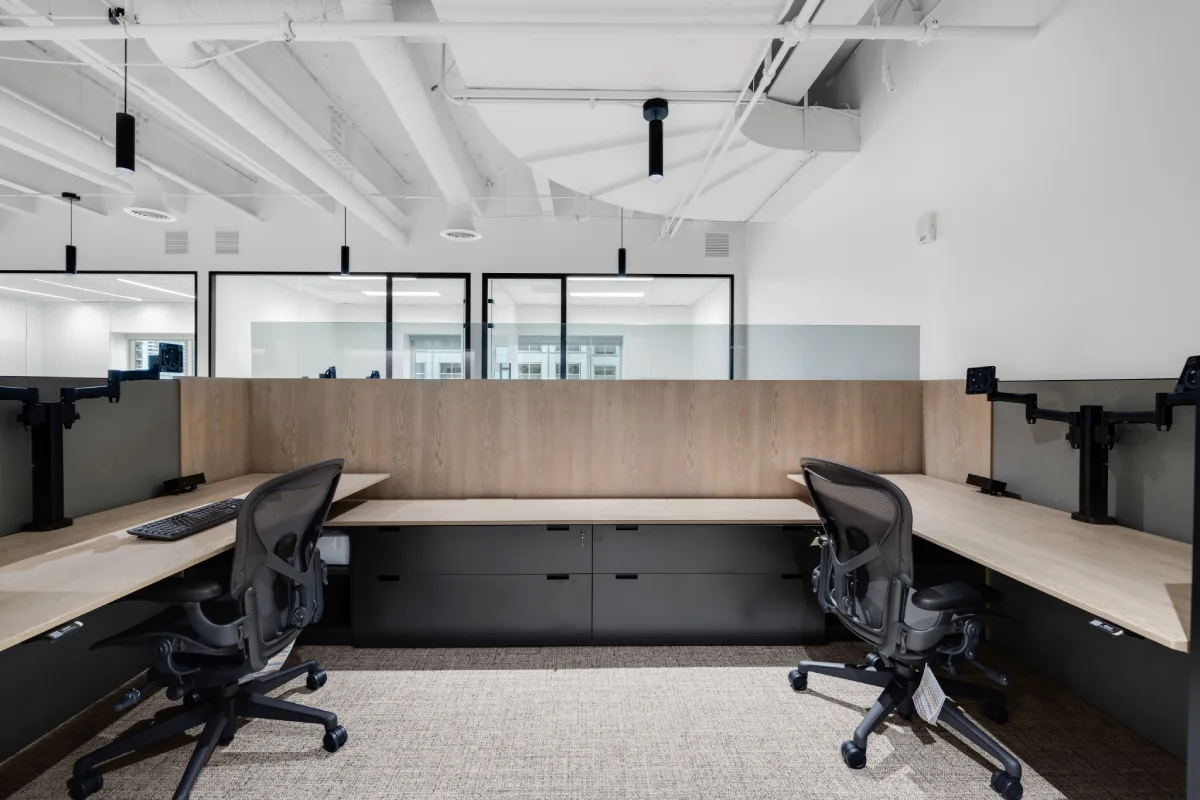
Some organizations, quantitative research firms, clinical operations, legal document review, software development, need an environment optimized primarily for sustained, uninterrupted individual work. In these setups, noise control, visual calm, and ergonomic excellence are the primary design criteria.
A focused floor specification: higher desk privacy screens, 16–20 inches above the work surface, acoustic ceiling treatment targeting the speech frequency range, premium ergonomic task seating, height-adjustable desks, and minimal high-traffic circulation through the primary work area. Collaboration happens in dedicated rooms or off the main floor, not adjacent to workstations.
In South Florida's talent market, where companies compete with Miami's lifestyle offering to attract specialized knowledge workers, a well-designed focused floor signals something important: we respect what you do and we have built an environment worthy of it. That message is received, and it affects retention.
Which of these five setups describes where your organization is heading?
B.House's free consultation will confirm which model fits your culture and work patterns, then spec the furniture to execute it, at no cost.
→ Book at bhouse.design or start the questionnaire at bhouse.design/questionnaire | (305) 644-8464
The Common Thread
Every setup that works starts with the same question: how do your people actually work today, and what does the space need to do to support that? The organizations that get the most from their workspace investments are the ones that answer that question clearly before selecting a configuration, a floor plan, or a single piece of furniture.
B.House has furnished corporate offices across Downtown Miami, Brickell, the Design District, Coral Gables, Aventura, Fort Lauderdale, and West Palm Beach. Our portfolio spans law firms, technology companies, real estate organizations, financial services firms, and healthcare businesses. Every project starts with a discovery session, not a catalog.
Build the setup your team actually needs.
Start with a free workspace discovery call. We map your work behaviors to the right configuration and furniture strategy, no obligation.
→ bhouse.design | (305) 644-8464

.webp)
.webp)
.webp)