Productivity in corporate offices is not primarily a management problem. It is an environment problem. Employees who spend eight or more hours a day at poorly designed workstations are fighting their surroundings before they even start on their work. The result is lower output, more errors, higher absenteeism, and faster burnout. Learn How to Choose Ergonomic Furniture for Your Office
If you manage a team of knowledge workers and you are not thinking about ergonomics as a productivity lever, you are leaving measurable performance on the table. This guide covers the specific changes that deliver the highest return and how to make the business case for them to leadership.
Want a free ergonomic workspace assessment for your Miami office?
B.House identifies the highest-impact changes for your specific setup, at no cost.
→ Book at bhouse.design | (305) 644-8464
Why Bad Ergonomics Are a Productivity Tax Not a Comfort Issue
The framing matters. Ergonomic furniture is still often presented as an employee wellness benefit, a nice-to-have that shows your organization cares. That framing consistently loses budget conversations because it is competing against other benefits. The correct framing is different: poor ergonomics are a productivity tax your organization pays every single day.
Here is what that tax looks like in practice: an employee experiencing lower back discomfort shifts attention to that discomfort multiple times per hour. Every interruption costs approximately 23 minutes of refocused attention, according to workplace research. Multiply across a team, multiply across a year, and the productivity loss from physically uncomfortable workstations is staggering and entirely preventable.
"The cost of poor ergonomics is invisible until you calculate it, then it is obvious."
The Task Chair: Highest-Return Ergonomic Investment in Any Office
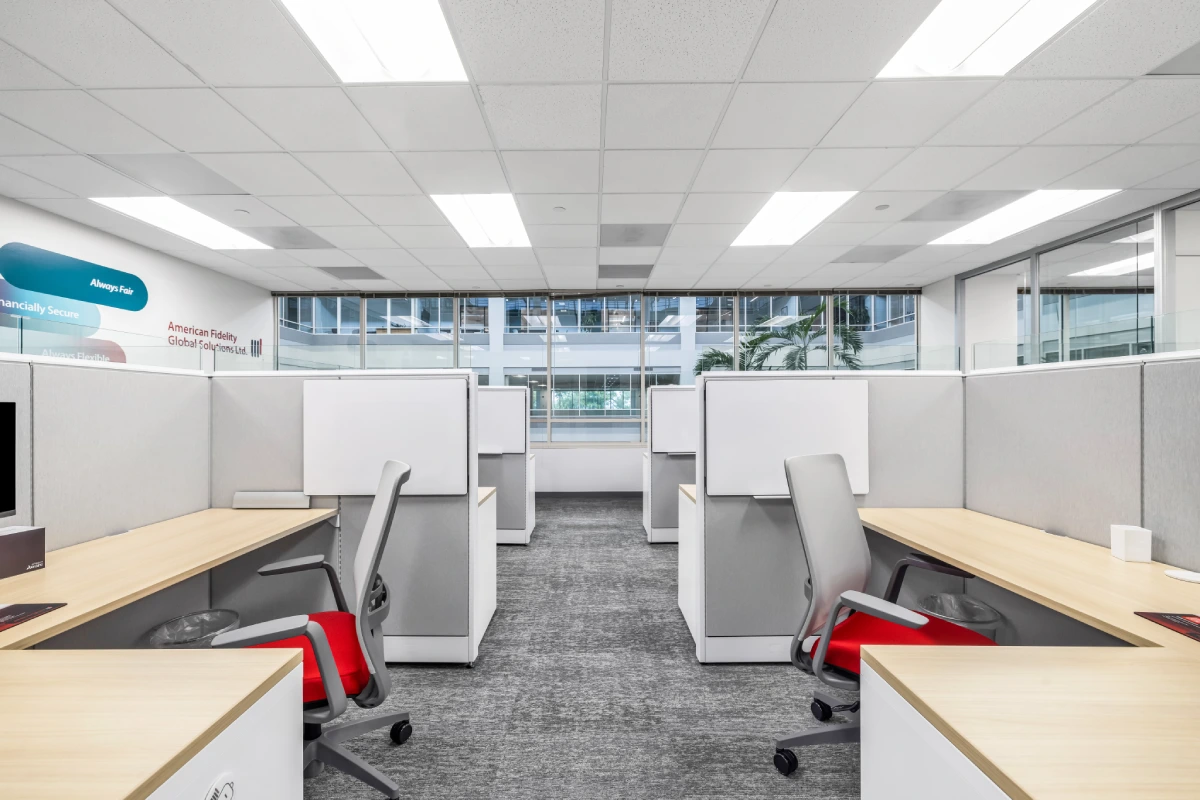
If you are prioritizing one piece of furniture for ergonomic improvement, it is the task chair, without exception. This is the piece your employees interact with for the longest continuous period every single day. A chair that does not properly support the spine, hips, and upper body creates compounding physical stress that builds through the day and cumulatively across years.
What a genuinely ergonomic task chair provides:
- Lumbar support that fills the inward curve of the lower spine, adjustable in both height and depth
- Seat depth adjustment so the front edge of the seat is not cutting into the back of the thighs
- Armrests that allow forearms to rest parallel to the floor, reducing shoulder and neck strain
- Synchronized tilt that moves the seat and back together, maintaining proper posture when leaning
- Breathable mesh or foam that prevents heat buildup over long sessions
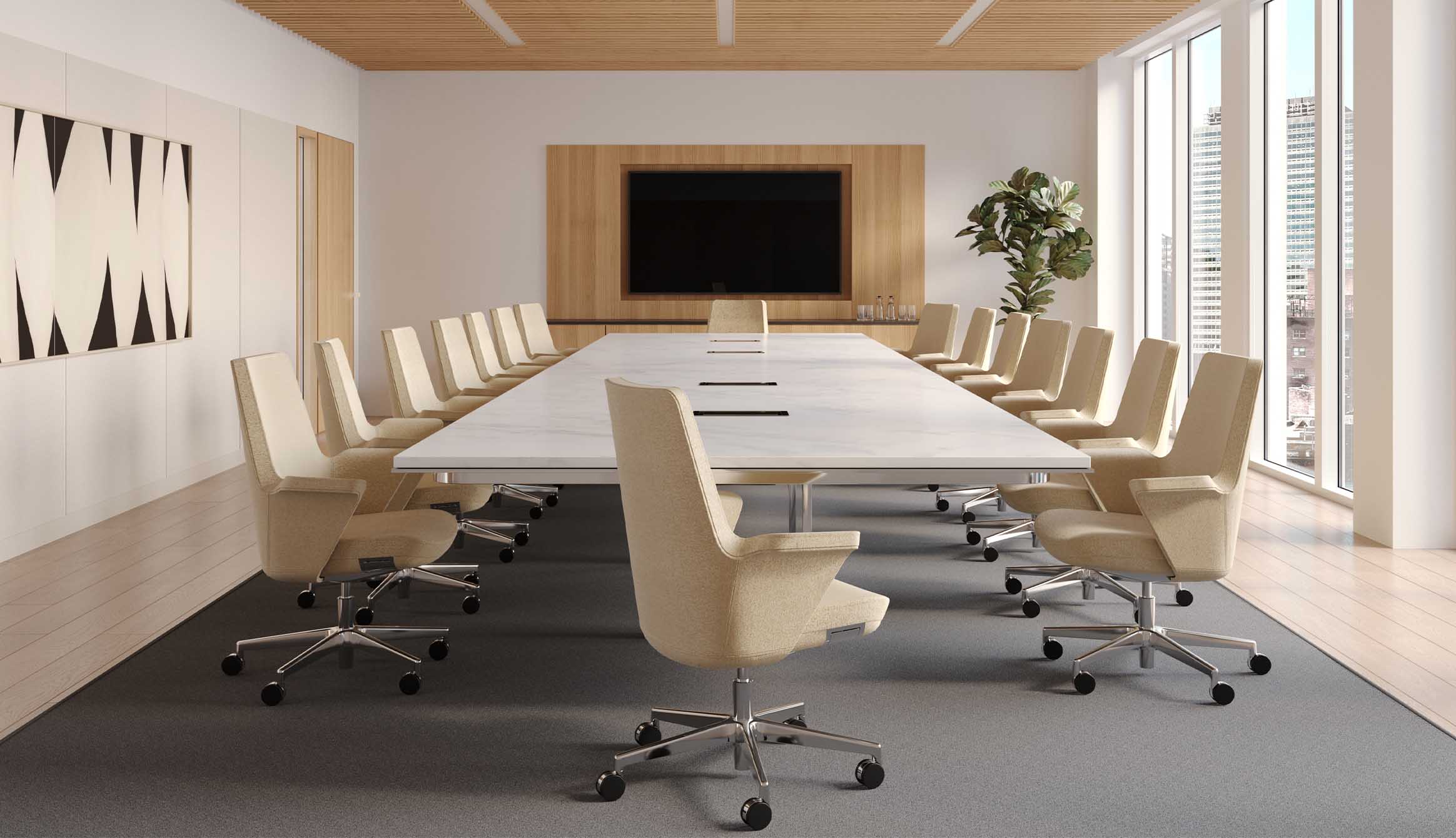
The business case for quality task chairs is unusually direct: reduced musculoskeletal injury claims, lower absenteeism, and better energy levels in the afternoon hours when output typically drops. B.House works with Humanscale, Global, Sitonit, and Keilhauer, manufacturers whose seating is engineered specifically for extended professional use, not just rated for 8 hours.
Monitor Position: The Most Common Ergonomic Error in Corporate Offices
Chair and desk ergonomics receive most of the attention in workplace design. Monitor positioning is consistently underimplemented, despite causing some of the most common and treatable sources of physical discomfort in office workers.
The correct position: top of the screen at or slightly below eye level, approximately arm's length from the face, directly in front of the user, not angled. Monitors positioned too high cause chronic neck extension. Monitors positioned too low cause forward head posture, which increases the effective load on the cervical spine dramatically.
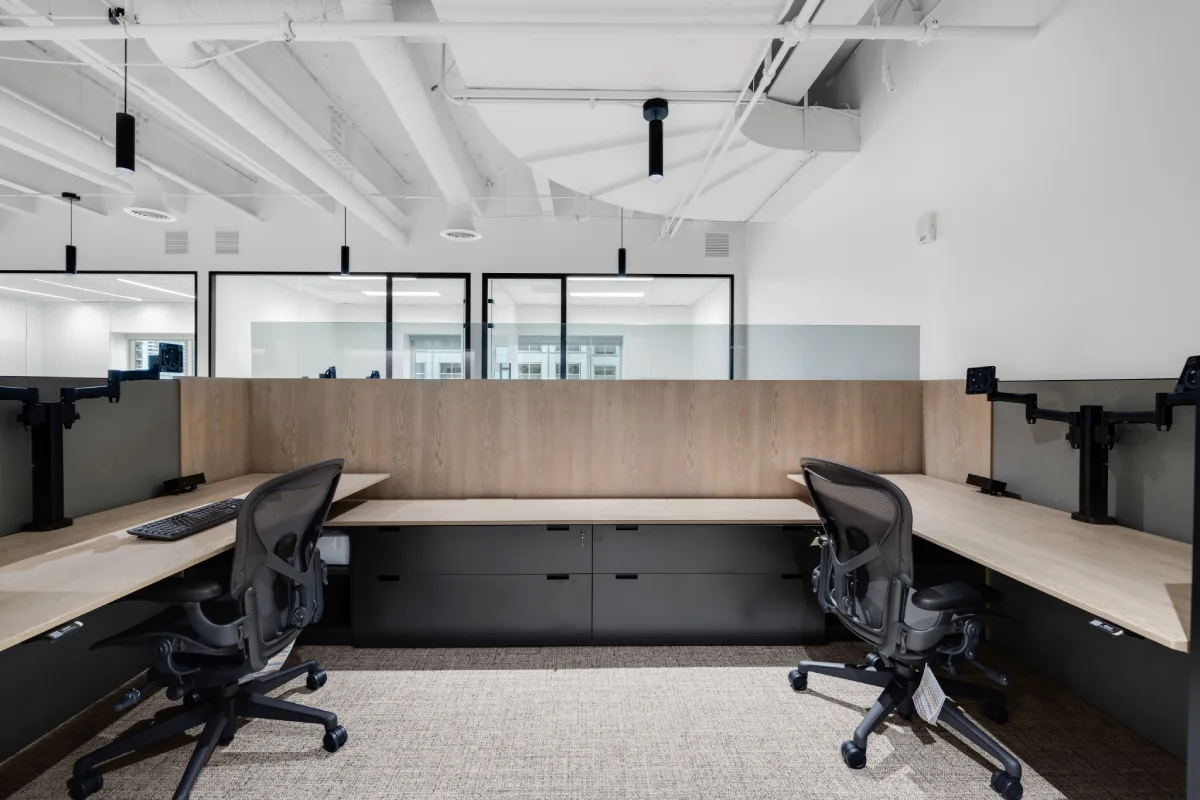
Monitor arms, articulating arms that mount to the desk surface, solve this problem completely and add a bonus: they free up significant desk surface area, improve cable management, and make dual-monitor configurations practical without bulky stands. At their price point, they are one of the highest-return ergonomic accessories in any office specification.
Is your team's current setup costing you productivity you are not measuring?
B.House's ergonomic workspace assessment identifies the specific changes with the highest return for your office, free for corporate clients in South Florida.
→ Request the assessment at bhouse.design | (305) 644-8464
Acoustic Ergonomics: The Often-Forgotten Dimension
A perfectly calibrated workstation still fails if the acoustic environment pulls constant attention away from the task. Noise is one of the most researched productivity inhibitors in open-plan offices, specifically the intelligible speech of nearby conversations, which the brain processes automatically and cannot learn to ignore.
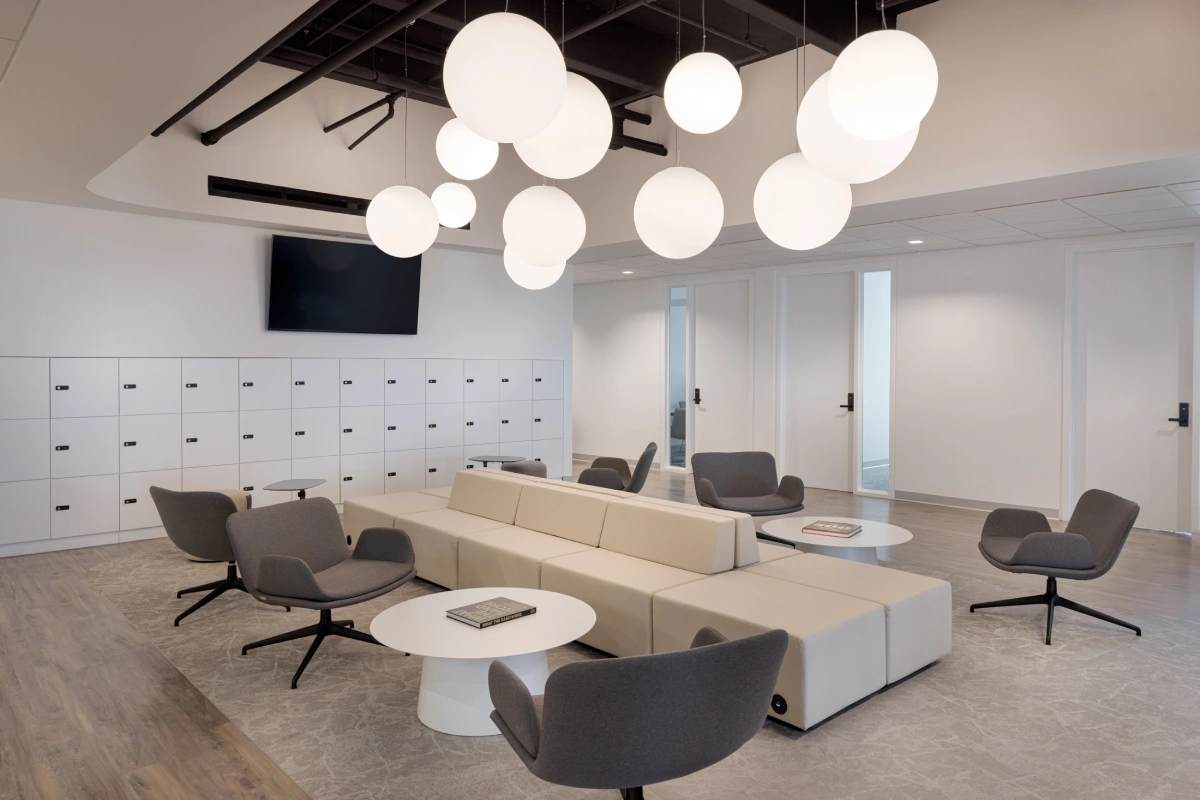
Acoustic ergonomics in a workspace includes desk-height privacy screens, ceiling acoustic panels in high-noise areas, acoustic pods or focus booths for work requiring deep concentration, and thoughtful zoning that separates collaboration-heavy areas from focus workstations.
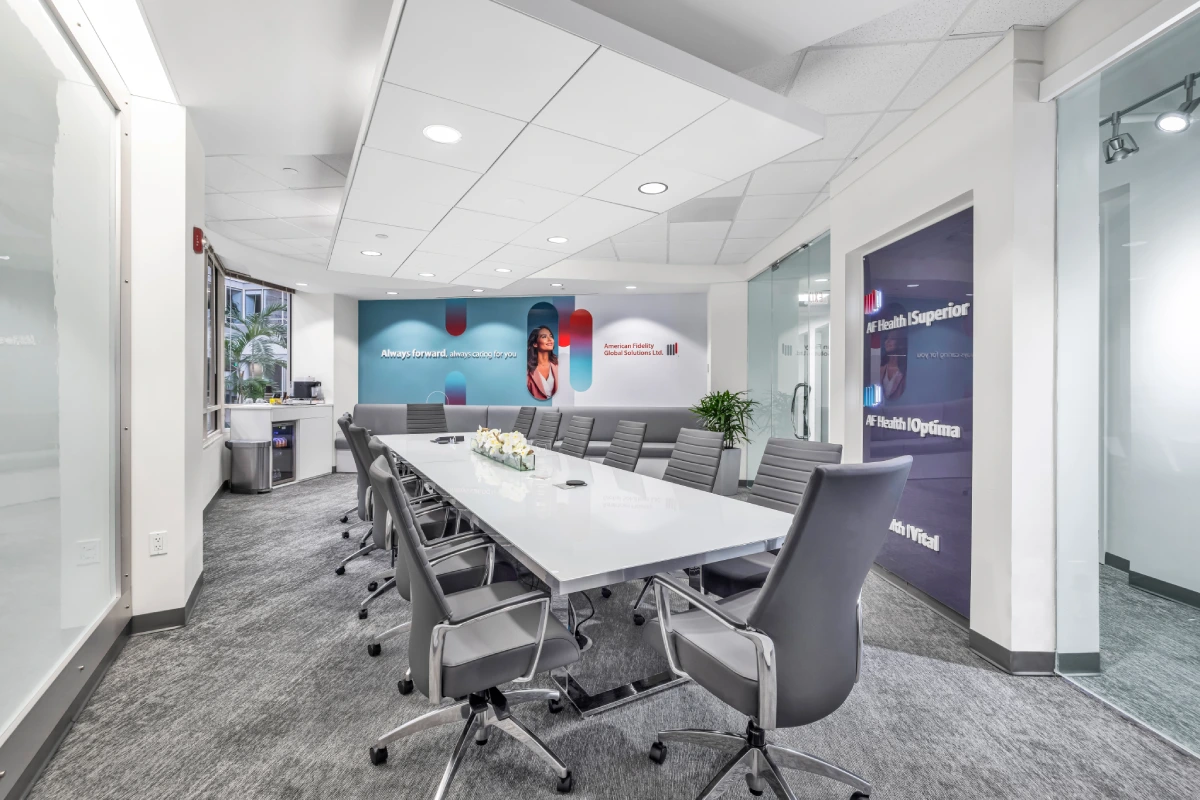
B.House designs ergonomic environments as complete systems, chair, desk, monitor support, and acoustic environment, because optimizing one component while leaving others unaddressed returns incomplete results. Corporate clients across Brickell, Aventura, and Coral Gables have seen measurable reductions in employee-reported distraction following complete ergonomic renovations.
Making the Business Case to Leadership
The three numbers that make ergonomic investment defensible in any budget conversation: reduction in workers' compensation and related health claims, reduction in absenteeism, and improvement in employee retention.
In South Florida's talent market, the quality of the work environment is a documented factor in retention decisions, and replacing a skilled professional costs between 50% and 200% of their annual salary.
B.House works with HR and facilities teams to structure this analysis before the furniture specification, helping you go into the budget conversation with data, not a wish list.
Build the business case with us, not alone.
Our team helps you quantify the productivity and retention impact of ergonomic investment for your specific organization, then spec the products that deliver it.
→ Start the conversation at bhouse.design or call (305) 644-8464 → bhouse.design/questionnaire

.webp)
.webp)
.webp)