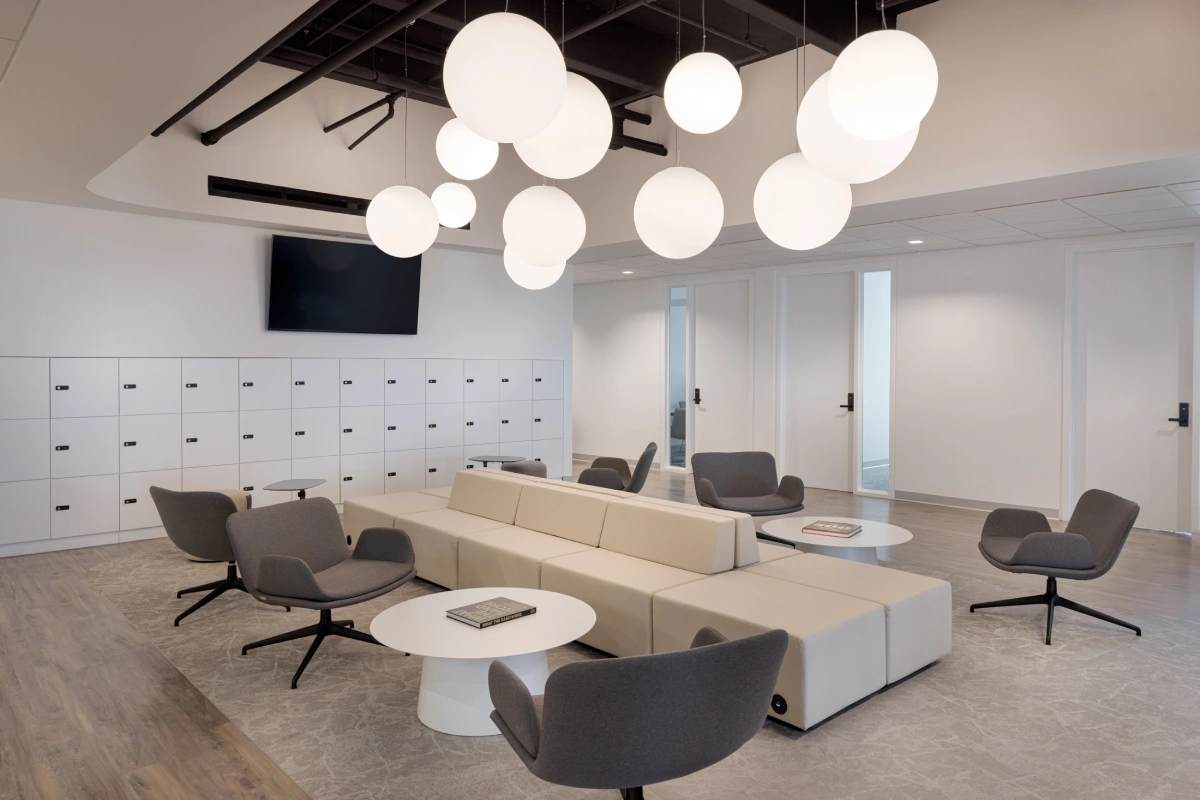
When clients come to us with a new office to furnish, the conversation almost always starts with budget constraints and a long list of things they'd like. Our job is to help them prioritize, to figure out what actually moves the needle on how people work versus what's nice to have once the essentials are covered. The answer is more consistent than you might think.
Essential vs. Secondary Office Furniture: At a Glance
| Priority | Furniture Piece | Primary Function |
|---|---|---|
| Essential | Ergonomic chair | Posture health + sustained productivity |
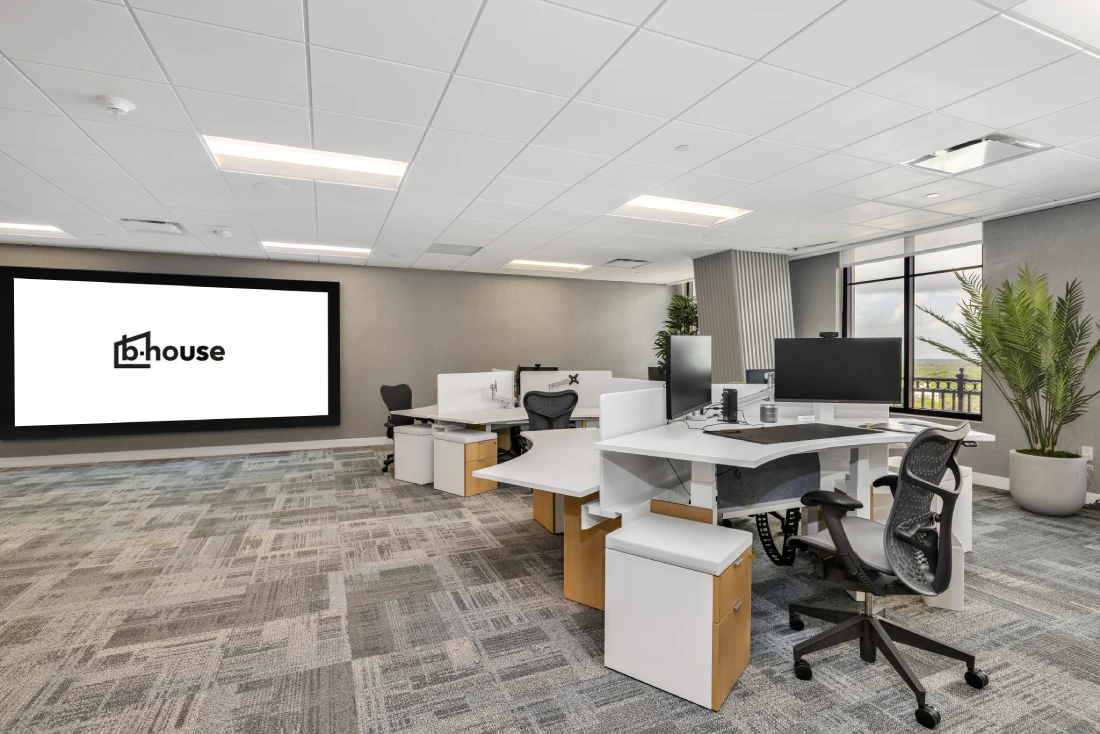
| Essential | Height-adjustable desk | Reduce sedentary behavior, improve circulation |
| Essential | Task lighting | Reduce visual fatigue, support focus |
| Essential | Storage systems | Organization, operational efficiency |
| Secondary | Acoustic panels | Noise control for focus-heavy environments |
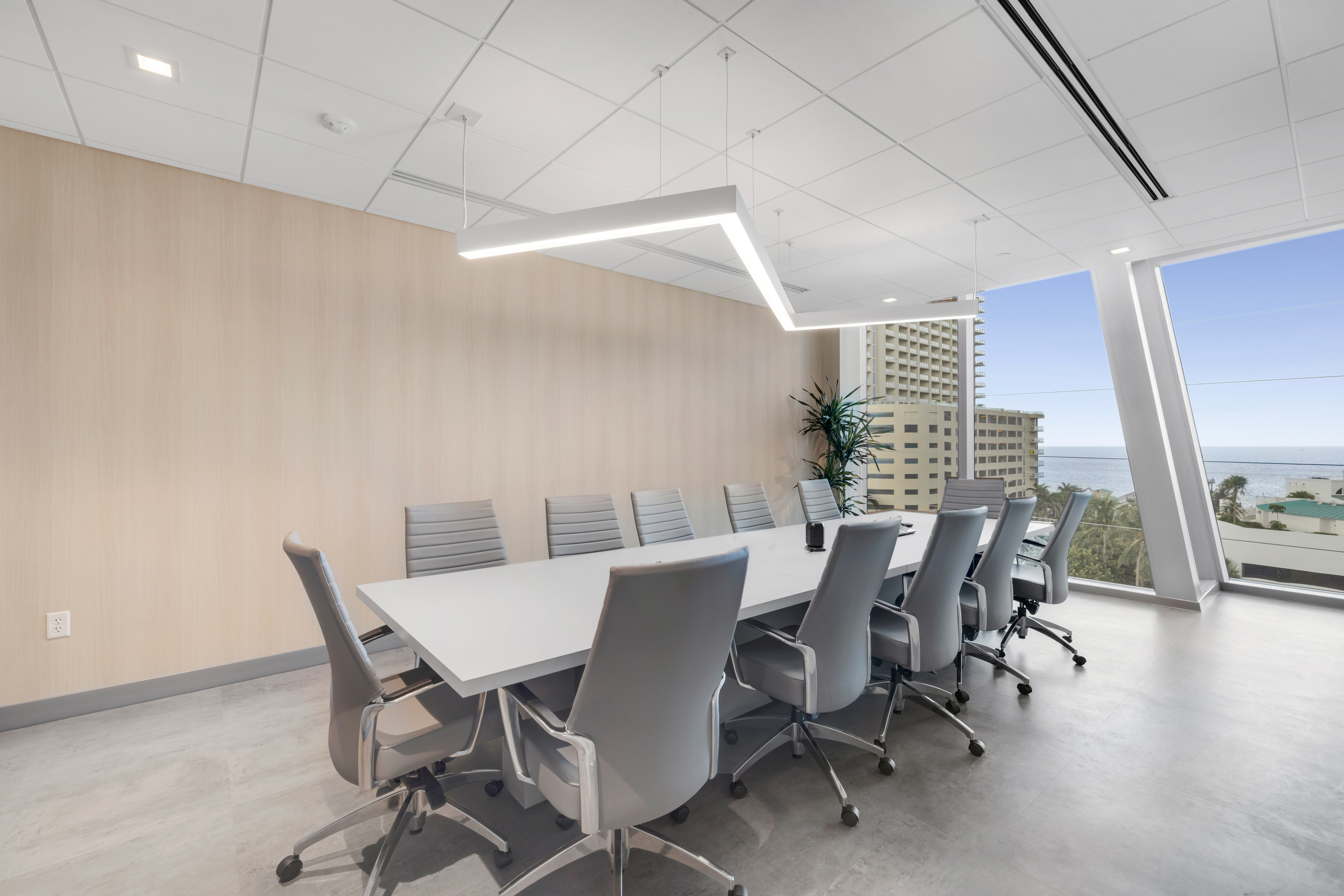
| Secondary | Meeting tables | Team collaboration and decision-making |
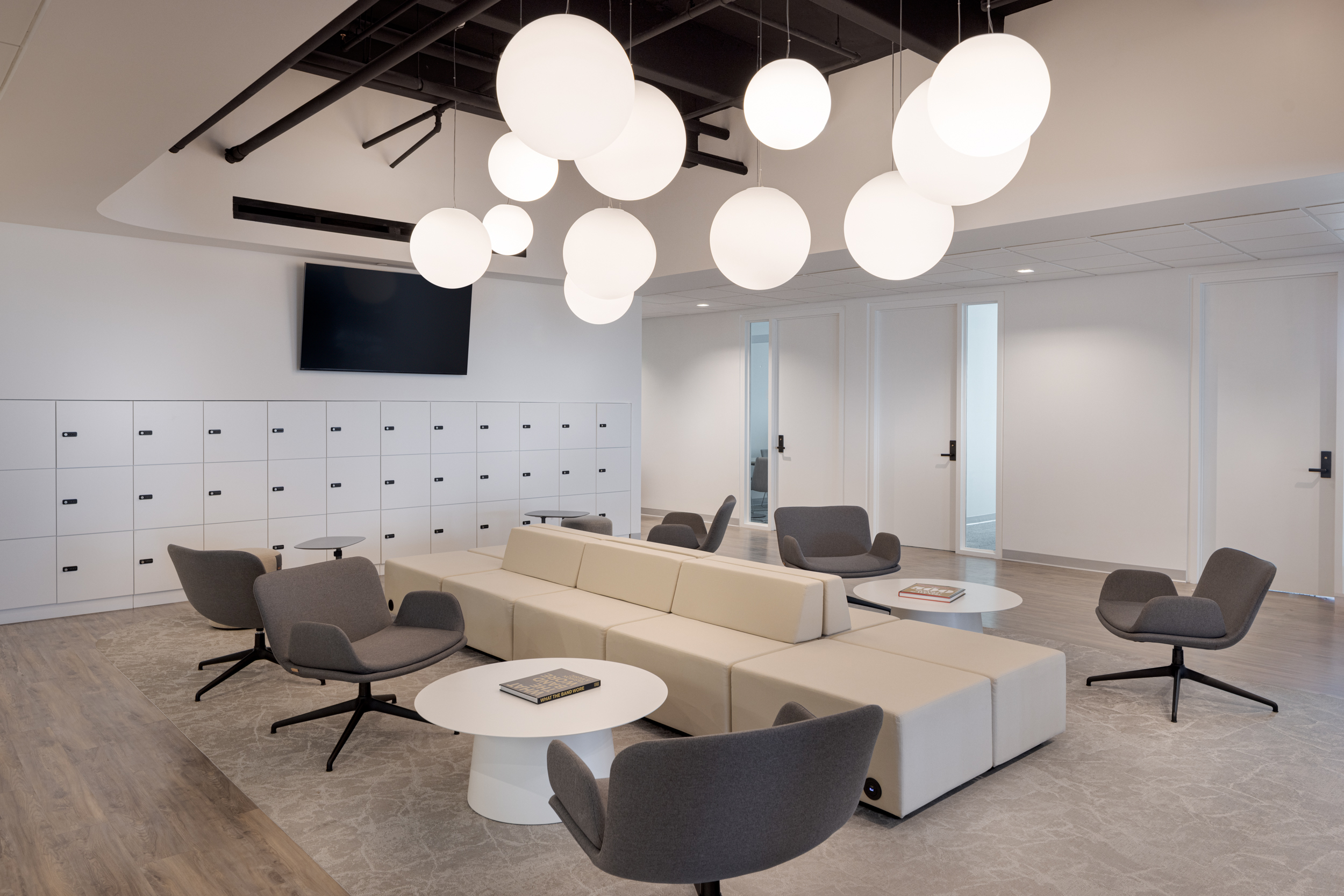
| Secondary | Lounge seating | Employee wellbeing and informal interaction |
| Secondary | Partitions | Privacy in open-plan layouts |
The 4 Essential Office Furniture Pieces
1. The Ergonomic Chair: Foundation of Posture Health and Productivity
If someone asks where to spend the money when furnishing an office, the answer is the chair. People spend six to eight hours a day in it. The physical consequences of poor seating, back pain, shoulder tension, fatigue that compounds across weeks, show up in absenteeism and performance in ways that are hard to trace back to the furniture but very real.
What 'ergonomic' actually requires beyond the marketing label:
- Adjustable lumbar support (height + depth)
- Synchro-tilt recline mechanism
- Seat height range covering the full workforce demographic
- Seat depth adjustment
- Multi-directional armrests
The gap between a $150 consumer chair and a $600 commercial chair is real: synchro-tilt recline, adjustable lumbar with actual range, seat depth adjustment, armrests that position correctly. That $450 difference pays for itself quickly when you factor in what poor seating costs.
2. The Height-Adjustable Desk: Reducing Sedentary Behavior
A good chair helps with seated posture. A sit-stand desk solves a different problem: the body isn't designed to hold any single posture for eight hours, even a well-supported one. Electric height adjustment matters here, a manual crank that takes thirty seconds gets used occasionally; a motor that responds to a button press gets used throughout the day.
- Adjustment range: 22–48 inches (sits and stands for users from 5'0" to 6'4")
- Electric actuator (not manual crank) for practical daily use
- Load capacity: 150 lbs minimum for dual-monitor setups
- Memory presets for shared desk environments
3. Task Lighting: Reducing Visual Fatigue
Task lighting doesn't get the attention it deserves in most office furniture conversations. Overhead lighting is designed for general visibility, not for looking at a screen for eight hours. A good desk lamp, adjustable color temperature, dimmable, with an articulating arm, reduces eye strain in ways that add up over a full day. It's one of the lowest-cost items in an office buildout and one of the most consistently appreciated by the people who use it.
- Adjustable color temperature (warm for reading, cooler for screen work)
- Dimmable brightness
- Articulating arm for positioning flexibility
- LED (energy efficiency + consistent color rendering)
4. Storage Systems: Organization and Operational Efficiency
A clear desk is a productivity advantage, not just an aesthetic preference. The constant low-level mental overhead of navigating clutter, where did I put that, what's under this stack, is real, and it compounds across a day. Storage systems that actually get used solve this. The key word is actually: storage that requires effort to use doesn't get used.
- Personal storage pedestal (3-drawer, lockable): For individual files, equipment, and personal items
- Overhead storage unit: For team reference materials and shared supplies
- Cable management system: Reduces surface clutter; often overlooked but high-impact
Secondary Office Furniture: Priority Order by Team Structure
Acoustic Panels :Priority for Focus-Heavy Environments
The case for acoustic panels is straightforward once you've sat in a noisy open office trying to do concentrated work. Recovering full focus after an interruption takes a significant amount of time, and in a busy open plan, those interruptions happen constantly.
Acoustic panels won't turn an open floor into private offices, but they meaningfully reduce ambient noise and visual distraction. For teams doing writing, analysis, coding, or legal work, they're worth prioritizing earlier than most budgets treat them.
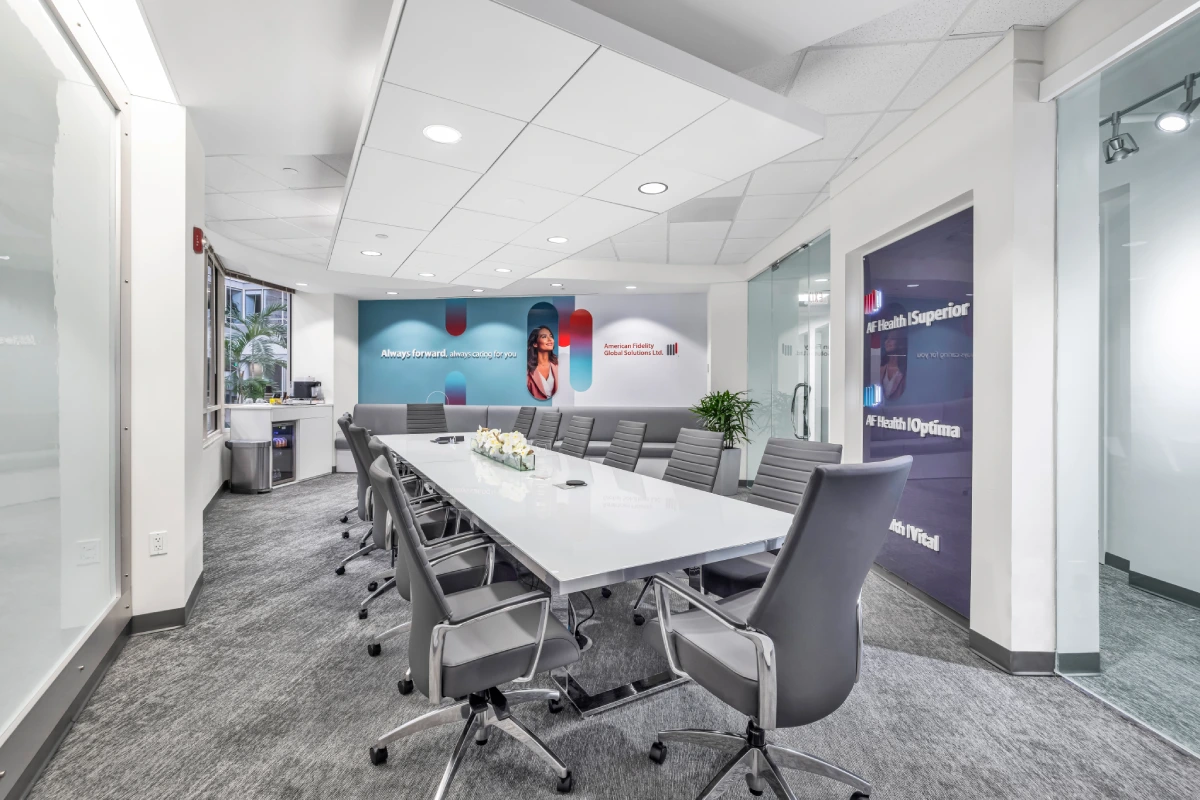
Meeting Tables :Priority for Collaborative Teams
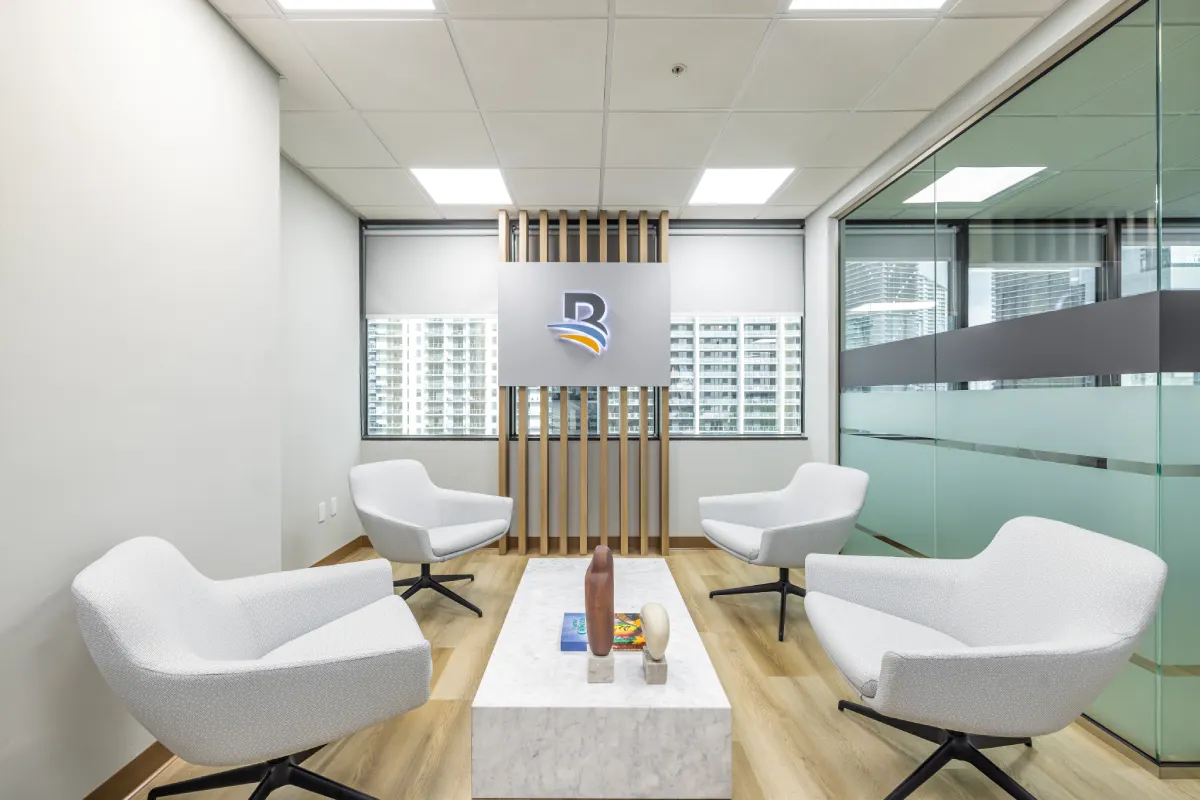
A meeting table is only secondary if meetings aren't central to how your team works. For teams that collaborate regularly in person, the right table matters: round configurations suggest equal participation and work well for working sessions, while rectangular tables communicate hierarchy and formality for client presentations or structured reviews. It's worth thinking about which culture you want to reinforce before you order.
Lounge Seating :Priority for Employee Wellbeing and Retention
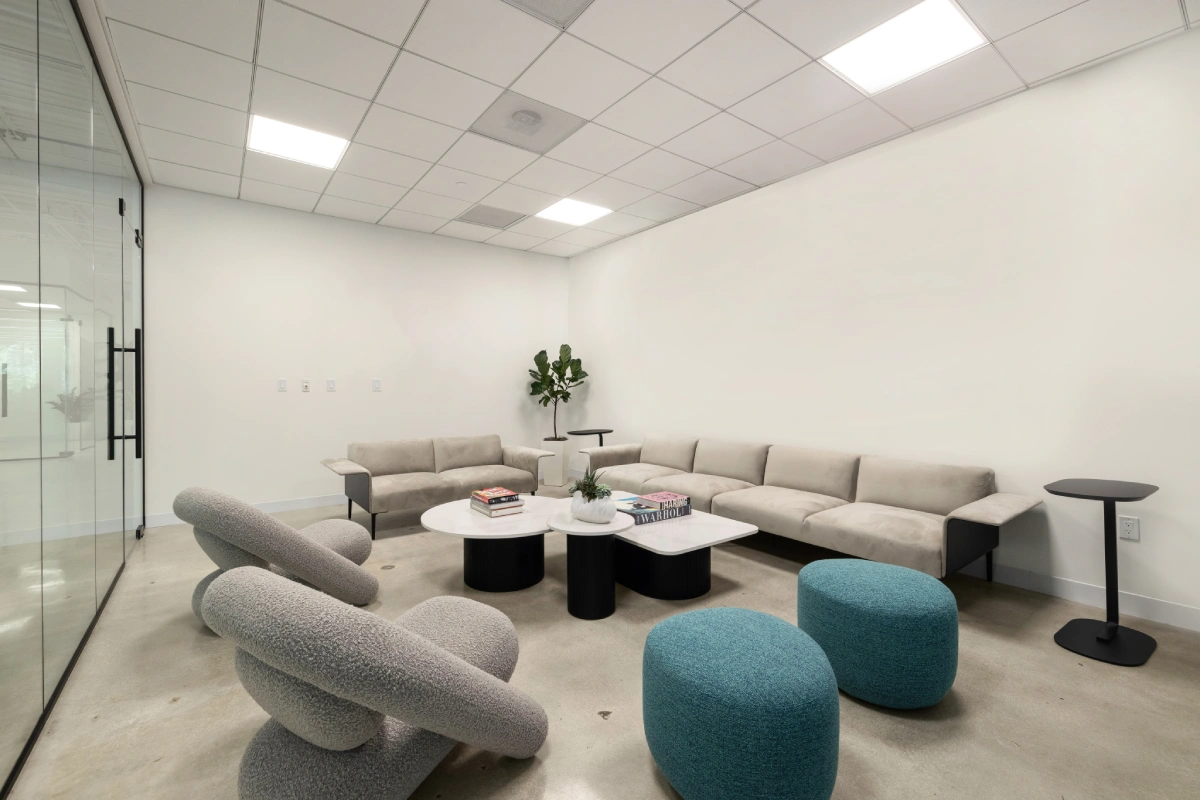
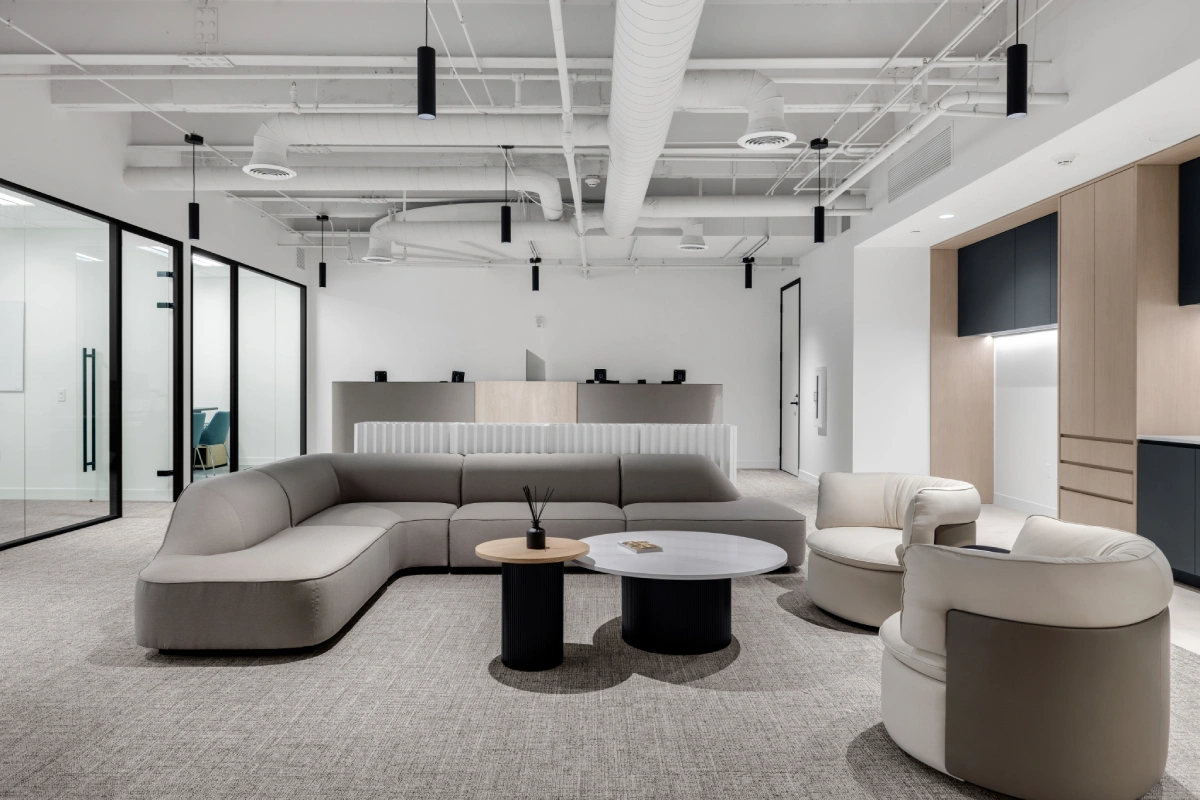
Lounge seating does something that task chairs and conference tables can't: it creates spaces where people actually want to be. For hybrid offices trying to make the case for coming in, this matters more than many employers realize. Informal social interaction, the kind that happens on a comfortable sofa near a coffee machine, is part of what an office does that remote work doesn't replicate easily.
Partitions :Priority for Privacy in Open-Plan Layouts
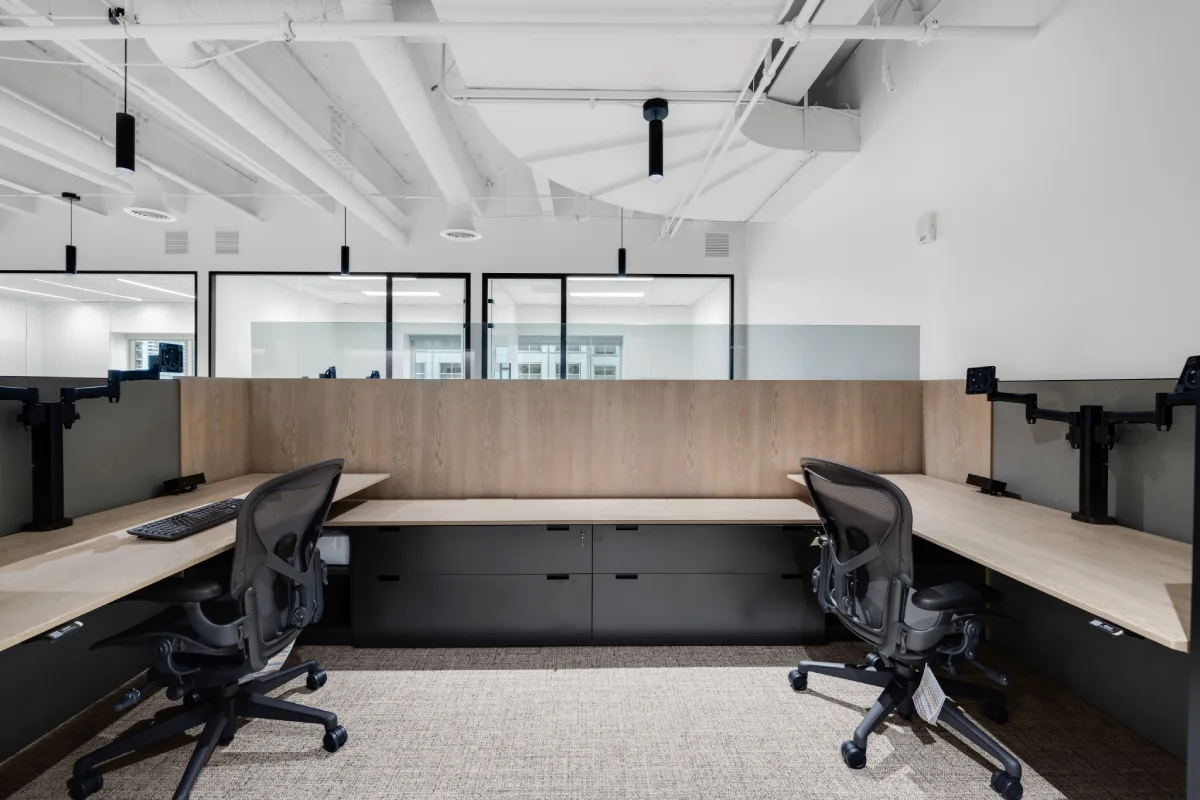
Partitions are often the last thing added to an office and the first thing people wish had been included. They're especially useful in spaces designed for higher headcounts than currently occupy them, a floor that was once full feels exposed and distracting when it's half-empty. They're also the practical solution for HR, finance, or legal functions that need a degree of visual and acoustic separation without permanent construction.
Work with B.House: We help organizations specify, procure, and install the right mix of essential and secondary office furniture for their space and team structure. Explore workplace solutions with B.House → bhouse.design
FAQ: Essential Office Furniture
- What is the most important piece of office furniture for productivity?
- The ergonomic chair. It directly affects physical health across 6–8 hours of daily use, which in turn affects sustained cognitive performance, error rates, and long-term occupational health outcomes.
- Do all offices need height-adjustable desks?
- Not necessarily all desks, but they should be available to every knowledge worker as an option. In hybrid offices, specifying 30–50% of workstations as height-adjustable and ensuring hot-desk access is a practical starting point.
- What storage is essential for a hot-desk office?
- Mobile, lockable pedestals that travel with the user, combined with centralized team storage for shared resources. Personal lockers are an alternative in spaces where employees don't need documents at the desk.
- How does lighting affect office productivity?
- Poor lighting is directly linked to visual fatigue, headaches, and reduced concentration. Task lighting combined with well-designed ambient lighting can reduce reported eye strain by 40–60%.
- What furniture should I prioritize for a startup office?
- Ergonomic chairs and a mix of fixed and height-adjustable desks first. Add a meeting table sized for your current team. Lounge seating and acoustic solutions can follow as you scale. Specify modular options wherever possible.
- How much should I budget per workstation for essential office furniture?
- For a properly specified commercial workstation (ergonomic chair + height-adjustable desk + task light + pedestal storage), budget $1,500–$2,500 per position depending on brand and specification level.

.webp)
.webp)