Most office furniture decisions start in the wrong place. A catalog, a budget meeting, a floor plan. What gets skipped is the one conversation that determines whether the investment actually works: how does your team work, and what does the space need to do to support that?
If you are a business owner, facilities director, or office manager in South Florida planning a workspace, whether it is a first office, a relocation, or a renovation, this guide will help you match the right furniture strategy to the right productivity goal before you spend a dollar on product. Learn How to Choose the Right Palette for Your Office.
Not sure where to start?
B.House offers free workspace discovery calls for corporate clients in Miami, Broward and Palm Beach County.
Book at bhouse.design or call (305) 644-8464
Step Back: Define What Productivity Means for Your Organization
Productivity is not one thing. For a law firm, productivity is sustained, uninterrupted concentration on complex documents. For a creative agency, it is rapid iteration and spontaneous collaboration. For a financial advisory firm, it is a mix of client-facing credibility and behind-the-scenes analytical work. Before you select a single piece of furniture, your team needs to agree on which of these modes your space is primarily serving.
A useful exercise: ask your leadership team to estimate what percentage of an average workday your employees spend in focused solo work, informal collaboration with 2 to 3 colleagues, formal meetings, and casual interaction. The distribution will tell you exactly how to weight your floor plan and your furniture budget.
"The best office we ever built started with a four-question survey, not a furniture catalog."
.webp)
Furniture for Focus-Driven Environments
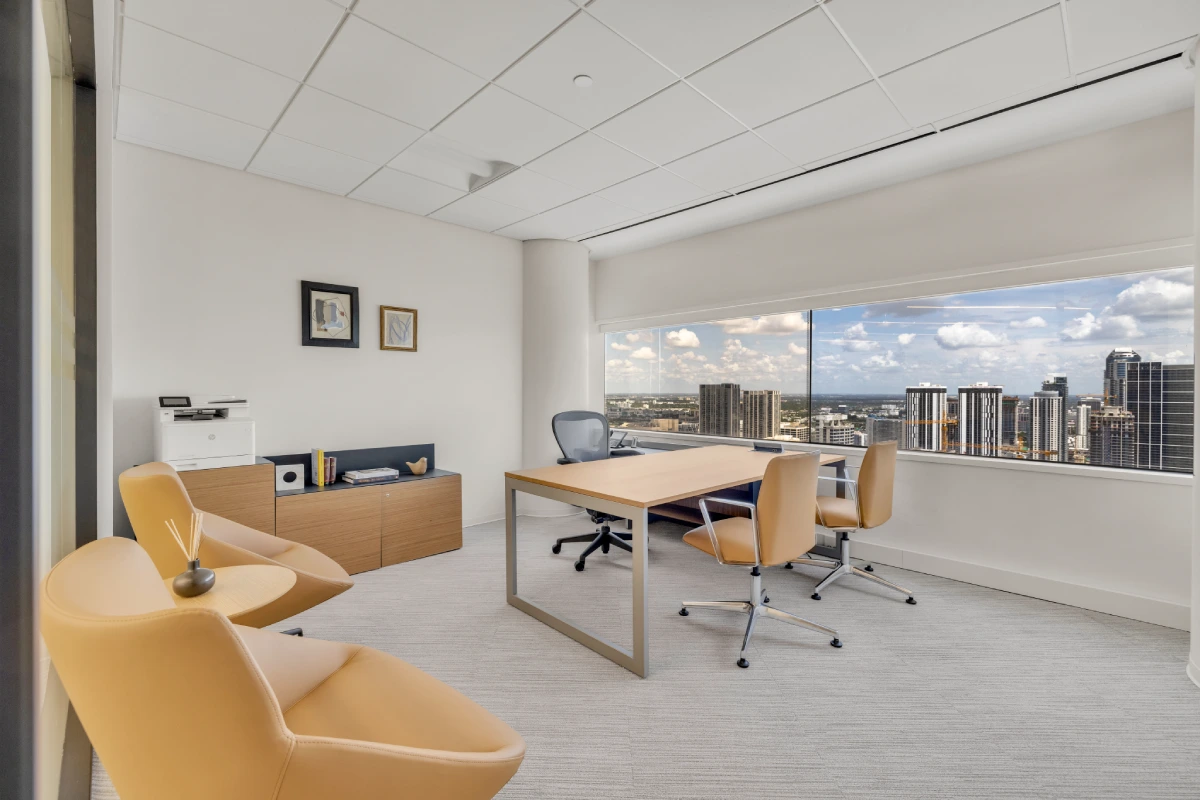
If deep concentration work dominates your team's day, research, writing, coding, legal analysis, your furniture strategy has one primary job: eliminate distraction. That means ergonomic task chairs that remove physical discomfort from the equation, height-adjustable desks that allow postural variety, and acoustic screens that reduce the visual and noise intrusions that break focus.
Color and material choices matter in focus environments. Cool, muted tones, soft blues, sage, and warm neutrals, consistently perform better for sustained concentration than energetic warm palettes. Apply brand colors as accents rather than as dominant surface treatments in workstation zones.
Specific products worth specifying for focus environments include acoustic desk screens at 16 to 20 inches above the work surface, height-adjustable benching with integrated power, and mesh-back task chairs with lumbar adjustment.
Furnishing a focus-driven team?
Ask about ergonomic office packages at bhouse.design or call (305) 644-8464
Furniture for Collaborative Environments
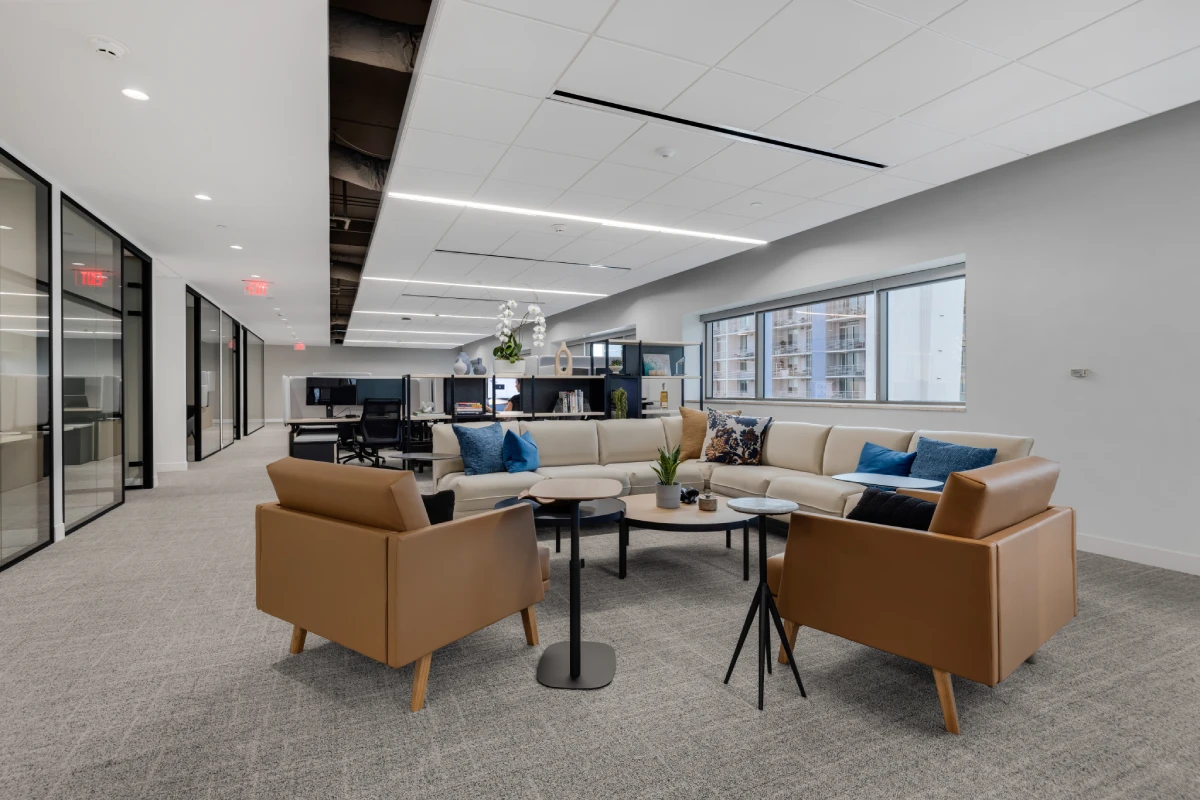
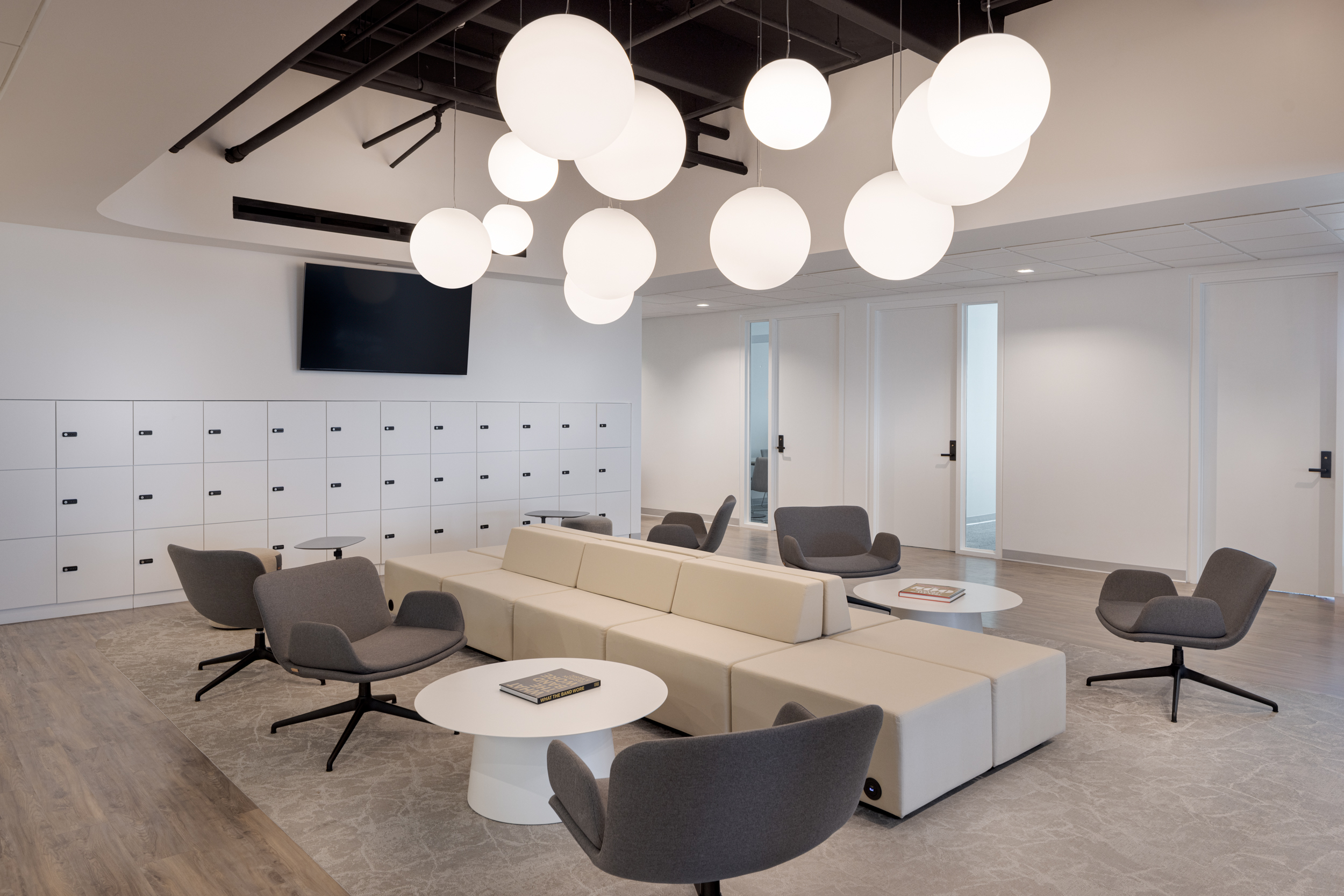
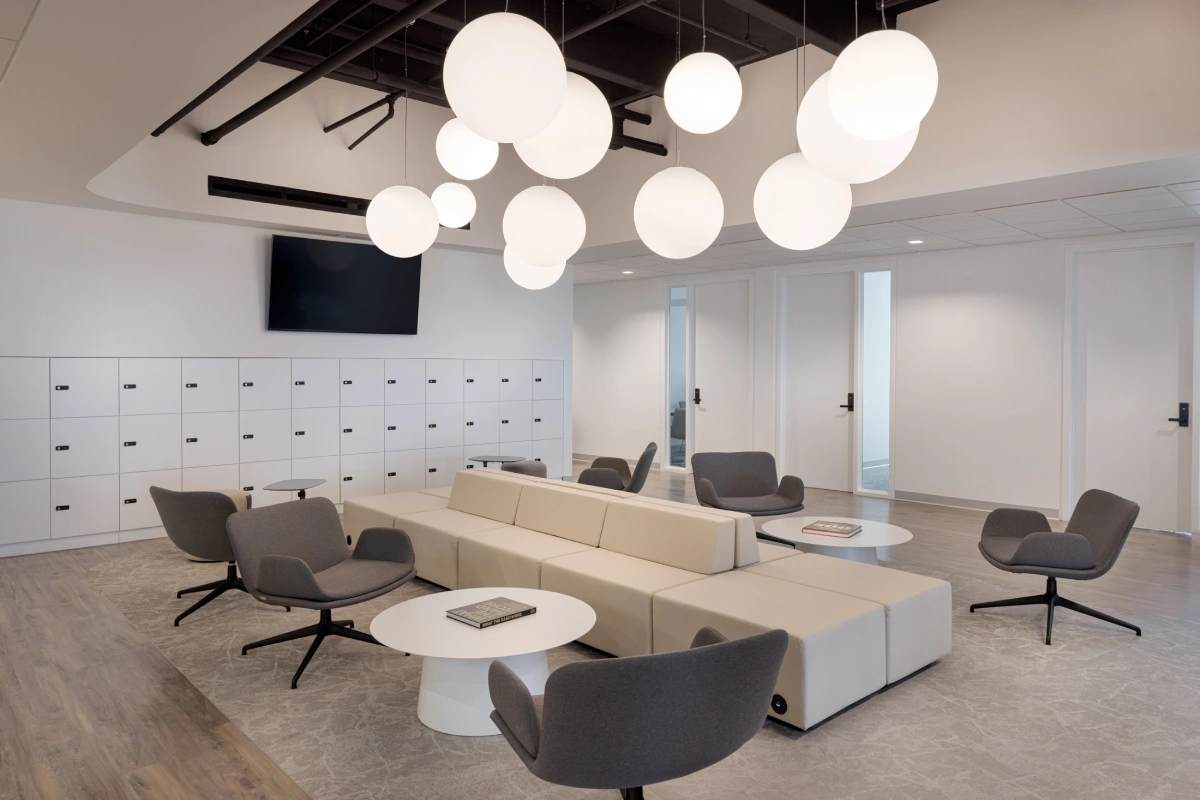
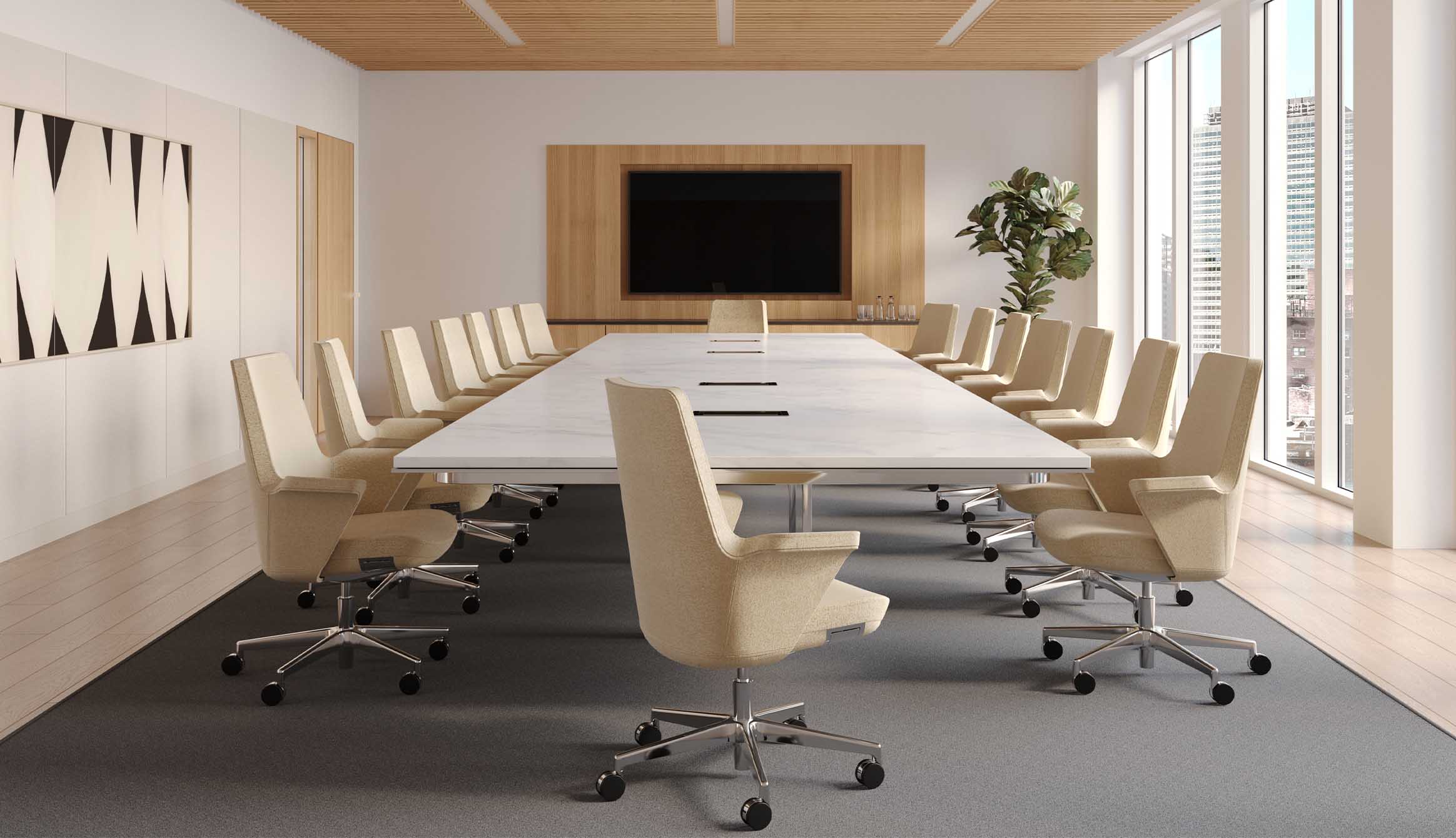
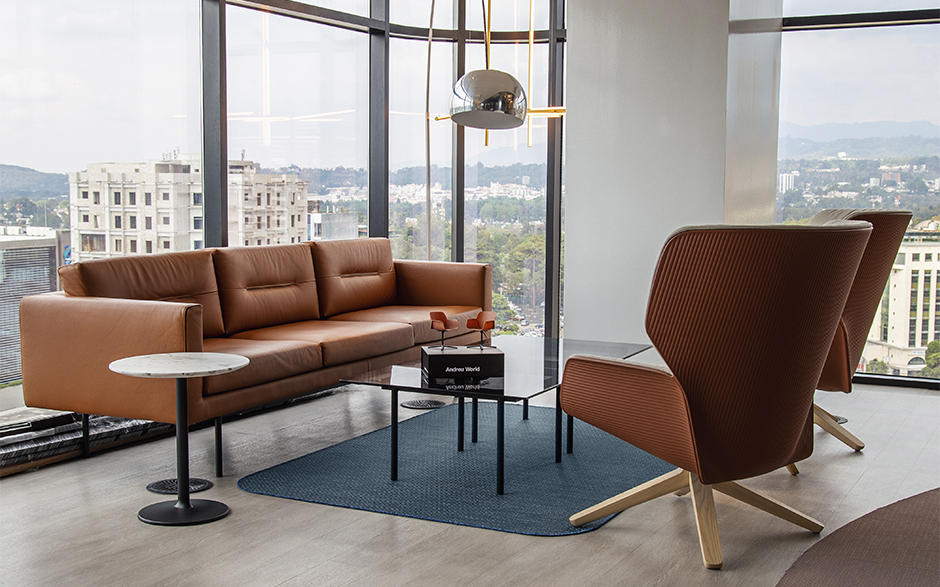
Collaboration-heavy teams need furniture that moves. Fixed conference tables are the enemy of dynamic group work. Modular tables on casters, lounge clusters for small groups, and standing-height tables for quick check-ins are essential tools for fast-moving teams.
The single most underutilized collaborative piece is the mobile whiteboard. It transforms informal conversations into working sessions and casual check-ins into decisions.
Material contrast also performs well in collaborative environments. Mixing wood, metal, fabric, and glass creates sensory variety that supports creative thinking and keeps teams mentally engaged.
.webp)

.webp)
.webp)
.jpg)