.webp)
Planning a corporate workspace, whether from scratch or through renovation, is one of the highest-leverage investments a company can make in its people and its culture. A well-planned office reduces friction in daily work, enables collaboration when it is needed, and provides the focus conditions that knowledge work requires. A poorly planned one creates daily frustrations that compound invisibly into lost productivity, higher turnover, and a culture that does not reflect what leadership intended.
This guide covers the complete process: brief development, layout strategy, furniture specification, flexibility planning, and procurement management. It is written for business owners, HR directors, facilities managers, and real estate decision-makers in South Florida who are preparing for a significant workspace project.
Planning a corporate workspace in Miami, Broward or Palm Beach County?
B.House offers free workspace planning consultations, we help you map the brief before you engage an architect or commit to a floor plan.
→ Start at bhouse.design | (305) 644-8464
Step 1: Write the Brief Before You Touch the Floor Plan
The brief is the single most important document in any workspace project, and it is the one most often skipped. It defines what the space needs to accomplish, who it serves, and how those people actually work. A brief that answers these questions thoroughly makes every subsequent decision faster and prevents the expensive changes that come from discovering mid-project that the plan does not match how your team operates.
Key questions the brief should answer:
- What percentage of your workforce will occupy the space on any given day?
- What work modes dominate each department: focus, collaboration, client meetings, or mixed?
- Where does collaboration break down in your current space?
- What is your headcount projection for the next two to three years?
- What should a first-time visitor understand about your company from walking into the space?
One step most companies skip: direct input from employees. The people using the space every day have specific, firsthand knowledge of what the current environment does and does not support. A short survey or facilitated session before planning begins returns insights that no outside consultant can generate independently.
"The brief takes two weeks. The renovation takes two months. Get the brief right and the renovation is easy."
Step 2: Layout Strategy : Zones, Flow, Adjacencies
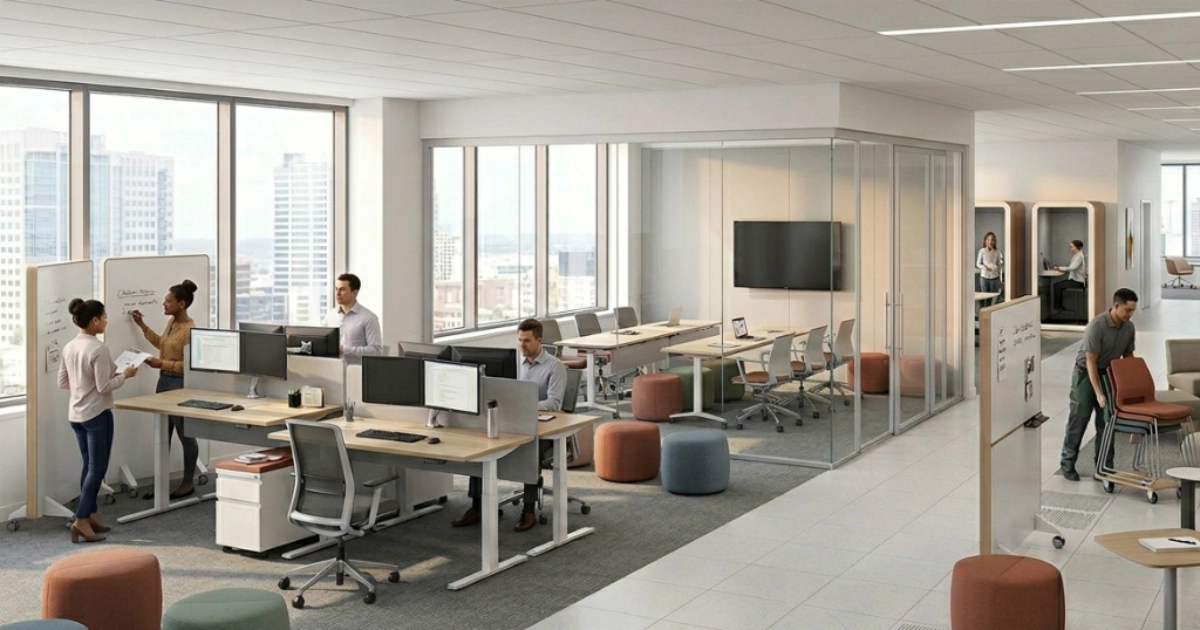
Every corporate workspace contains the same set of functional zones, the question is how they relate to each other and how well the layout supports the actual movement of people and work through the space. The zones: primary workstations, enclosed meeting rooms, open collaboration areas, phone rooms and focus booths, reception and arrival, support spaces (printing, storage, kitchen), and circulation.
Adjacency planning, deciding what goes near what, is guided by workflow. Teams that collaborate constantly should have workstations near each other and near shared meeting infrastructure. Focus zones belong away from high-traffic circulation. Reception and client-facing areas need a controlled entry sequence that does not expose operational work areas to visitors on arrival.
The most consistently mismanaged resource in office layout planning is natural light. Perimeter private offices, a legacy of hierarchical workspace conventions, block daylight from the employees who spend the most time at their desks. Modern workspace planning puts workstations at the perimeter and moves meeting rooms and support spaces to the interior. The productivity and wellbeing gains from daylight access are well-documented and significant.
Not sure how to zone your floor plate?
B.House offers free layout strategy sessions: bhouse.design
Step 3: Furniture Specification : Matching Product to Function
Once the layout is established, furniture specification translates the zones into specific products. The functional requirements of each zone determine the product categories, the brand and design requirements determine the specific products within those categories.
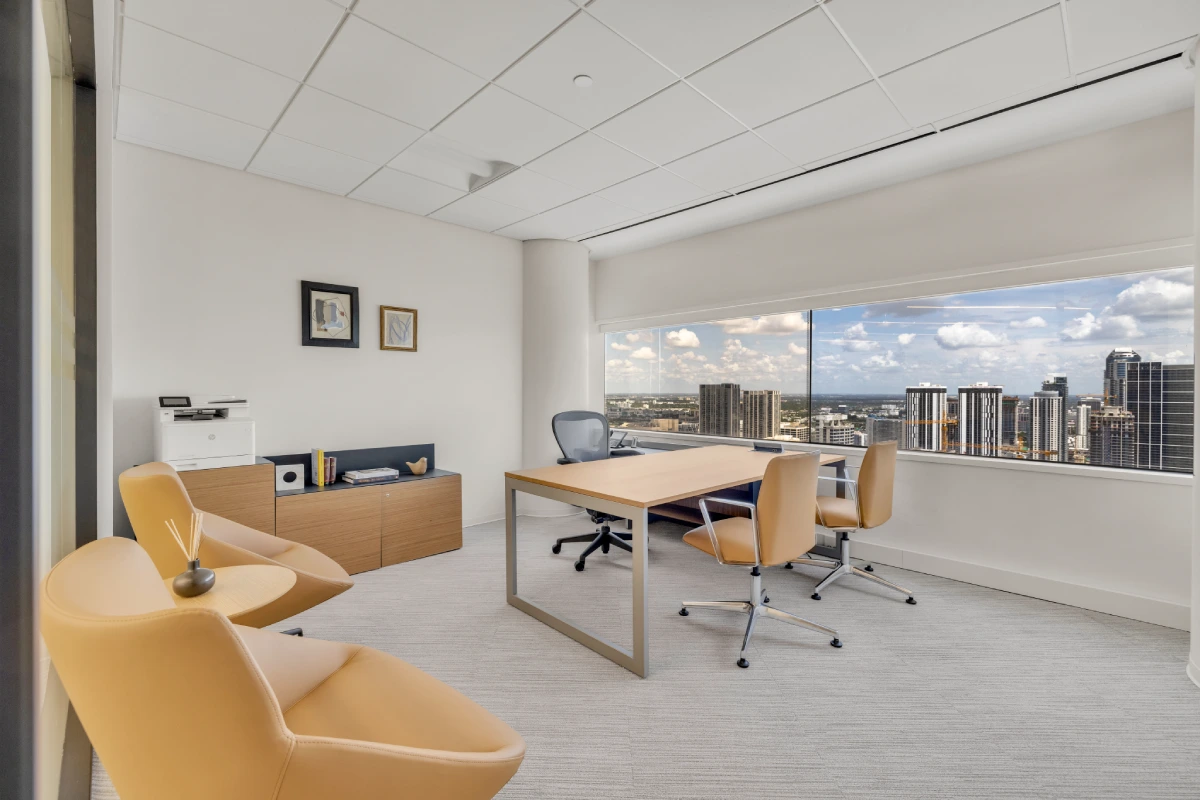
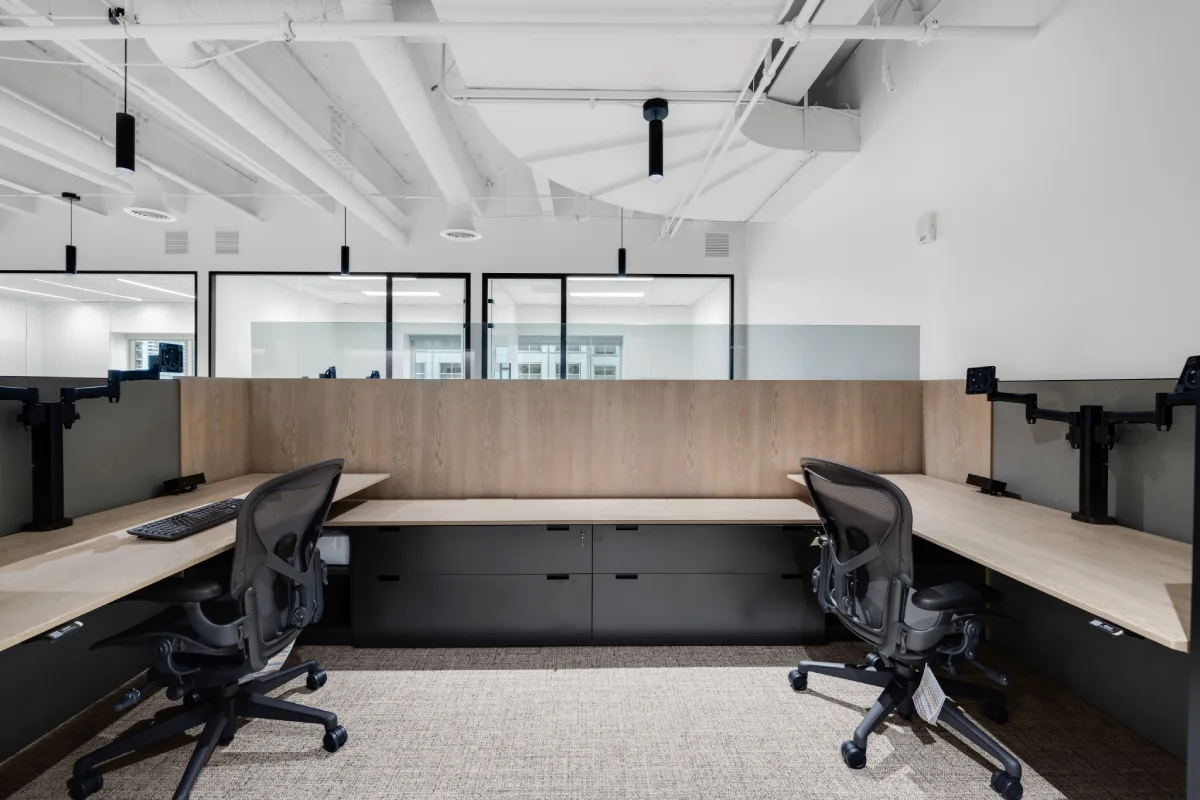
Primary workstation specification: desk surface (height-adjustable where budget allows), ergonomic task chair, personal storage, and monitor support.
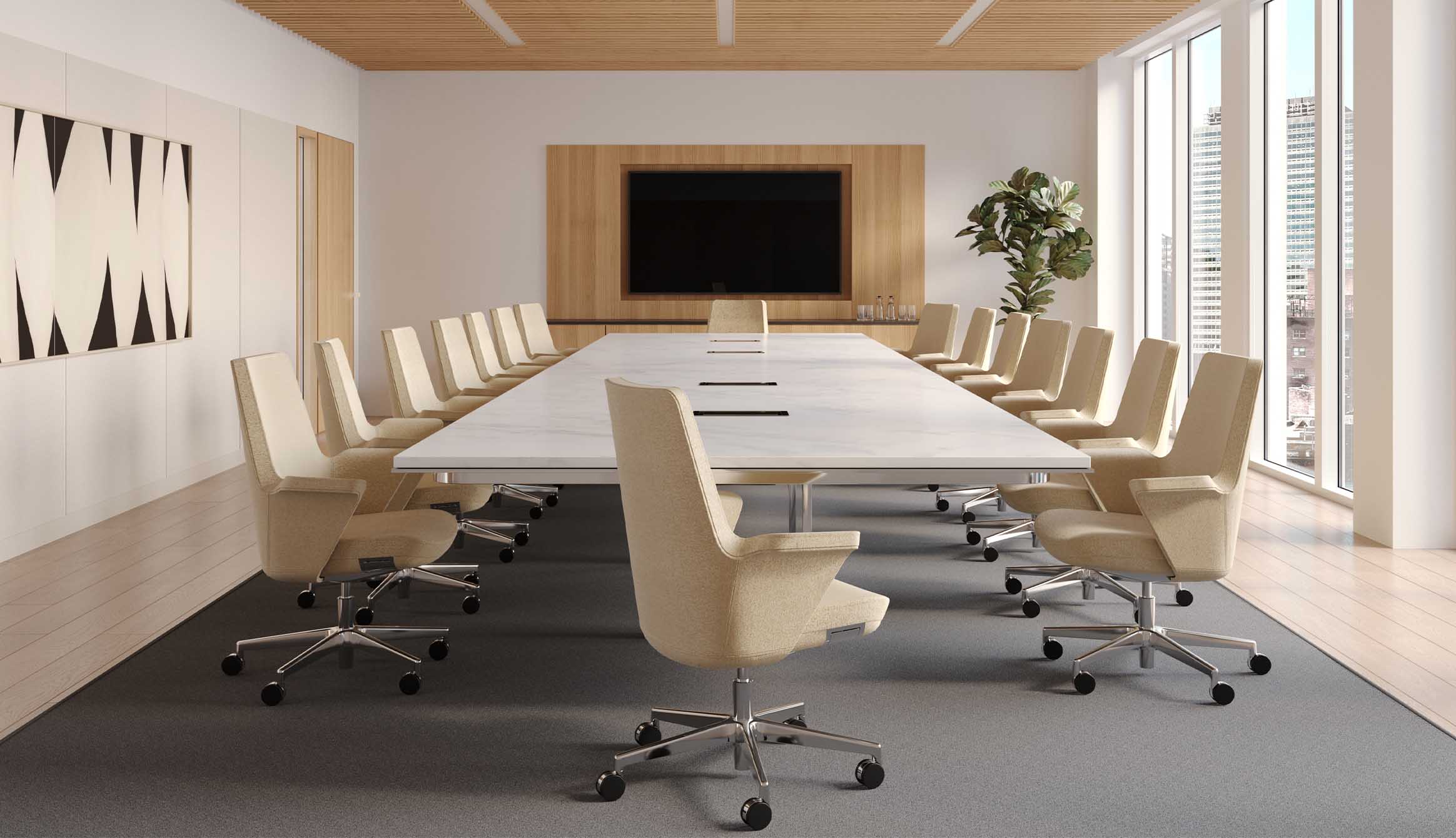
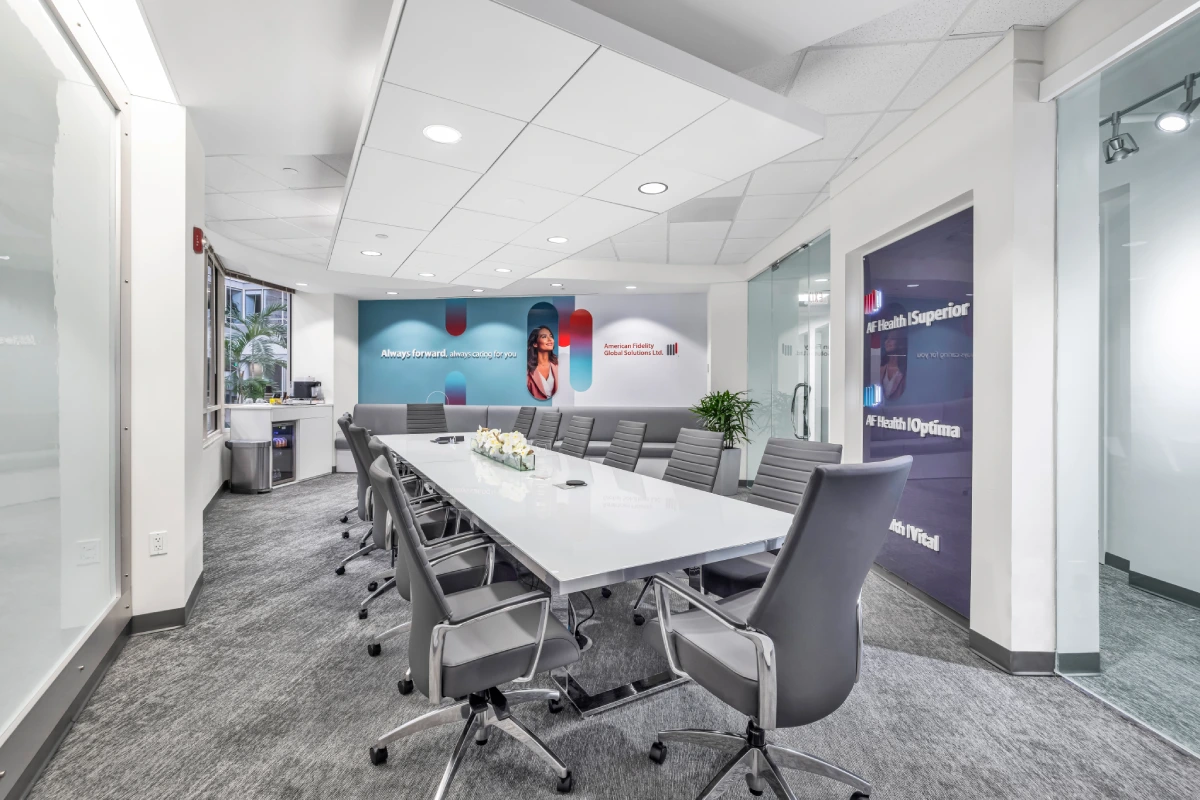
Meeting rooms: tables, fixed or modular based on the reconfiguration frequency you need, meeting chairs, display surfaces, and integrated technology.
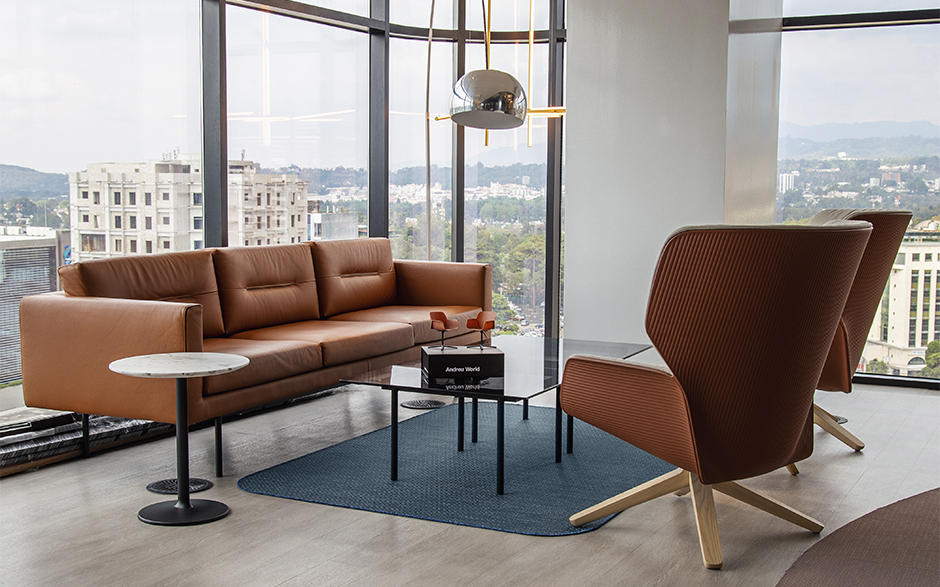
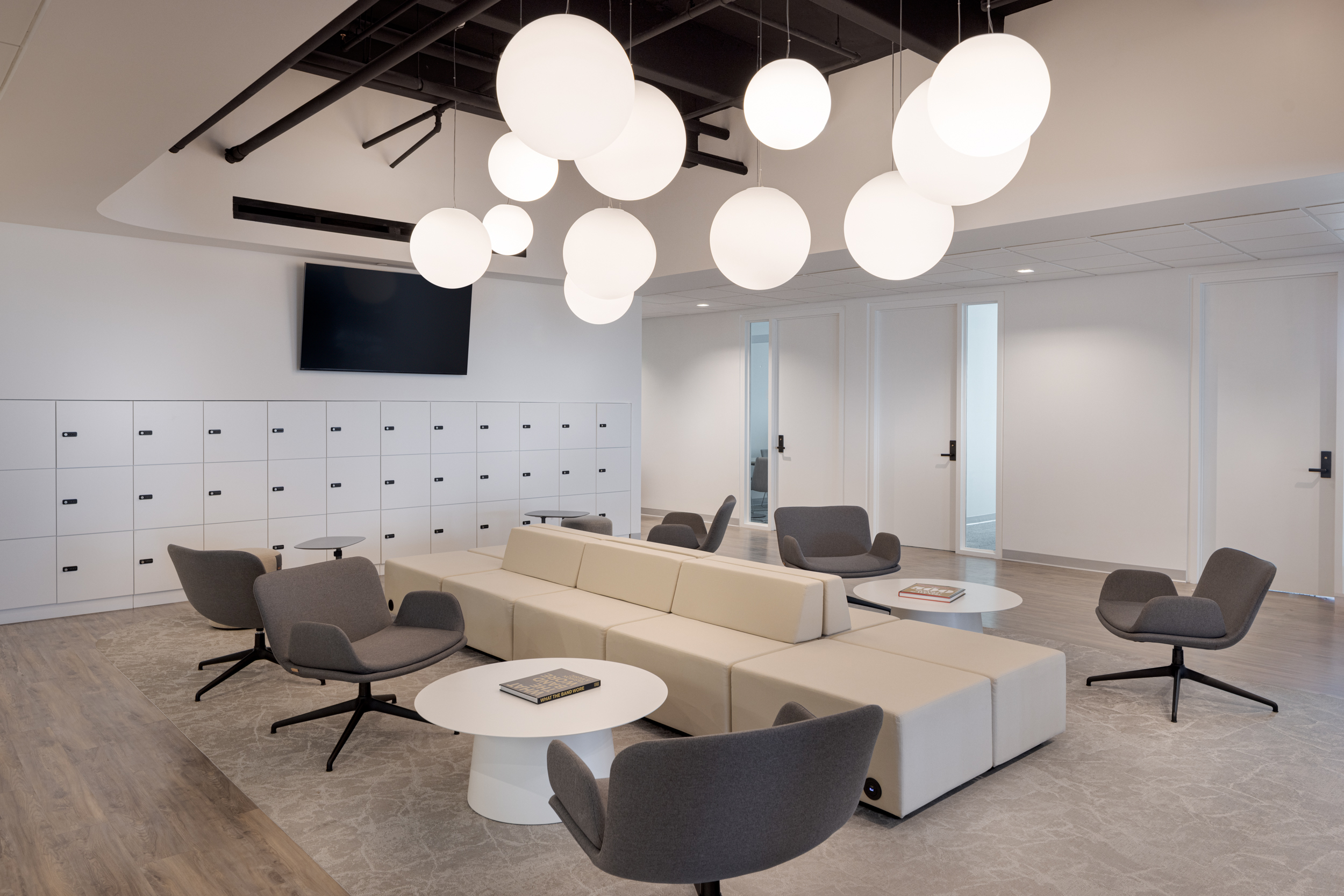
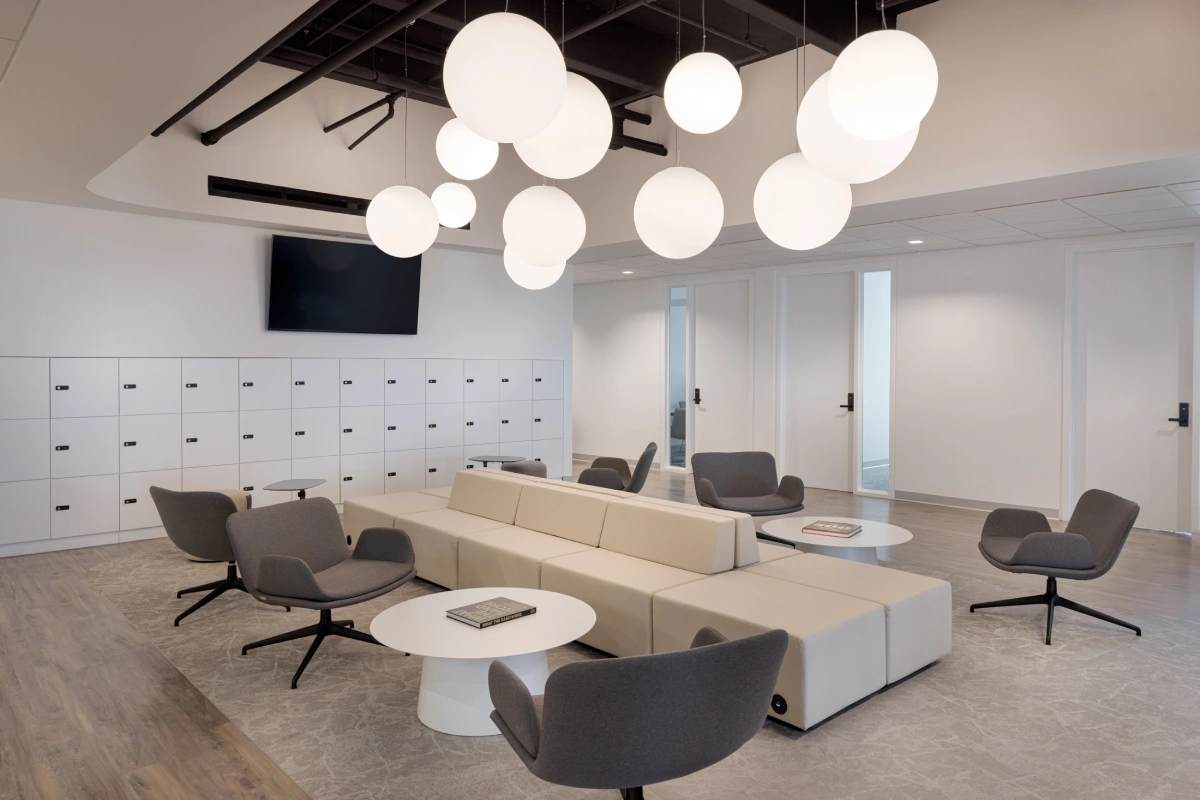
Collaboration zones: lounge seating, occasional tables, writable surfaces, and mobile display options.
Reception: greeting counter or desk, guest seating, and brand expression elements.
B.House works from a portfolio of more than 100 manufacturers. Key specification points:
- No single manufacturer leads in every product category.
- Best task chair in your budget tier may come from one company.
- Best modular meeting table from another.
- Best lounge system from a third.
- Independent dealers like B.House curate across the full market.
Step 4: Flexibility Planning: Building for the Organization You Will Be
The organizations that extract the most value from workspace investments are the ones that plan for change at the outset. Workplace needs shift constantly, headcount grows, hybrid policies evolve, team structures change, new business units form. A workspace that cannot adapt creates an expensive renovation cycle every few years.
Flexible workspace planning uses modular furniture systems, demountable partitions, and technology-ready infrastructure to reduce the cost and disruption of future changes. Benching systems that extend or contract in segments, storage walls that can be relocated, tables on casters that can be rearranged in a day, these design decisions made upfront eliminate most of the cost and disruption of adaptation later.
Infrastructure flexibility matters equally. Hard-wired power and data at fixed locations constrains every future reconfiguration. Raised floor systems with access panels or overhead cable management allow power and data connections to move with the furniture. This infrastructure investment is consistently undervalued at the planning stage and consistently cited as one of the most important decisions in retrospect.
Are you planning for where your company is, or where it is going?
B.House builds flexibility into every workspace specification, ensuring your investment adapts as your organization evolves.
→ Talk to our team at bhouse.design | (305) 644-8464
Step 5: Procurement and Project Management
Corporate workspace projects involve multiple vendors, complex logistics, and fixed move-in dates. The procurement process requires the same level of management as the design process.
Lead time expectations:
- Standard catalog products: 4–6 weeks from order confirmation
- Custom finishes and upholstery: 8–12 weeks
- Made-to-order components: 12–16 weeks
Long-lead items must be identified early and ordered before the full specification is finalized. A missed lead time on a key product can delay an entire floor installation by weeks. Installation sequencing requires active management: furniture goes in after painting and flooring, before final IT and AV. Getting this wrong means furniture is moved multiple times to accommodate other trades, it damages product and delays completion. B.House manages this coordination directly, acting as a single point of accountability for the furniture component of your project and coordinating with your construction manager and technology vendors throughout.
What a Well-Planned Workspace Returns
The return on a well-planned corporate workspace comes from multiple sources simultaneously: improved daily productivity, lower attrition and reduced replacement costs, faster onboarding for new employees who can navigate and use the space intuitively, stronger impressions on clients and recruit candidates who evaluate your office as a proxy for organizational quality, and reduced friction in the daily workflows that determine how much time is spent working versus managing the limitations of a poorly designed environment.
In South Florida's competitive commercial market, organizations that invest in exceptional work environments consistently outperform their peers on talent metrics. B.House has delivered workspace projects in Downtown Miami, Brickell, the Design District, Coral Gables, Aventura, Fort Lauderdale, and West Palm Beach, across professional services, technology, real estate, healthcare, and financial services.
Ready to plan a workspace that performs as well as it looks?
B.House's planning process starts with your brief, not a catalog. Free consultation for corporate clients in South Florida.
→ Begin at bhouse.design or fill out the questionnaire at bhouse.design/questionnaire | (305) 644-8464

.webp)
.webp)