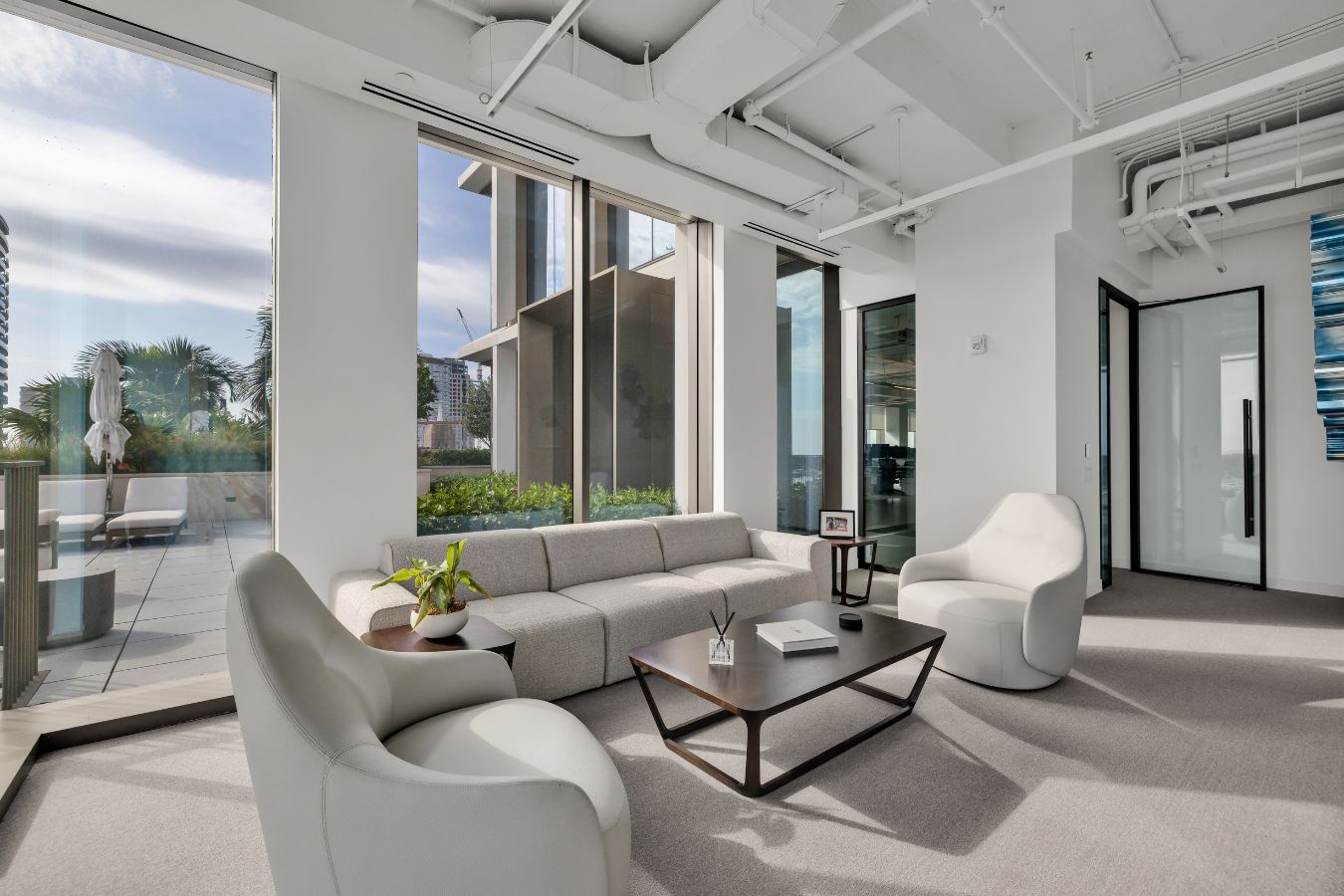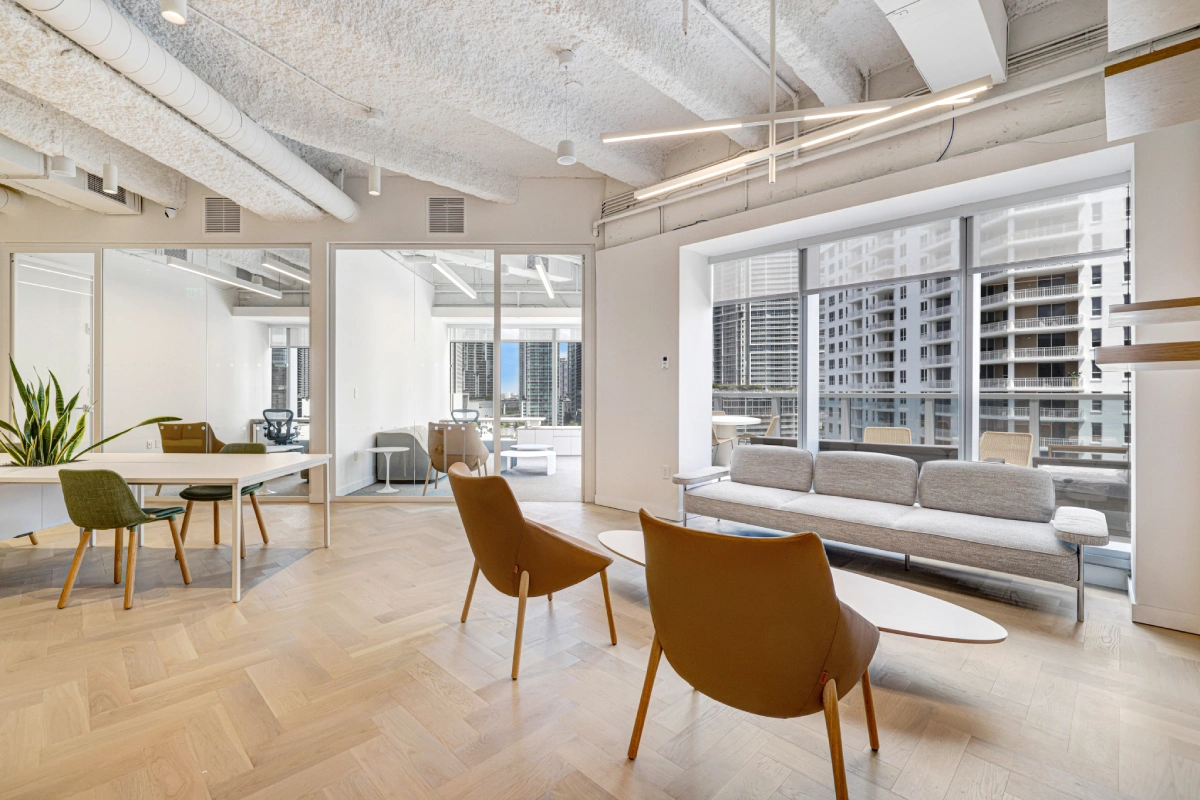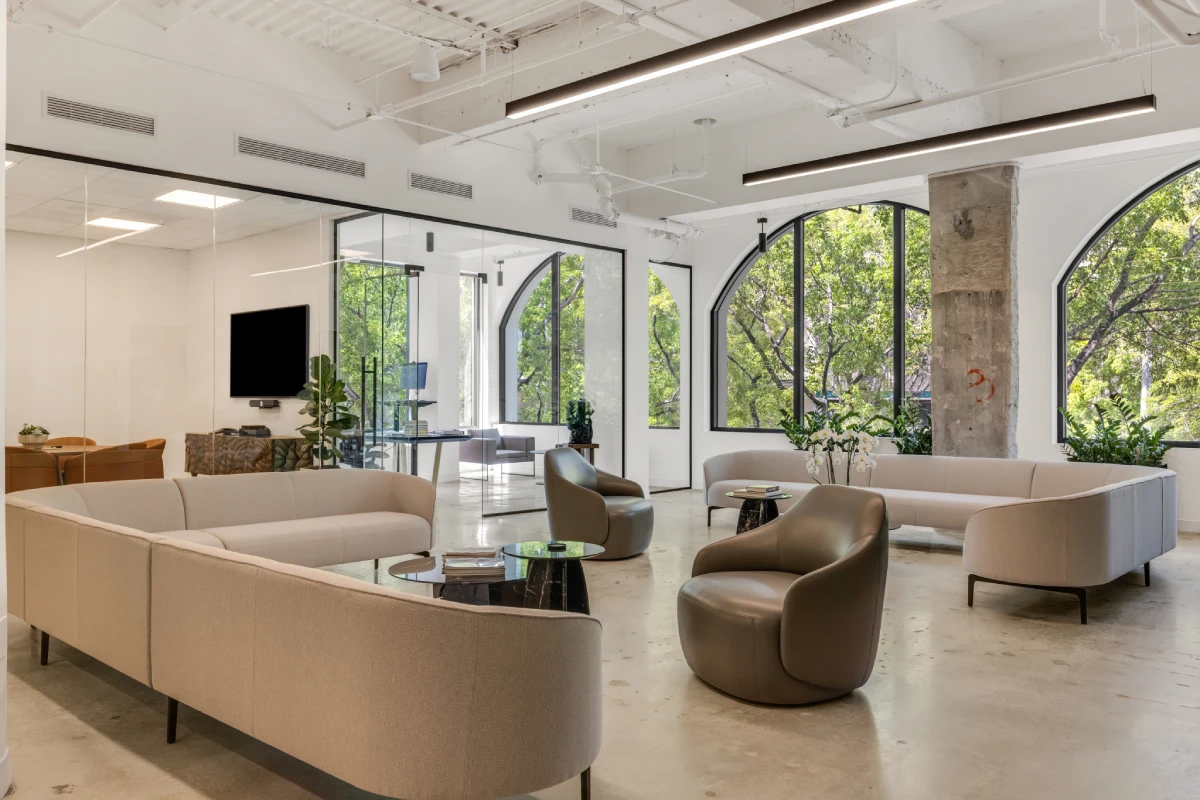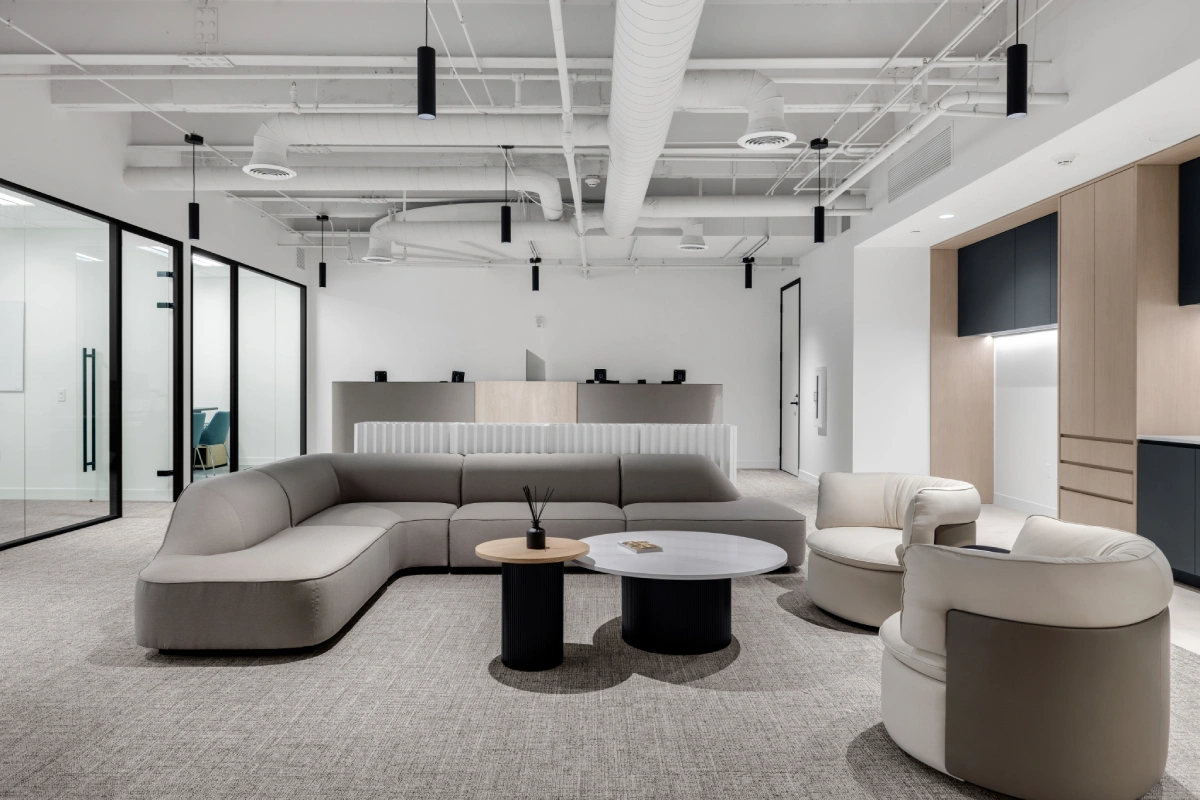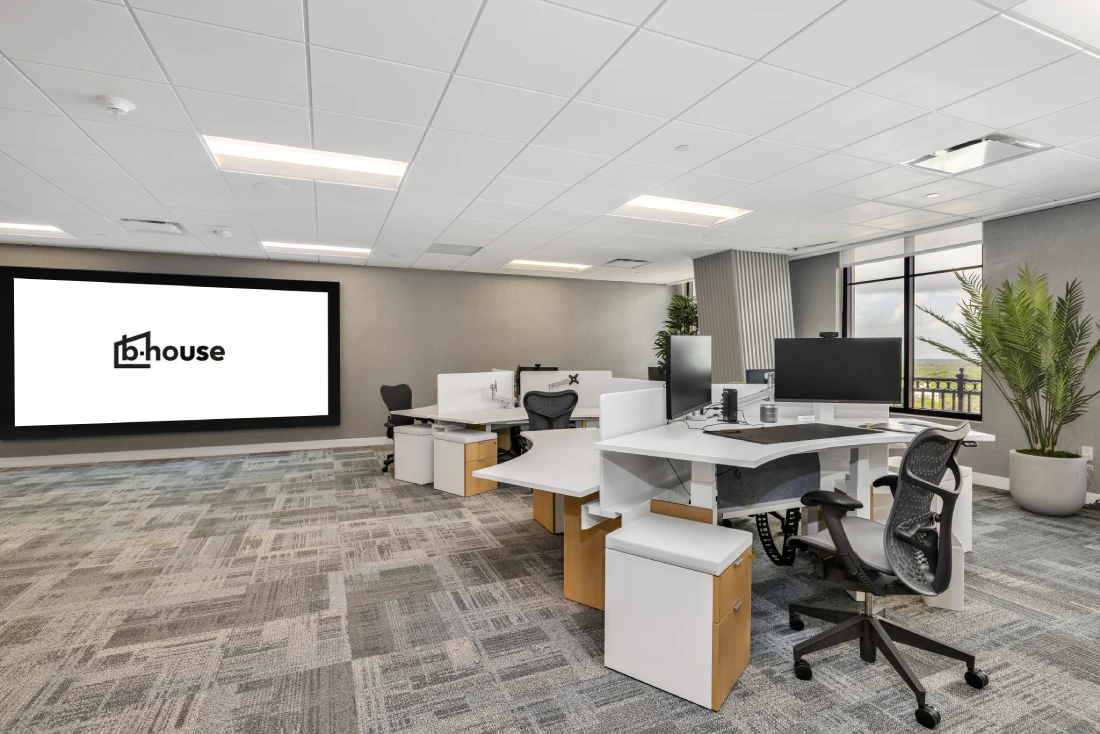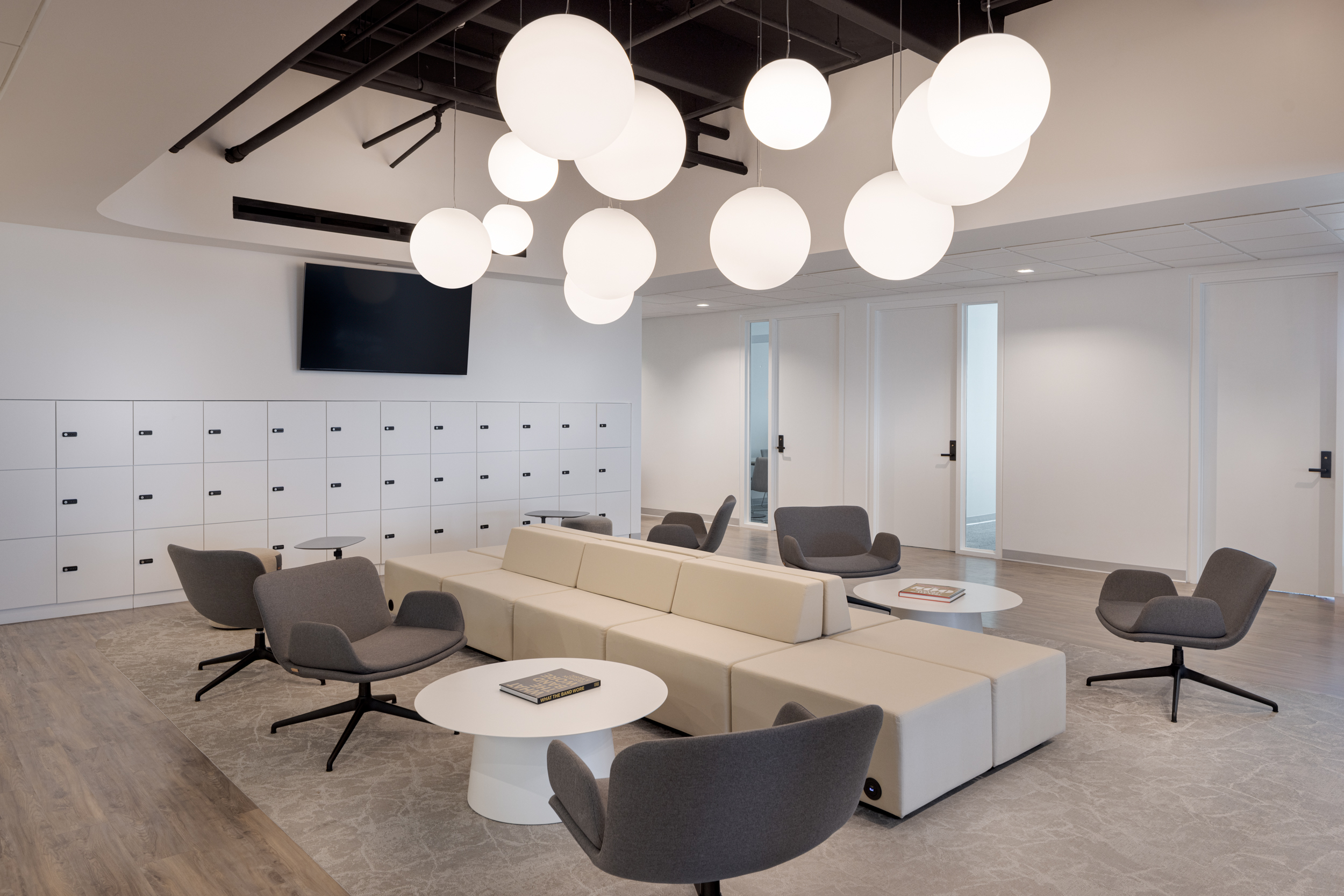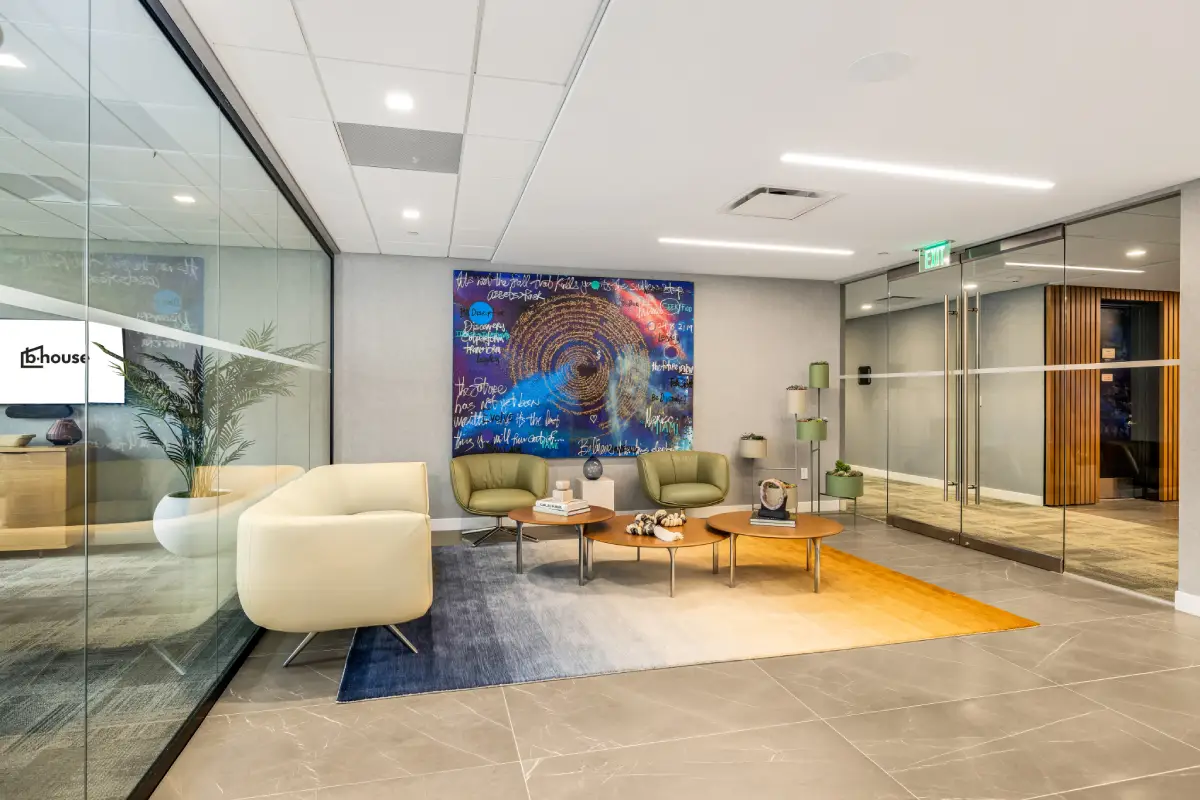
Miami is one of the few cities where architecture directly shapes cultural identity. The iconic Miami Art Deco style, recognized for pastel palettes, geometric forms, terrazzo surfaces, and metallic accents, has begun influencing modern corporate interiors across the region.
For local businesses, incorporating Art Deco elements into office design can create a workspace that feels uniquely tied to Miami’s heritage rather than resembling a generic global office.
Below are the most common questions businesses ask when exploring Art Deco inspired workplaces.
What defines the Miami Art Deco design style?
Miami Art Deco blends modernist geometry with vibrant color and luxurious materials.
- Curved architectural forms
- Geometric patterns
- Pastel color palettes
- Brass and chrome accents
- Terrazzo flooring
Unlike classic European Art Deco, Miami’s version reflects tropical influences and coastal brightness. Learn How to Design a Tropical Modern Workplace
Why are companies adopting Art Deco design in offices?
Businesses increasingly want workplaces that reflect their brand and location.
- Strengthens company identity
- Attracts talent
- Creates memorable client impressions
For Miami companies, referencing Art Deco connects the workplace to the city's architectural legacy.
Can Art Deco work in modern office environments?
Yes, when thoughtfully blended. Successful projects combine Art Deco aesthetics with modern functionality.
- Curved reception desks with integrated technology
- Terrazzo floors paired with modular furniture
- Brass lighting fixtures above collaborative areas
The key is balance rather than full historical recreation.
.webp)
What colors define Art Deco inspired workspaces?
Color plays a major role in the style.
- Soft pinks and corals
- Seafoam greens
- Cream and ivory tones
- Deep navy accents
These colors maintain the bright, coastal atmosphere associated with Miami.
Which materials bring the aesthetic to life?
Materials are where Miami Art Deco design becomes tangible.
- Terrazzo flooring
- Polished metals
- Lacquered wood surfaces
- Velvet or textured upholstery
These materials create a subtle sense of luxury without appearing excessive.
How can small offices incorporate Art Deco elements?
Even compact spaces can reference the style through details.
- Geometric wall panels
- Curved mirrors
- Brass desk lamps
- Patterned rugs
Small touches allow businesses to capture the aesthetic without major renovations.
Does Art Deco conflict with modern workplace functionality?
Not at all. The style adapts well to modern requirements such as:
- Flexible workstations
- Hybrid meeting spaces
- Technology integration
Designers often combine Deco-inspired surfaces with contemporary office furniture systems.
How does this design help attract talent?
Workplace experience is increasingly important to employees. Offices that reflect local culture tend to feel more authentic and inspiring. For younger professionals especially, a workspace that feels distinctive and creative often influences employer perception.
Is Art Deco expensive to implement?
Costs vary depending on scope.
Full architectural elements like terrazzo floors may require investment, but many Art Deco elements are affordable:
- Lighting fixtures
- Decorative panels
- Accent furniture
These additions can significantly influence the overall atmosphere.
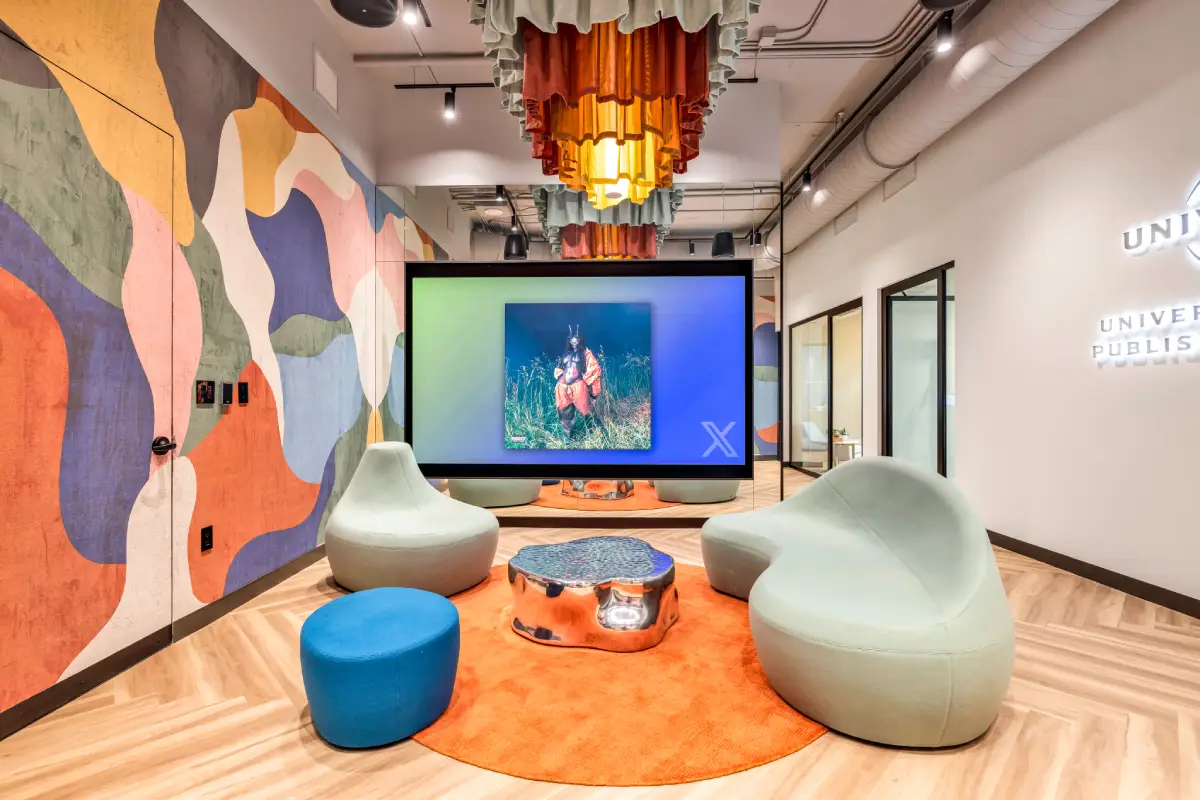
What mistakes should businesses avoid?
- Overdoing decorative elements: Too many patterns or metals can feel theatrical.
- Ignoring workplace functionality: Design must still support workflow and productivity.
- Copying hotels instead of offices: Corporate spaces require different lighting and furniture strategies.
When should a company hire a design professional?
Professional designers help balance aesthetics with operational needs. They are especially valuable when:
- Renovating large office spaces
- Integrating custom architectural features
- Planning furniture and layout simultaneously
A designer ensures the final space reflects both brand identity and employee needs.