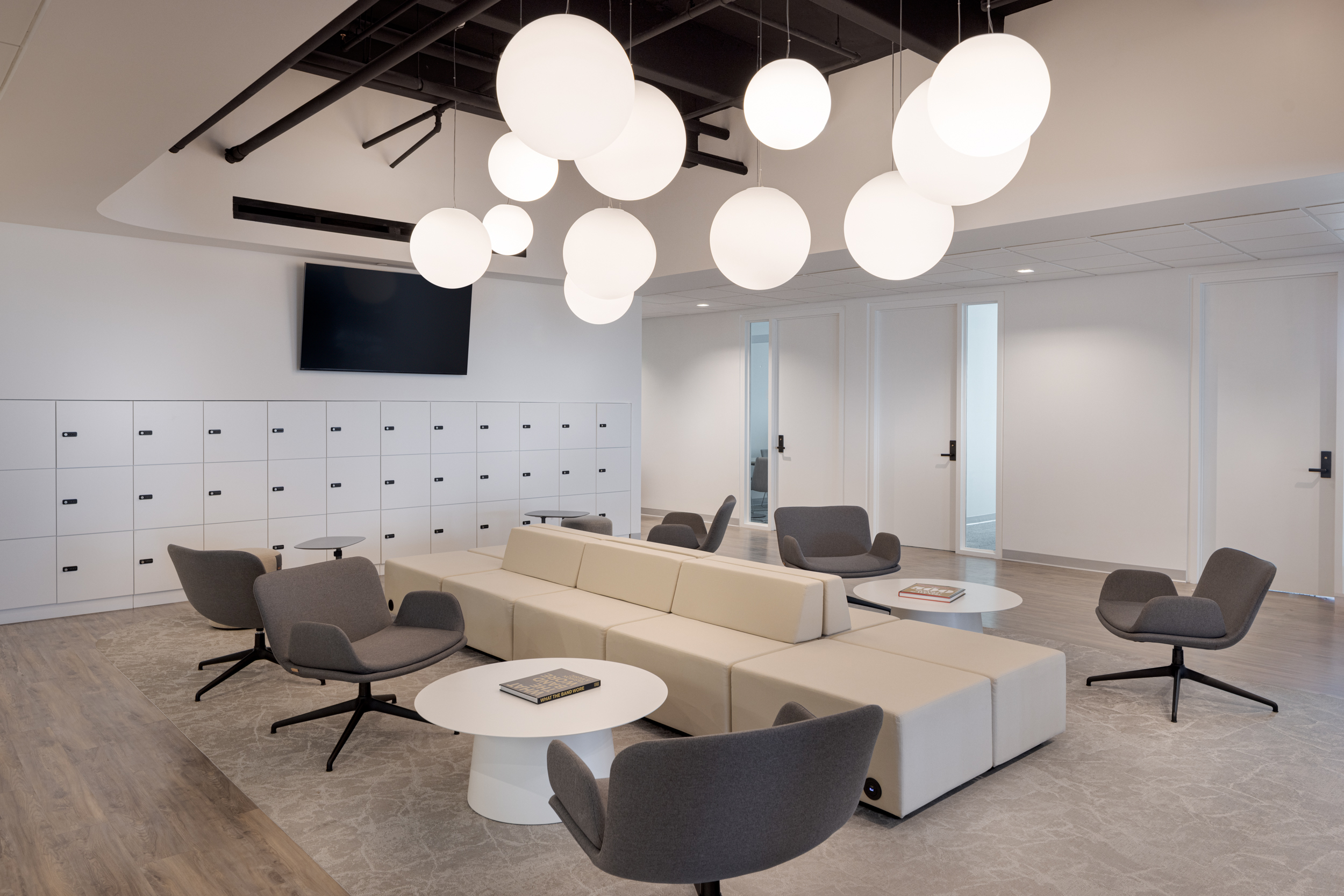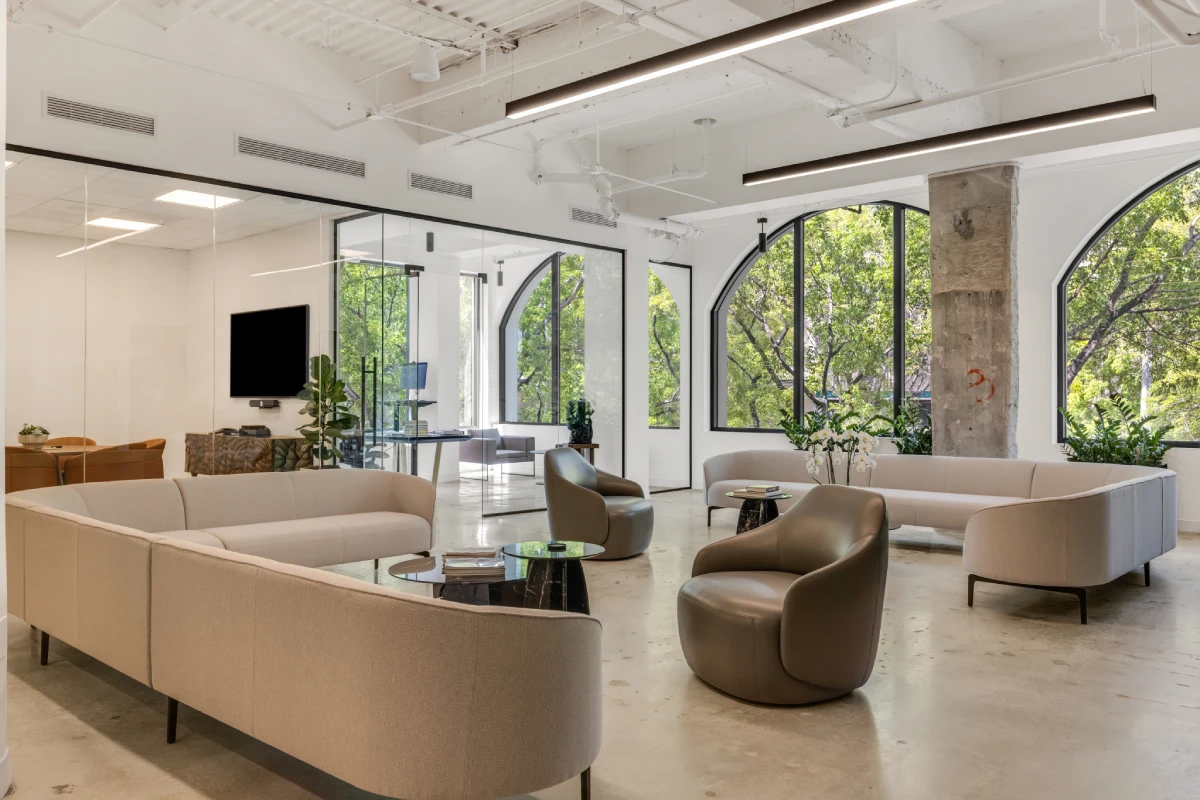
A corporate reception area is often the first physical space a visitor, client, or new hire experiences, and the furniture in that space carries more weight than its square footage suggests. The right combination of reception desk, seating, and supporting pieces signals professionalism and brand identity within seconds, while the wrong combination can undercut an otherwise strong first impression.
This guide walks through the furniture pieces that matter most in a corporate lobby or reception area, how to prioritize them based on available space and visitor traffic, and what to consider around maintenance, durability, and workplace style before making a purchase.
Reception Desks
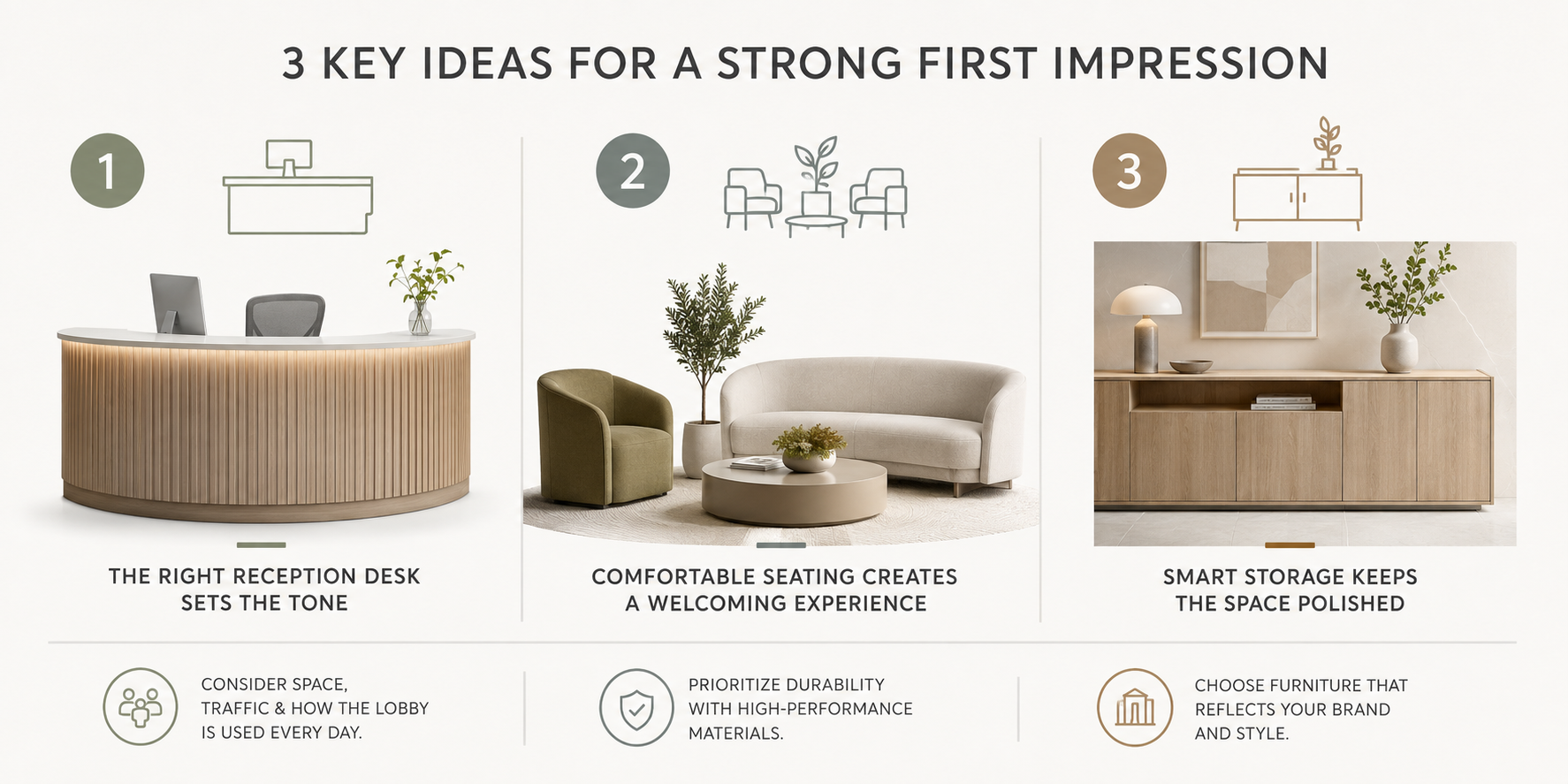
The reception desk anchors the entire space and is typically the first purchasing decision in a lobby renovation. Desk size and configuration should be driven by how many staff members work the reception area at once, how much storage is needed behind the desk, and whether the desk needs to accommodate visitor check-in technology such as tablets or sign-in kiosks.
Design Trends:
- Modular reception desks built from configurable components are gaining ground over fixed single-piece desks, since they allow the desk to be reconfigured or expanded as staffing needs or check-in technology change, without requiring a full replacement.
- Height-adjustable reception desks are also becoming more common, giving reception staff the ergonomic flexibility to sit or stand throughout the day and accommodating team members of different heights or mobility needs without a custom-built desk.
Lounge Seating and Guest Chairs
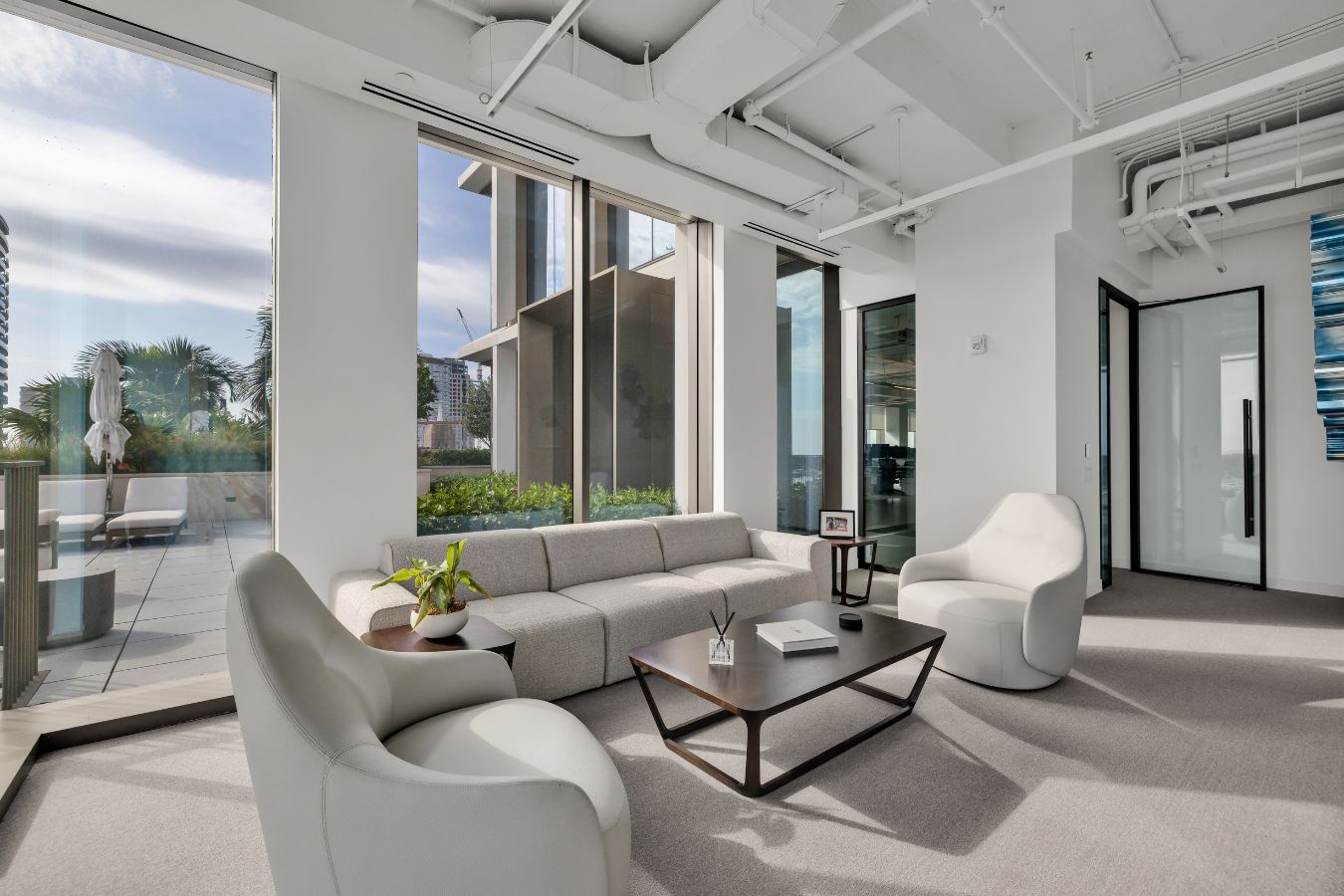
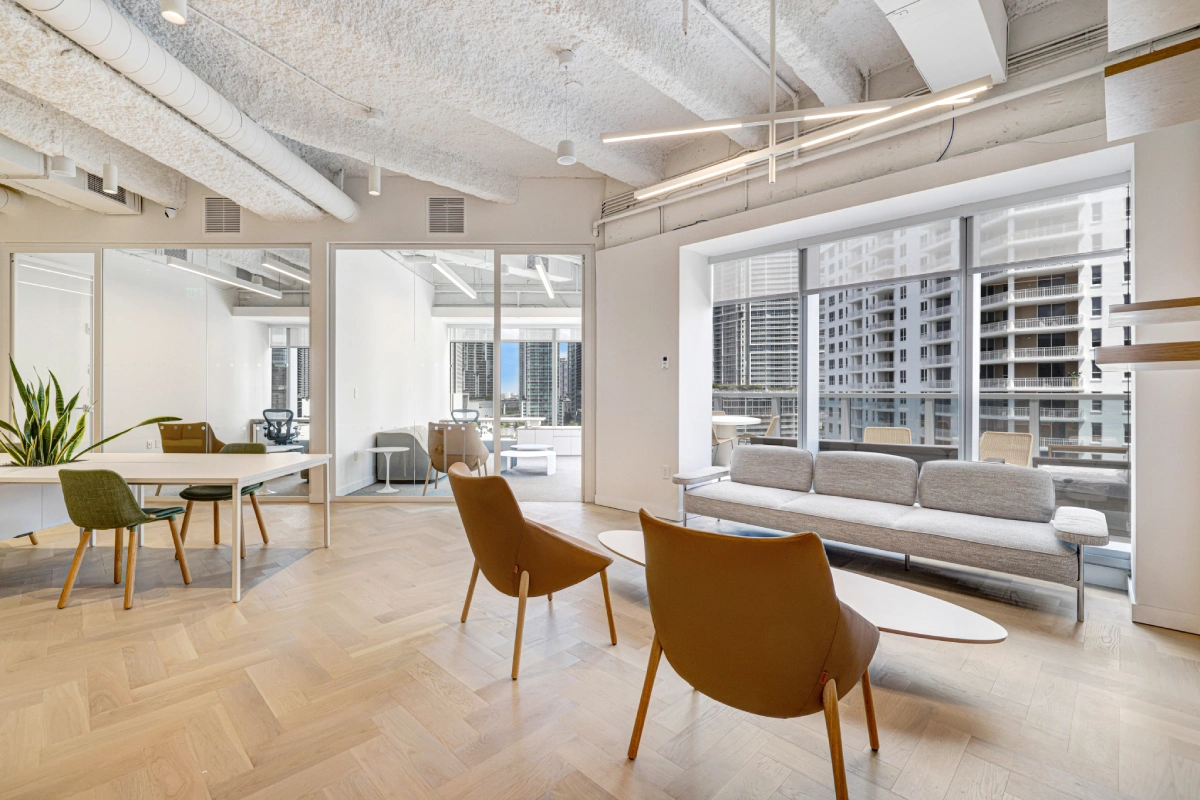
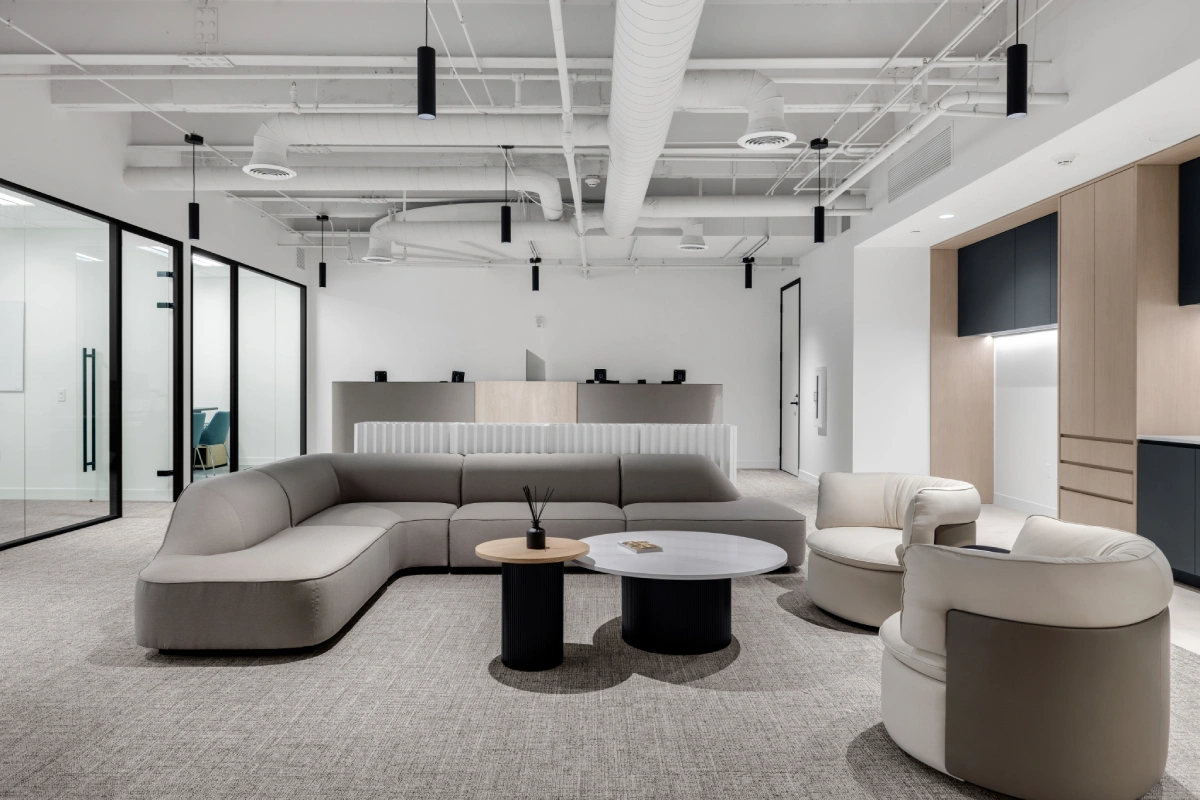
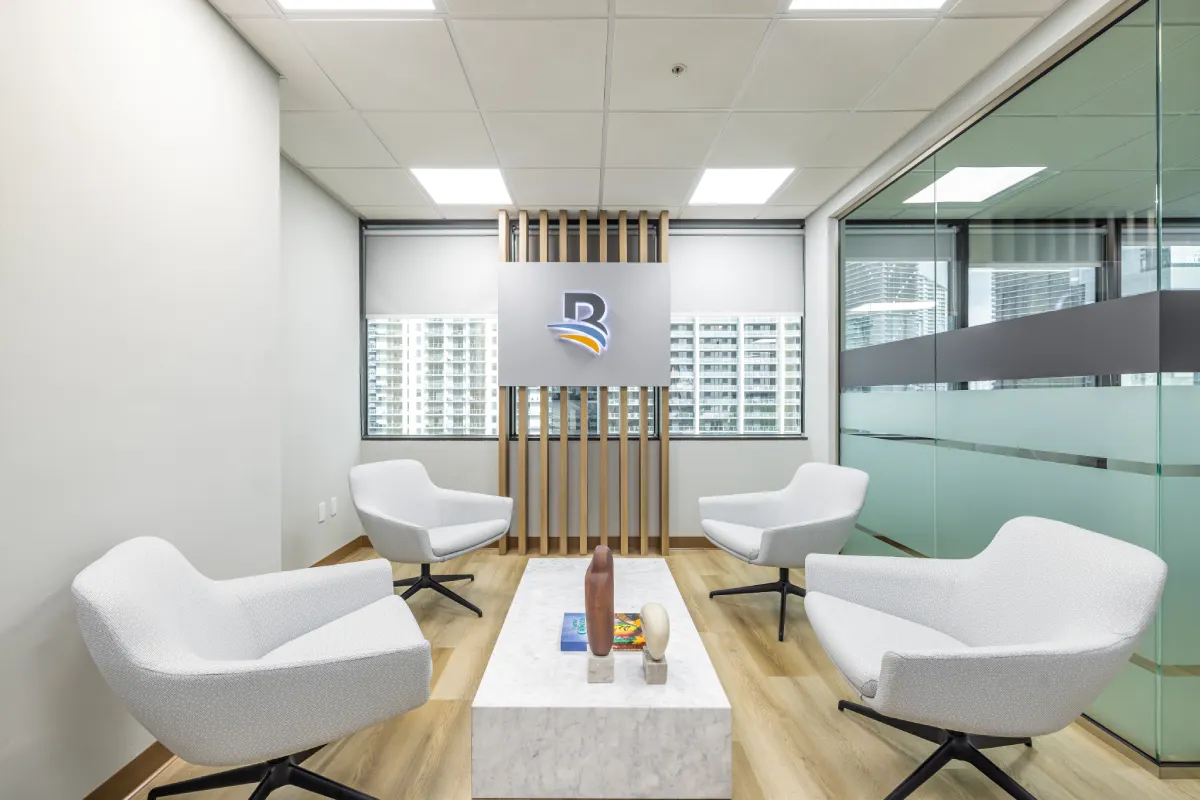
The choice between individual guest chairs and grouped lounge seating depends largely on visitor volume and how long people typically wait. Spaces with brief, high-turnover visits often do well with a compact row of guest chairs near the entrance, while spaces where visitors linger, or where reception doubles as an informal meeting area, benefit from a lounge grouping that feels more like a living room than a waiting room.
Design Trend: hospitality-inspired lounge seating arranged in small conversational groupings is increasingly replacing rows of individual guest chairs, borrowing directly from hotel lobby design to make waiting areas feel more like a hospitality space than a holding area.
Coffee Tables and Supporting Pieces
Coffee tables, side tables, and small accent pieces round out a lounge grouping and give the space a finished, intentional feel. In compact lobbies, a single well-scaled coffee table paired with a side table often works better than multiple smaller pieces, which can make a tight footprint feel cluttered rather than composed.
Storage Solutions
Reception staff need discreet storage for mail, supplies, coats, and personal items, ideally built into or matched to the finish of the reception desk so it does not visually compete with the space. Storage that is functional but out of sight keeps the reception area looking polished even during a busy workday.
Design Trend: high-performance, stain- and abrasion-resistant fabrics are now standard expectations for reception seating rather than an upgrade, since lobby furniture endures more daily traffic and wear than almost any other seating in the building.
Choosing Furniture Based on Space, Traffic, and Style
Available square footage, expected visitor volume, whether the lobby needs to double as an informal meeting or waiting space, and the surrounding workplace style, whether traditional, modern, or hospitality-inspired, all shape which combination of desk, seating, and supporting pieces makes sense. A useful approach is to map out how the space is actually used on a typical day before selecting furniture, rather than furnishing first and adjusting later.
| Furniture Piece | Key Consideration | Best Fit For |
|---|---|---|
| Reception Desk | Size, storage, technology integration | High-traffic lobbies, multi-staff reception |
| Lounge Seating | Grouping vs. individual chairs, fabric durability | Waiting areas, informal meeting use |
| Guest Chairs | Compact footprint, quick turnover | Small lobbies, brief visitor stays |
| Storage | Discreet access, matching finish | Reception staff daily operations |
B.House Solution
B.House sources reception furniture from manufacturers such as Andreu World, Arper, and Hbf, giving South Florida businesses access to lounge seating, reception desks, and guest chairs built for both hospitality-grade comfort and commercial-grade durability. Our team helps match these collections to your lobby's traffic patterns, available space, and brand style.
Frequently Asked Questions
How do I know how large my reception desk should be?
Reception desk size should be driven by how many staff work the desk at once, how much storage and technology it needs to house, and the overall footprint of the lobby, since an oversized desk can overwhelm a small space just as easily as an undersized desk can look inadequate in a larger one.
Is lounge seating or individual guest chairs better for a small lobby?
Compact lobbies with brief visitor stays generally do well with a small row of guest chairs, while lounge seating groupings work better when there is enough square footage to accommodate a coffee table and side table without crowding the walkway.
What fabric should I choose for reception seating that gets heavy daily use?
High-performance fabrics rated for stain and abrasion resistance are the standard choice for reception seating, since this furniture typically sees more daily wear than seating anywhere else in the office.
How often does reception furniture typically need to be replaced?
Commercial-grade reception furniture that is properly maintained typically holds up for seven to ten years, though heavy-traffic lobbies may see wear on high-contact surfaces like armrests and desk edges sooner than that.
Can reception furniture be customized to match our brand colors?
Manufacturers such as Andreu World, Arper, and Hbf offer a range of fabric, finish, and upholstery options, which typically allows reception furniture to be coordinated with brand colors and materials used elsewhere in the office.
What is the difference between a modular and a fixed reception desk?
A modular reception desk is built from configurable components that can be rearranged or expanded over time, while a fixed desk is a single-piece design that offers a cleaner look but less flexibility if staffing or technology needs change later.
Next Steps
Furnishing or renovating a corporate reception area is easier with guidance from a team that works with these collections daily. Consult with B.House's specialists to select reception furniture tailored to your visitor traffic, available space, and brand identity.