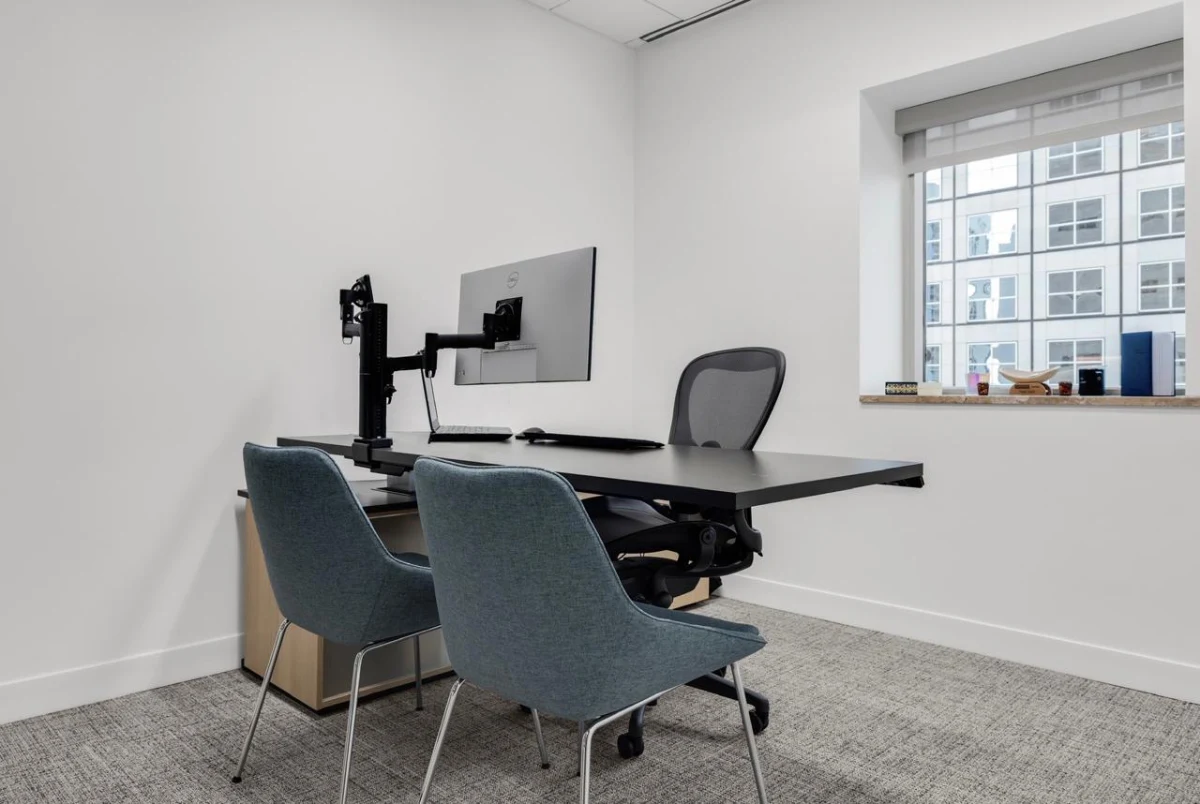
Commercial-grade ergonomic seating is defined by testing standards and specification thresholds, not by price point or marketing language. The baseline reference in North America is BIFMA (Business and Institutional Furniture Manufacturers Association) certification, which tests chairs for structural integrity, stability, and durability under simulated heavy daily use over a defined cycle count.
A chair that has not been BIFMA-tested may use identical-sounding language, such as "ergonomic," "adjustable lumbar," or "commercial use," without having been independently verified against any defined standard. For procurement purposes, BIFMA certification, or an equivalent documented testing standard, should be treated as a non-negotiable baseline requirement, not a nice-to-have.
Specifications That Matter in Procurement Decisions
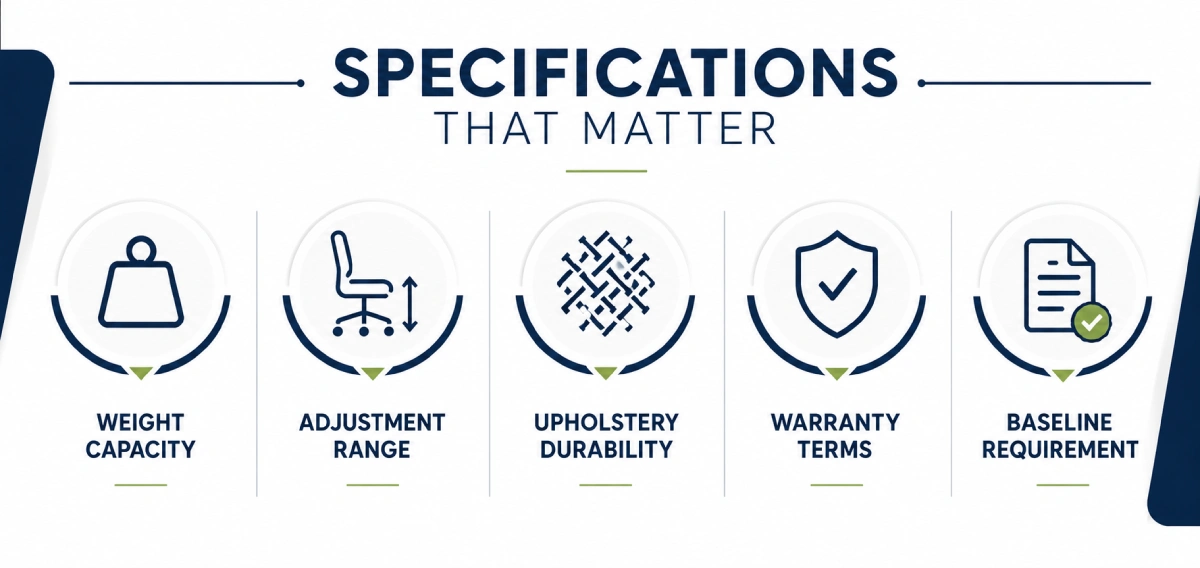
Weight Capacity
Commercial-grade chairs are typically rated for 250 to 300 or more pounds as standard, with high-capacity options rated for 350 to 500 or more pounds available from most major manufacturers. Procurement should specify weight capacity based on the actual workforce the chairs will serve, not the manufacturer's lowest-tier default rating, and should confirm that high-capacity options carry the same warranty terms as standard models, which is not always the case.
Adjustment Range
At minimum, commercial procurement should require a seat height range of 16 to 21 inches, independently adjustable seat depth, height- and depth-adjustable lumbar support, and multi-directional (three-axis minimum) armrests. Chairs that fall short of this range will fail to properly fit a meaningful percentage of any reasonably diverse workforce, creating downstream ergonomic complaints and potential injury exposure.
Upholstery Durability
Upholstery is specified by double rub count, a textile industry durability rating measuring abrasion resistance. Commercial-grade upholstery should carry a minimum rating of 30,000 double rubs. High-traffic or shared-seating environments such as hot-desking, training rooms, and reception areas should specify 100,000 or more double rubs. Vinyl and performance textiles rated for cleanability are particularly relevant for healthcare-adjacent and regulated environments where surface disinfection is routine.
Warranty Terms
Commercial-grade chair warranties typically range from 10 years to lifetime coverage on mechanisms, depending on brand. Procurement should confirm exactly what is covered, since frame, mechanism, upholstery, and casters are often warrantied separately and for different durations, and should also confirm whether the warranty transfers if chairs are redistributed between locations or departments.
Seating for Regulated and Compliance-Sensitive Environments
Healthcare-adjacent, legal, and financial services environments frequently carry additional procurement considerations beyond standard commercial specification, driven by infection control protocols, accessibility compliance, or internal risk management policies that require documented sourcing.
Healthcare-Adjacent Environments
Medical office administration, healthcare-adjacent corporate spaces, and clinical-administrative environments typically require seating with cleanable, non-porous upholstery options, such as vinyl or performance textiles rated for disinfectant exposure, and may require documentation confirming materials meet relevant infection control guidance. Antimicrobial upholstery treatments are increasingly specified, though procurement should verify the specific claims and testing behind any antimicrobial marketing language.
Legal Environments
Law firms typically prioritize a combination of client-facing aesthetic quality (for reception and conference seating) and long-duration ergonomic performance (for attorney and paralegal task seating), given extended desk-based work hours. Documentation requirements are generally lighter than healthcare, but warranty and durability specifications remain important given the multi-year occupancy typical of law firm leases.
Financial Services
Financial services firms, particularly those in regulated entities, may require procurement documentation as part of broader vendor and asset management compliance processes, even though the seating itself isn't subject to industry-specific regulation. ADA compliance documentation for adjustment range and accessibility is the most common specific requirement in this sector.
Summary Table: Sector Needs and Key Product Characteristics
| Sector | Primary Needs | Popular Product Characteristics |
|---|---|---|
| Healthcare-adjacent / clinical-administrative | Cleanable upholstery, infection control compatibility, durability | Vinyl/performance textile, sealed seams, 100,000+ double rub rating |
| Legal | Client-facing aesthetic + long-duration ergonomic comfort | Leather or premium textile, auto-adjusting recline, executive and task variants |
| Financial services | ADA compliance documentation, professional aesthetic | Full ergonomic adjustment range, documented compliance specs, multiple finish options |
| General corporate / open-plan | Cost efficiency at volume, shared-seating durability | BIFMA-certified, mesh or textile back, weight-sensitive auto-recline for hot-desking |
Humanscale Available Through B.House
Humanscale's commercial seating line, including the Liberty, Diffrient World, and Freedom chairs, is among the most specified for procurement decisions where automatic ergonomic adjustment, lifetime mechanism warranty, and shared-seating performance are priorities. Because Humanscale's chairs auto-calibrate to user weight without manual adjustment, they perform consistently in hot-desk and shared-seating environments common in healthcare-adjacent and general corporate settings alike, a meaningful procurement advantage when chairs will be used by multiple employees across a workday.
For a full breakdown of Humanscale's product line, ergonomic mechanisms, and B.House's role as an authorized Miami dealer, see our companion article: Humanscale Office Furniture in Miami: Authorized Dealer for Corporate Ergonomic Solutions.
B.House supplies and helps specify commercial-grade ergonomic seating for corporate and regulated environments across Florida, including Humanscale.
Request a procurement consultation for your seating specification at bhouse.design
FAQ: Commercial Ergonomic Office Chairs
- What is the minimum certification I should require when procuring commercial ergonomic chairs?
- BIFMA certification should be treated as a non-negotiable baseline. It is the North American standard for commercial furniture durability and safety testing, verifying structural integrity and stability under simulated heavy daily use. Without it, any "ergonomic" or "commercial-grade" claim is unverified.
- How do I know if a chair is appropriate for a healthcare-adjacent or regulated environment?
- Confirm the upholstery is rated for cleanability and disinfectant exposure (vinyl or performance textile rather than standard fabric), request documentation on double rub count (100,000 or more recommended for high-traffic regulated environments), and verify ADA compliance documentation for adjustment range if accessibility compliance is part of your organization's procurement requirements.
- Is Humanscale worth the investment for general corporate seating?
- It depends on the use case. For shared or hot-desk seating where consistent automatic ergonomic performance across multiple users matters, Humanscale's auto-adjusting mechanisms deliver a meaningful procurement advantage. For assigned, single-user seating in general corporate environments where budget efficiency is the priority, procurement teams should weigh Humanscale's premium positioning against the specific ergonomic demands of the role, since the auto-calibration feature delivers the most value in multi-user or rotating-seat scenarios.