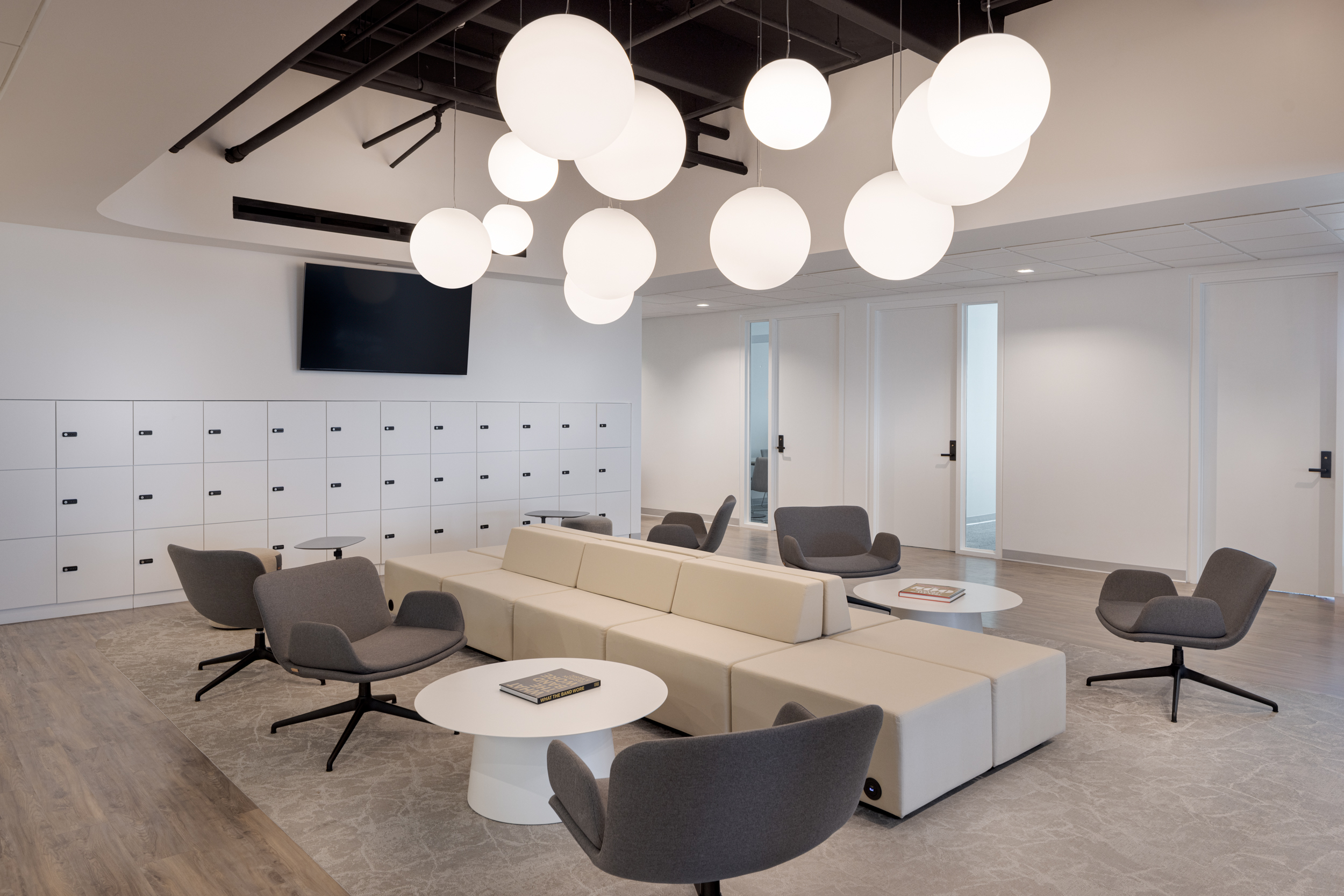
Organizations investing in hybrid office furniture are frequently making decisions based on assumption rather than evidence. They estimate how many desks are needed, guess at the ratio of collaboration space to individual workstations, and allocate ergonomic seating budgets based on headcount rather than actual usage. The result is often over-furnished in some areas, under-resourced in others, and misaligned with how employees actually work.
An office space utilization study changes that equation. By collecting and analyzing objective data on how office spaces and furniture are actually used, organizations can make furniture decisions rooted in evidence, reducing waste, improving employee experience, and building workplaces that perform.
This article is written for Facility Managers and Corporate Real Estate Managers evaluating whether a utilization study is the right tool for their organization, and how to translate utilization data into actionable furniture strategy.
What Is an Office Space Utilization Study?
An office space utilization study is a structured data collection and analysis process that measures how physical office spaces : workstations, meeting rooms, collaboration zones, and shared amenities are actually occupied and used over a defined period of time.
Unlike occupancy surveys or badge access counts, a comprehensive utilization study captures not just whether a space is occupied, but how it is being used: the type of activity taking place, the duration of occupancy, and the frequency of use across different time periods and days of the week.
The output of a utilization study is a dataset , typically presented as utilization rates by space type, time-of-day patterns, peak occupancy maps, and comparative analysis between different zones or floors , that enables decision-makers to evaluate current space performance against organizational needs.
What Data Does a Utilization Study Collect?
The specific data collected in a utilization study depends on the measurement methodology used. The most common approaches include:
Passive Badge Access and WiFi Data
Many organizations begin utilization analysis with data that is already being collected , building access badge records and WiFi connection logs. Badge data shows when employees enter and exit the building; WiFi data provides a proxy for where employees are located within the floor. These methods are relatively low-cost and non-intrusive but provide limited granularity about specific furniture or zone usage.
Sensor-Based Occupancy Monitoring
Overhead occupancy sensors, under-desk presence sensors, and desk booking system data provide the highest granularity utilization data. These systems measure occupancy at the individual workstation level, capture time-of-day patterns with high precision, and can distinguish between a space that is occupied and one that has personal items placed on it without an active user. For organizations making significant furniture investment decisions, sensor-based data is the gold standard.
Manual Space Observation Studies
In environments where sensor deployment is not feasible or cost-justified, trained observers conduct systematic walkthroughs of the space at defined intervals , typically once per hour , recording occupancy status for each workstation, meeting room, and collaboration zone. While more labor-intensive, manual observation studies can be highly accurate when properly designed and executed.
Employee Surveys and Experience Data
Quantitative occupancy data tells you how spaces are used but not why. Employee experience surveys capture qualitative context: which types of spaces employees find most productive, which furniture configurations support their work best, and what gaps between available spaces and actual work needs exist. Combining occupancy data with experience data produces the most actionable utilization insights.
| Measurement Method | Data Granularity | Best For | Relative Cost |
|---|---|---|---|
| Badge / WiFi Data | Building/floor level | Initial occupancy baseline | Low |
| Occupancy Sensors | Workstation level | High-precision furniture decisions | Medium–High |
| Manual Observation | Zone/desk level | Targeted studies without sensor infrastructure | Medium |
| Employee Surveys | Experience-based | Qualitative context and gap analysis | Low |
When Should a Company Commission a Utilization Study?
Not every furniture decision requires a formal utilization study. However, there are several organizational conditions and decision triggers that make commissioning a study essential:
Pre-Lease Renewal or Relocation
When a lease renewal or office relocation is approaching, a utilization study provides objective evidence for right-sizing the new space and its furniture inventory. Organizations that renew or relocate based on pre-pandemic headcount projections rather than actual hybrid utilization patterns frequently over-lease square footage and over-purchase furniture: Both expensive mistakes.
Transition to Hybrid Work Models
Organizations transitioning from traditional assigned-seating to hybrid hot desking models need utilization data to determine appropriate desk-sharing ratios. A common mistake is assuming that a 3-day-per-week hybrid policy means 60 percent desk utilization , actual utilization patterns are almost always more complex, with peak occupancy concentrated on specific days and times.
Significant Furniture Investment Decision
When an organization is preparing to invest $200,000 or more in new office furniture, a utilization study is a cost-justified prerequisite. The study cost , typically a fraction of total furniture investment, is recovered through better-targeted procurement decisions, reduced over-specification, and avoiding purchases for space types that are consistently underused.
Post-Occupancy Performance Evaluation
Organizations that have recently completed a major office renovation or furniture refresh benefit from post-occupancy utilization studies that validate whether the furniture investments made are performing as intended. These studies identify mismatches between design intent and actual usage and provide the data needed to optimize configurations before they become embedded problems.
BHouse Solution Capsule: Utilization Study Advisory
BHouse works with Facility Managers and Corporate Real Estate teams across Florida to design and execute office space utilization studies that produce actionable furniture strategy recommendations. We integrate occupancy data with space programming requirements to deliver a clear roadmap for furniture investment , aligned with how your people actually work.
How Do Utilization Findings Translate Into Furniture Decisions?
The value of a utilization study is not in the data itself , it is in how the data translates into better furniture decisions. For Facility Managers and Corporate Real Estate Managers, utilization findings drive five categories of furniture strategy:
Workstation Ratio Optimization
Utilization studies consistently reveal that hybrid offices have lower peak concurrent occupancy than organizations assume. Most hybrid environments operate at 60 to 75 percent of desk inventory during peak periods , meaning organizations can reduce workstation counts, rightsize desk inventories, and reallocate budget to higher-value furniture typologies without creating an occupancy shortage. Utilization data determines the appropriate desk-sharing ratio for hot desking environments , typically expressed as a ratio of desks per employee, such as 0.7:1 or 0.8:1.
Desk-Sharing Strategy Development
Raw utilization rates must be combined with peak occupancy analysis and day-of-week patterns to develop a desk-sharing strategy that actually works. A hybrid organization with Tuesday through Thursday peak attendance requires a different desk inventory strategy than one with evenly distributed attendance. Utilization data identifies these patterns and enables Facility Managers to build desk-sharing policies that align with actual behavior.
Meeting Room Furniture Allocation
Meeting room utilization is frequently the most imbalanced finding in corporate real estate studies. Large boardroom-style conference rooms are typically underutilized, while small group meeting rooms are perpetually over-subscribed. Utilization data enables Facility Managers to right-size meeting room furniture inventories ; converting large, low-utilization rooms into smaller high-utility configurations, and ensuring frequently-used rooms are furnished for the group sizes that actually use them.
Ergonomic Seating Requirements
In hot desking environments, ergonomic seating strategy is different from assigned-seating environments. Utilization data identifies which workstation zones experience the highest occupancy intensity and those zones warrant investment in higher-specification ergonomic seating. Zones with lower utilization can be furnished with mid-grade seating without compromising employee wellbeing.
Future Furniture Investment Planning
Utilization studies conducted over 6 to 12 month periods reveal long-term trends , seasonal occupancy fluctuations, shifts in collaboration zone demand, and emerging space types that employees seek but cannot find. These trends inform multi-year furniture investment planning, enabling organizations to phase furniture procurement in alignment with evolving workplace needs rather than making speculative bulk purchases.
| Utilization Finding | Furniture Decision Implication |
|---|---|
| Peak concurrent occupancy is 65% of headcount | Desk-sharing ratio of 0.75:1 is appropriate; reduce workstation inventory |
| Conference rooms >8 people used at 20% utilization | Convert large rooms to smaller collaborative furniture configurations |
| Tuesday–Thursday shows 2x Monday/Friday occupancy | Ergonomic seating at all peak-zone desks; basic seating at low-use zones |
| Collaboration zones occupied 85%+ during peak hours | Expand collaboration furniture inventory; add flexible lounge seating |
| Phone booth / focus pod demand exceeds availability | Add acoustic seating pods and focus work furniture in underused corners |
BHouse Solution Capsule: From Data to Furniture Strategy
BHouse converts utilization study findings into fully developed furniture strategy and implementation roadmaps. Our team maps occupancy data to furniture typologies, develops desk-sharing ratio recommendations, right-sizes meeting room and collaboration furniture specifications, and produces a prioritized procurement plan aligned with your budget and timeline.
Building a Furniture Strategy Recommendation Report
The output of a utilization study engagement should be more than a data dashboard. For Facility Managers and Corporate Real Estate Managers, the actionable deliverable is a Furniture Strategy Recommendation Report that translates data into decisions. A complete Furniture Strategy Recommendation Report includes:
- Executive summary : Key utilization findings and primary furniture strategy recommendations
- Utilization analysis: Ocupancy rates by zone, time-of-day patterns, and peak versus average utilization comparisons
- Desk inventory analysis : Current desk count versus utilization-optimized recommendation
- Furniture typology recommendations : Specific furniture categories to add, reduce, or reconfigure based on utilization findings
- Phased implementation roadmap :Sequenced procurement and installation recommendations aligned to budget cycles
- Investment estimate: Indicative budget ranges for recommended furniture changes
Frequently Asked Questions
How long does an office space utilization study typically take?
The data collection phase of a utilization study typically runs 4 to 8 weeks to capture representative occupancy patterns across different days of the week and business cycles. Analysis and strategy development typically require an additional 2 to 4 weeks. Organizations should plan for a total study-to-recommendations timeline of 6 to 12 weeks depending on the measurement methodology and complexity of the space.
What is a typical office utilization rate for a hybrid workplace?
Hybrid workplaces typically show peak concurrent occupancy rates of 55 to 75 percent of headcount on peak days, with average daily utilization often running 40 to 60 percent. These figures vary significantly based on hybrid policy, industry, and organizational culture. The most important finding is not the absolute utilization rate but the pattern , specifically which days, times, and zones experience peak demand.
Can utilization data be used to justify reducing office space?
Yes, and this is one of the most common applications of utilization studies in corporate real estate. When utilization data demonstrates that the organization consistently occupies only 60 percent of its current footprint, that evidence supports lease renegotiation, floor consolidation, or space decommissioning decisions. However, Facility Managers should analyze peak occupancy, not average occupancy, to ensure space reductions do not create bottlenecks on high-attendance days.
What desk-sharing ratio is typical for hybrid offices?
Most hybrid organizations operating on 3-days-per-week hybrid models operate effectively with desk-sharing ratios of 0.7 to 0.85 desks per employee , meaning 70 to 85 desks per 100 employees. The appropriate ratio depends on the specific attendance distribution revealed in utilization data. Organizations with concentrated peak attendance require higher ratios; those with evenly distributed attendance can operate at lower ratios.
Should utilization studies be conducted before or after a furniture renovation?
Ideally both. A pre-renovation utilization study provides the evidence base for furniture investment decisions. A post-occupancy study conducted 6 to 12 months after renovation validates that investments are performing as intended and identifies any remaining mismatches between furniture configuration and actual usage patterns. The two studies together create a continuous improvement cycle for workplace performance.
What is the difference between occupancy rate and utilization rate?
Occupancy rate measures whether a space is occupied at any given moment , it is a binary metric. Utilization rate is a broader concept that captures how frequently a space is occupied over a defined period and how it is being used. A meeting room might have a 40 percent occupancy rate but poor utilization if it is consistently booked for one-on-one meetings in a room configured for ten people , the space is occupied but not appropriately utilized.
Commission Your Workplace Utilization Study with BHouse
BHouse partners with Florida organizations to conduct office space utilization studies that go beyond data collection , delivering a complete Furniture Strategy Recommendation Report with actionable procurement guidance and implementation roadmaps.
Contact BHouse today to commission a workplace utilization study and receive your Furniture Strategy Recommendation Report. Our team works with Facility Managers and Corporate Real Estate professionals across Miami and Florida to convert occupancy data into smarter furniture investment decisions.
Visit www.bhouse.com to schedule your consultation.