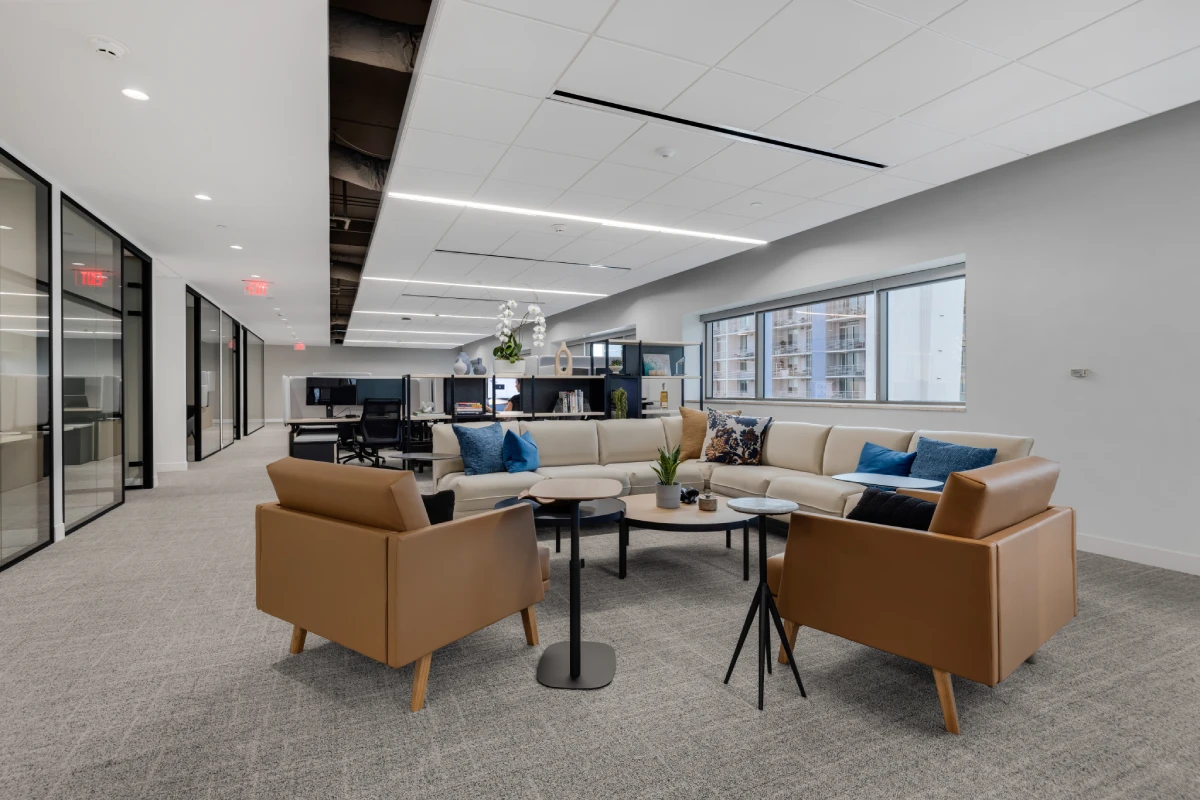
Customized corporate workspaces are not a luxury category. They are the response to a specific problem: your company has outgrown generic furniture solutions, and the gap between how your space functions and how your team needs to work is costing you , in productivity, in retention, or in the impression you make on the clients and talent you are trying to win.
If you are a business owner, HR director, or real estate manager in South Florida planning a customized workspace, this guide covers every variable that determines whether the project delivers real results or just looks good in the first week.
Planning a custom workspace project?
B.House discovery sessions help you define the brief before committing to a single product at no cost.
Start the conversation at bhouse.design or call (305) 644-8464.
1. Define the Problem Before You Define the Solution
The most common reason custom workspace projects underperform is starting with product selection before establishing a clear brief. The brief is the document (formal or informal) that answers the question: what problem does this workspace need to solve?
Typical briefs we encounter at B.House: a professional services firm growing from 40 to 70 employees over 18 months and needing a space that accommodates that growth without a full renovation. A tech company transitioning from fully remote to three-days-in and needing the office to be genuinely worth the commute. A regional headquarters relocating and wanting the new space to reflect a brand refresh that the old office never captured.
Each of these briefs calls for a different solution. The brief determines everything: floor plan, furniture categories, budget priorities, timeline, and finish specifications. Skip it and you are designing in the dark.
Tip: Start with the problem, not the product catalog. Every good workspace project starts here.
2. Headcount Planning and Future-Proofing
Design for where you will be, not where you are. Clients who plan for current headcount and sign off on fixed furniture configurations consistently come back 18 months later with a reconfiguration challenge that costs significantly more than a modular approach would have at the outset.
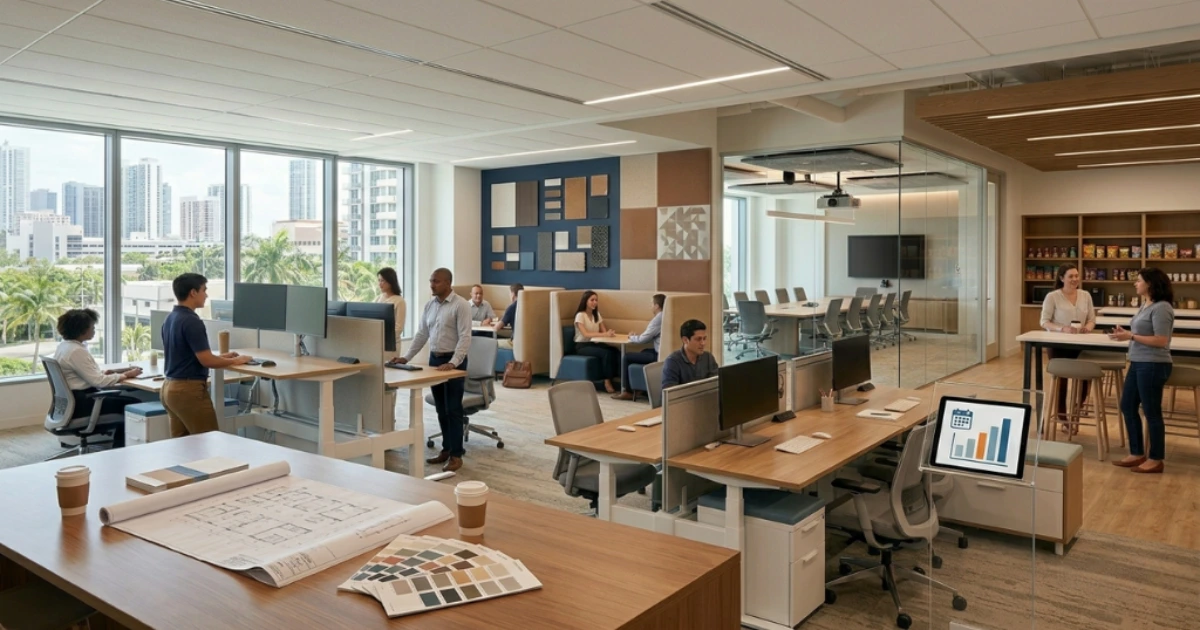
The practical solution is specifying modular systems in the primary workstation and meeting areas , systems designed to expand, contract, and reconfigure without replacement. Custom finishes and brand-specific colorways can be applied to modular systems, giving you the aesthetic of a bespoke fit-out with the operational flexibility of a system product.
The rule of thumb: in any organization growing at 15% or more annually, the furniture specification should accommodate at least 130% of current headcount without a full replacement cycle.
Tip: Unsure whether to spec modular or custom? We break this down on a free call - bhouse.design
3. Brand Integration: More Than a Logo on the Wall
True brand integration in a workspace means the environment communicates your organization's identity through material, color, spatial sequence and atmosphere , not just signage. When a visitor walks into your office, the space should tell them something true about your company before anyone says a word.
For a law firm in Brickell, that means dark wood tones, controlled lighting, leather or high-quality textile seating, and a spatial sequence that communicates precision and authority. For a healthcare technology company, it might mean clean whites and soft blues that signal clinical precision alongside warm wood accents that communicate human care. For a real estate development firm in Aventura, it might mean dramatic statement pieces, premium finishes, and a gallery-quality reception that establishes status on arrival.
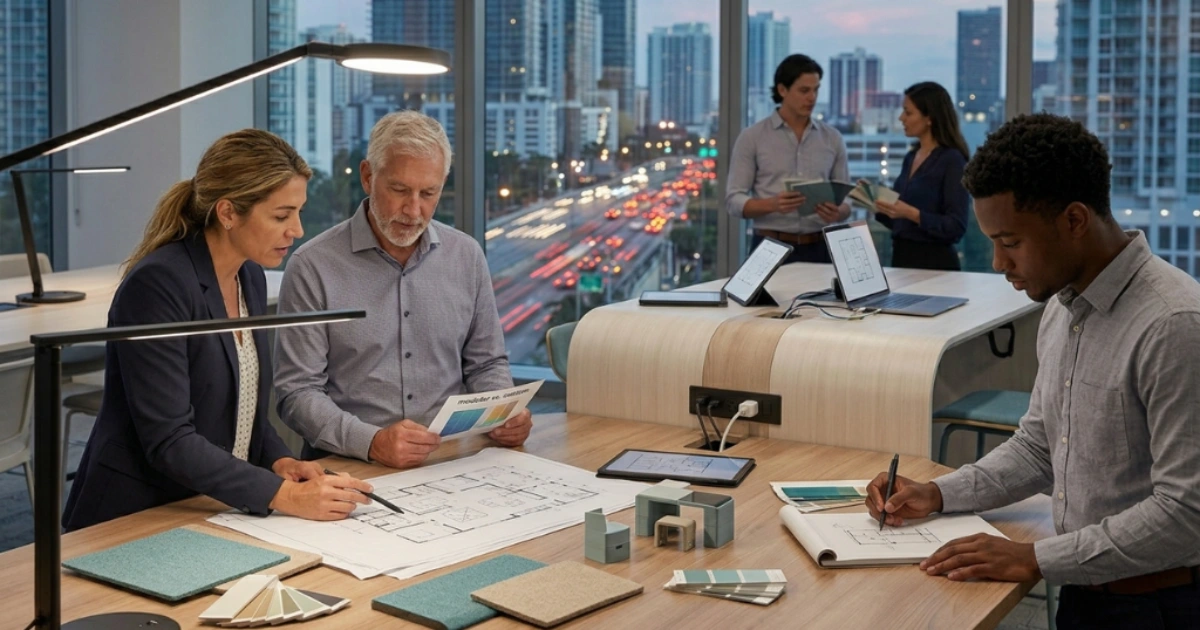
B.House brings your brand team or architecture firm into the specification process early, ensuring that the furniture palette reinforces the design intent rather than contradicting it. We have furnished brand-specific environments for companies across every sector in South Florida , the details of how brand integration actually changes client behavior are consistently striking. Learn How to Use Brand Colors for Zoning, Wayfinding, and Spatial Clarity
.webp)

.webp)
.webp)
.jpg)