The hybrid office is not a transitional state on the way back to full occupancy. It is the permanent operating model for most South Florida companies, and it has specific physical requirements that traditional office furniture was never designed to meet. Chief among them: flexibility. The ability to serve varying daily occupancy, support multiple work modes, and reconfigure without prohibitive cost as organizational needs evolve.
Modular furniture systems are the physical infrastructure that makes this possible. This guide covers the essential systems every hybrid workspace needs, what to look for when specifying each one, and the common mistakes that undermine investments that should be delivering results.
Transitioning to a hybrid office model in South Florida?
B.House specifies and installs modular workspace systems designed to serve your organization through multiple rounds of growth and reconfiguration.
→ Start the conversation at bhouse.design | (305) 644-8464
1. Modular Benching Systems: The Hybrid Workstation Backbone
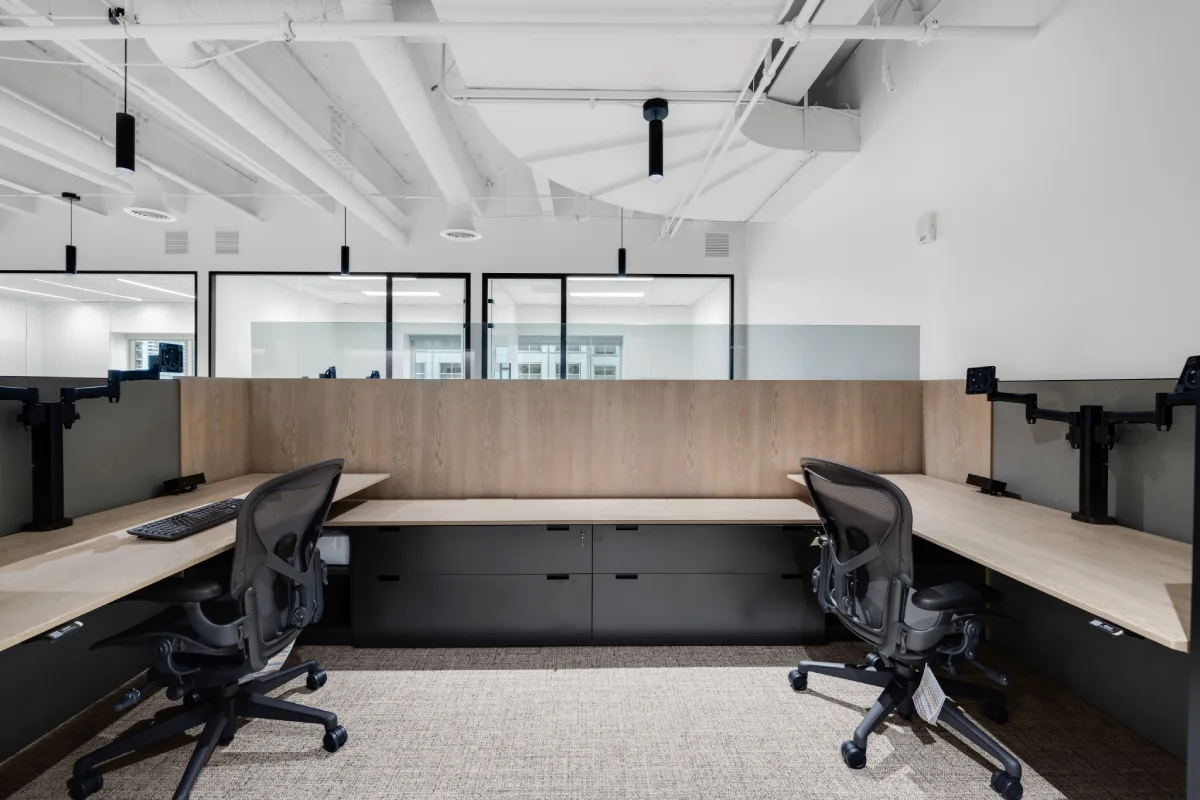
In a hybrid office, workstations are shared daily rather than personally occupied. The furniture system serving them needs to be easy to reconfigure, cleanable between users, and adaptable as team sizes and compositions change. Modular benching, long shared work surfaces divided into individual workstation segments by panel heights and storage configurations, is the industry standard solution for exactly these requirements.
Quality benching systems are designed to be extended, contracted, and reconfigured in segments. Adding workstations does not require replacing the whole system; it means adding a surface component and the relevant structural support. This is what makes benching a fundamentally different investment than individual desks: individual desks are inflexible, benching systems evolve.
"Benching that cannot adapt is just a long desk. Modular benching is infrastructure."
What to specify for hybrid benching:
- Electric height adjustment at every station, manual crank systems are rarely used and defeat the purpose
- Integrated power and USB at desk level, at minimum every other station
- Low-to-medium privacy screens, 12–18 inches above the work surface, enough separation without the enclosed, isolating feel that discourages in-office attendance
- Cable management integrated into the beam structure, not added as an afterthought
2. Modular Meeting Furniture: From Two-Person to Twelve
Hybrid workplaces consistently show higher meeting room utilization than traditional offices. When employees come to the office on office days, they come primarily to collaborate; individual work happens at home. This means the meeting infrastructure in a hybrid office must be both abundant and varied.
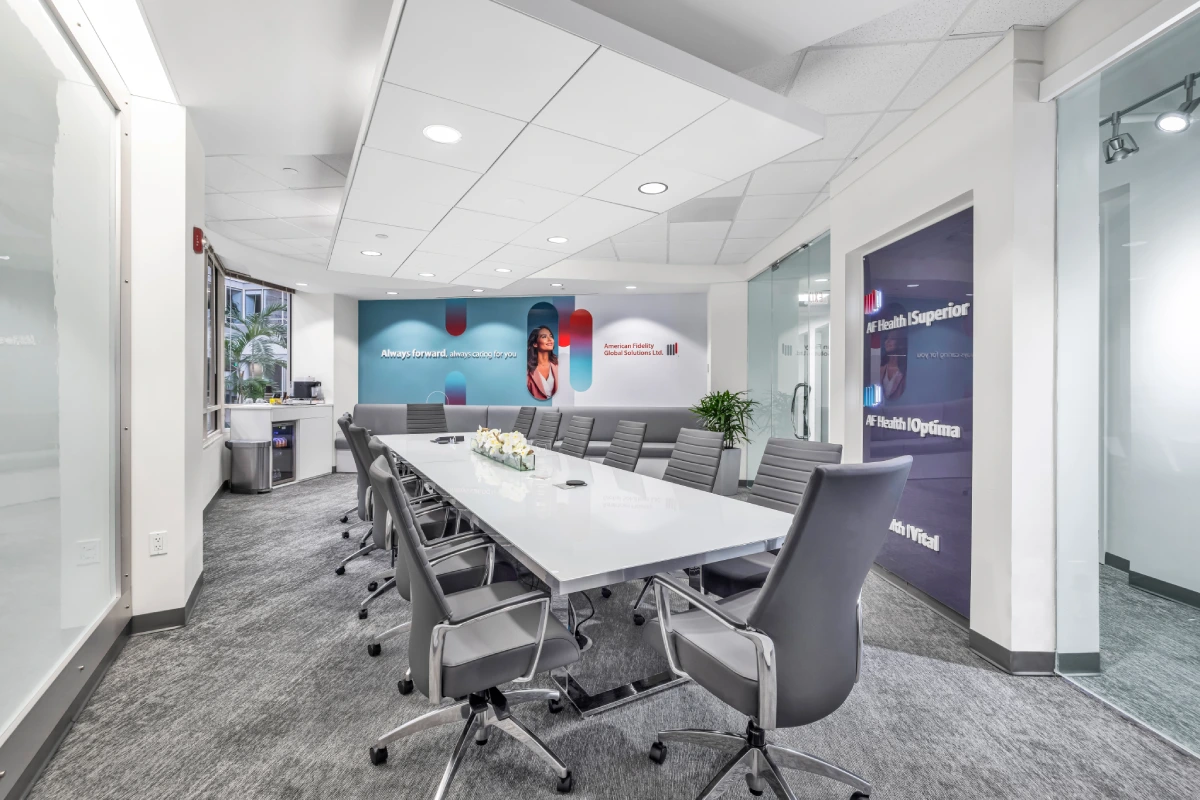
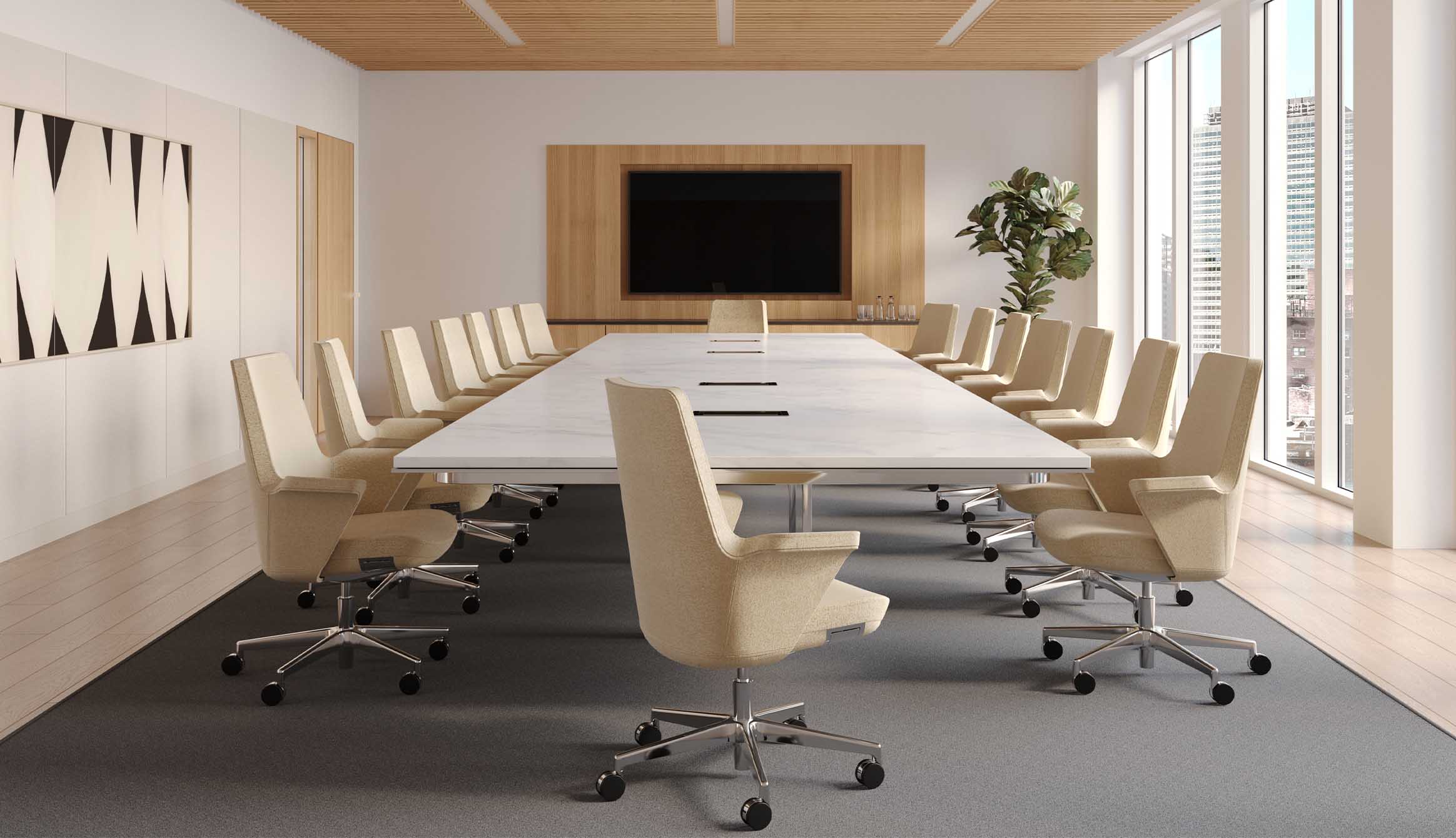
Four identical 10-person conference rooms do not serve a hybrid organization. What it needs is a range: 2-person phone rooms, 4-person huddle spaces, 6–8 person workshop rooms, and one or two larger spaces for all-hands or client presentations. Modular meeting tables give you the flexibility to serve this range without proportional square footage.
The practical specification:
- Tables on glides with locks rather than fixed legs; reconfiguration should happen without tools or professional installation
- Modular table sections that can be combined in different arrangements: classroom, U-shape, boardroom, breakout clusters
- Consistent finish family across meeting and workstation furniture so reconfigured rooms still feel intentional
One frequently underestimated detail: table weight. Heavy modular tables get reconfigured approximately never, regardless of the theoretical flexibility the design offers. Lightweight systems get reconfigured constantly. Specify for the behavior you want, not the configuration that looks good in the rendering.
Meeting rooms that never get reconfigured? We help you spec for real-world use.
bhouse.design
3. Modular Storage Walls: Space Division Without Permanence
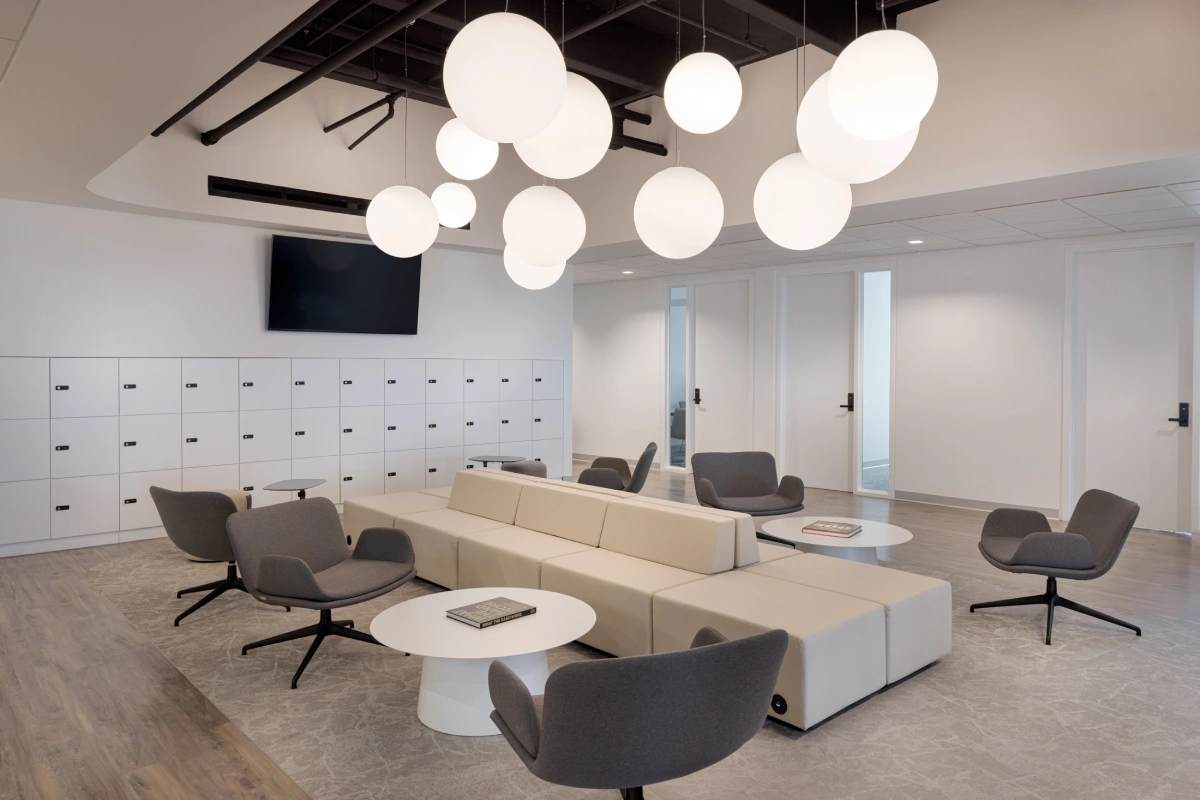
One of the core design challenges in hybrid office planning is creating defined zones, neighborhoods for different teams, separation between focus and collaboration areas, visual identity for different functions, without the cost, permanence, or inflexibility of constructed walls. Modular storage walls solve this at a fraction of the cost and can be relocated in a day when the organization needs to change.
A well-specified storage wall serves three simultaneous functions: storage for the teams on either side, spatial definition that creates a sense of separate zones within the open floor plate, and visual texture that breaks up the visual monotony of large open floors. Some modular wall systems can also incorporate writable surfaces on the collaboration side, display panels for team information, and open shelving for informal storage.
B.House has replaced planned construction projects with modular storage wall solutions in multiple hybrid offices across Brickell and Coral Gables, saving clients construction costs and delivering a result that is actually more adaptable. The cost savings typically fund meaningfully better furniture quality in the primary workstation areas.
4. Acoustic Pods and Focus Booths: Private Space Without Private Offices
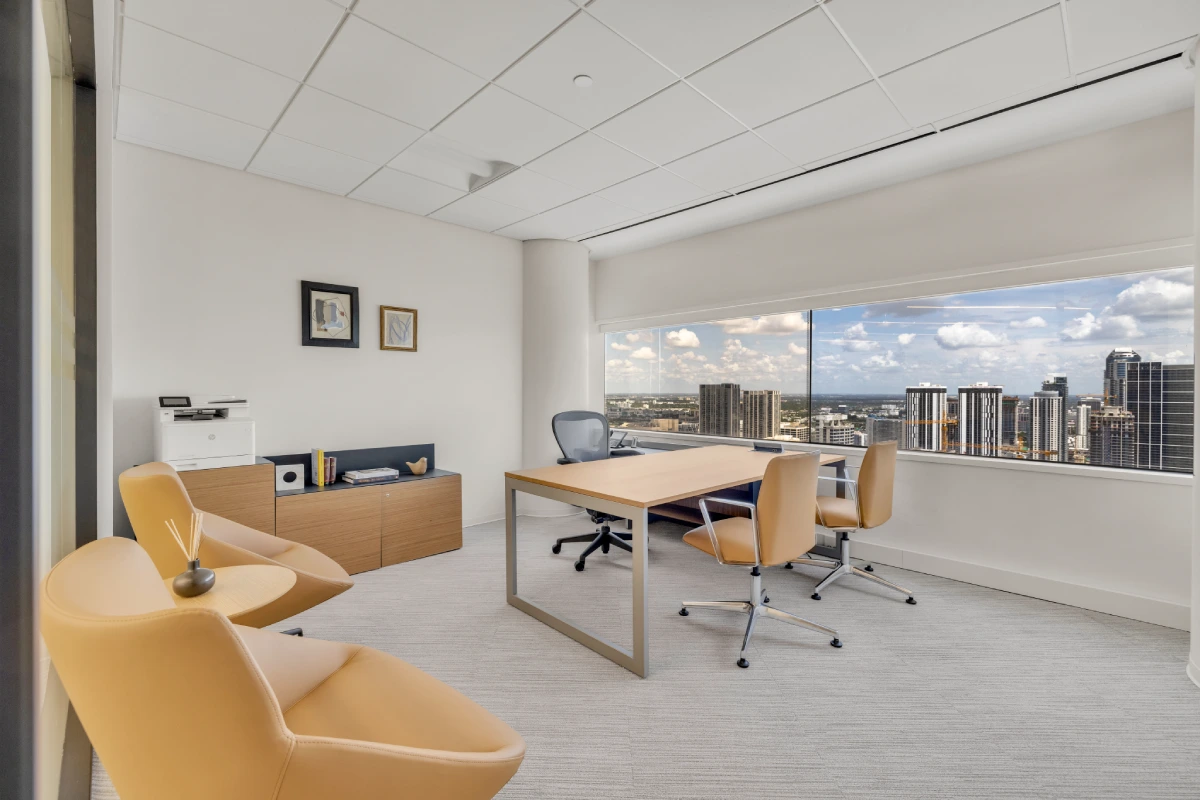
The single most consistent complaint from employees in hybrid offices is the absence of private space for focused work and confidential calls. When private offices have been removed to create open collaborative space, the need for privacy does not disappear; it just becomes unmet. Acoustic pods address this directly.
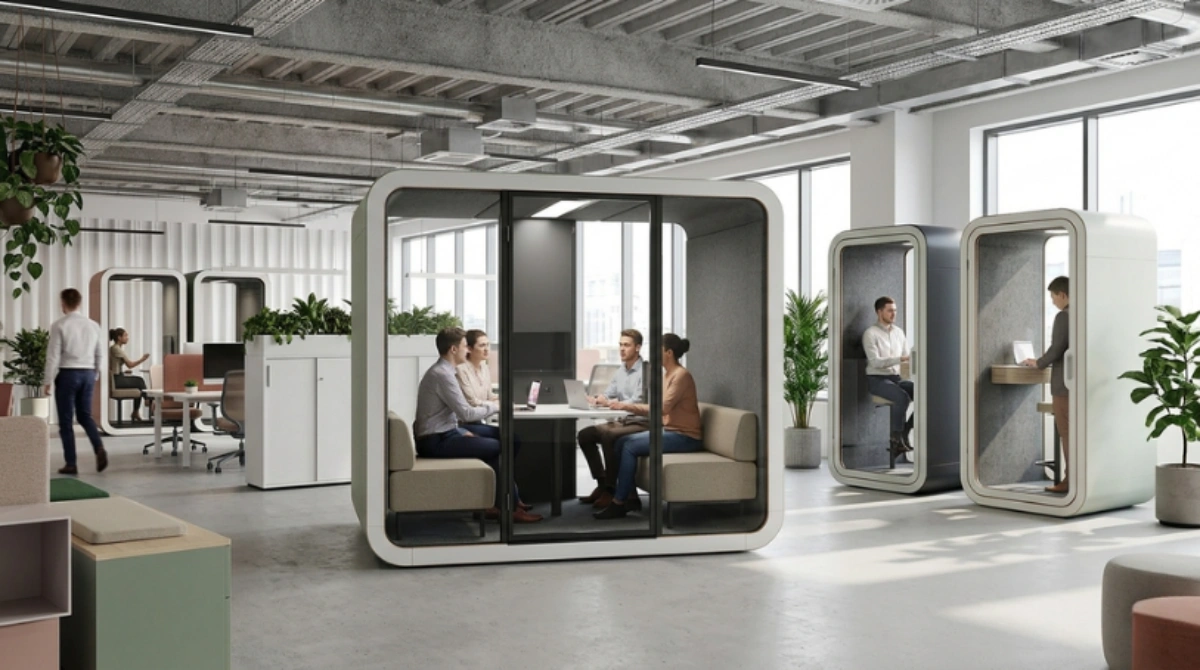
Acoustic pods are freestanding, fully or semi-enclosed workspaces that can be placed anywhere on the floor without construction, relocated without leaving infrastructure behind, and removed entirely without any building modification. Quality acoustic pods achieve 20–35 dB noise reduction compared to the open floor, sufficient for confidential calls and sustained focused work.
The range of pod products now covers every need:
- Single-person phone booths, 2–4 square meters, for calls and short focused sessions
- Two-person collaboration pods for one-on-one meetings and confidential conversations
- Four-person enclosed meeting pods with glass walls and integrated video conferencing for small team meetings
For hybrid offices where the reduction in private office space has not been matched by an increase in private alternatives, acoustic pods are consistently the first furniture recommendation B.House makes, because they immediately address the friction that is most directly discouraging employees from coming in.
Is your hybrid office missing private space?
B.House can specify and install acoustic pod solutions in as little as two weeks. Free consultation for South Florida corporate clients.
→ Talk to our team at bhouse.design | (305) 644-8464
5. Modular Lounge Systems: Making the Office Worth the Commute
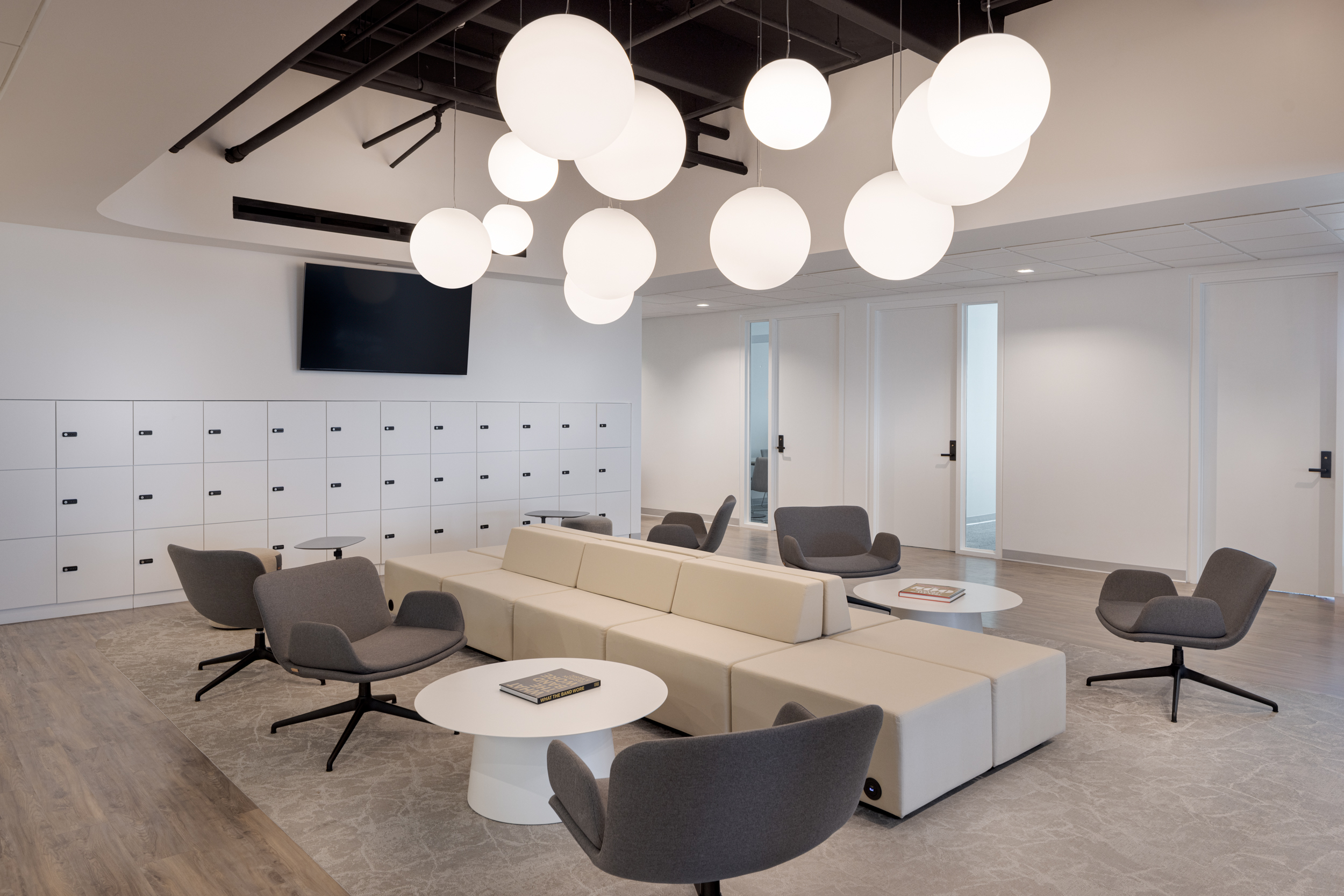
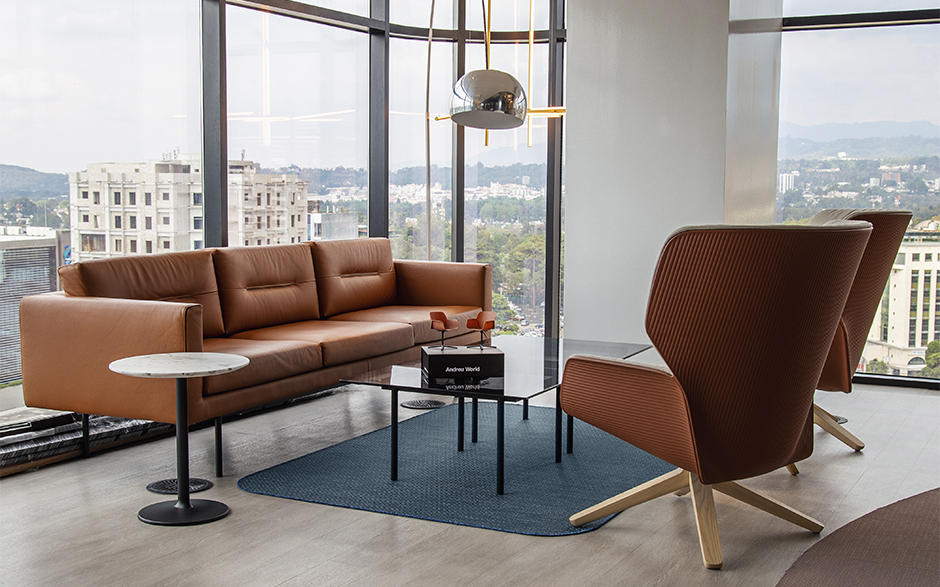
In a hybrid model, employees choose to come to the office. If the office offers nothing that home does not, a workstation and a screen, many will reasonably choose to stay home. Well-designed lounge and collaborative seating areas are part of the answer. They offer what home offices cannot: the social energy, the spontaneous conversation, and the relaxed collaborative engagement that only happens in shared physical space.
Modular lounge systems, sectional sofas, armchairs, and occasional tables that can be reconfigured into different arrangements, allow you to serve different social functions within the same footprint. The large U-shaped arrangement works for a team town hall. The same pieces in smaller clusters work for informal team catchups. Individual pieces work for the focused reading or thinking that employees increasingly do at the office rather than at a desk.
Material and quality matter significantly here. The lounge area communicates what the organization thinks about the wellbeing of its people. In South Florida's talent market, where professionals have real choices about where they build their careers, the quality of the social and collaborative environment in your office is part of your employer value proposition and is evaluated directly by every candidate you bring in.
Specifying Modular Systems as an Integrated Environment
The most effective modular workspace investments are planned as integrated systems, not assembled from separate catalogs by separate vendors. When benching, storage walls, meeting furniture, acoustic solutions, and lounge systems share a coherent design language, the result feels intentional and complete. When they are specified independently, the result looks like an office that evolved without a plan.
B.House specifies hybrid workspace systems as integrated packages. We bring a consistent aesthetic direction across every furniture category, manage the procurement from multiple manufacturers under a single contract, and deliver the complete installation as a managed project. If your current office was designed for a pre-pandemic work model and no longer reflects how your team operates, a modular transformation is likely more affordable and less disruptive than you expect.
Your hybrid office should be pulling people in, not pushing them toward home.
B.House designs, specifies, and installs complete modular workspace systems for hybrid organizations across South Florida. Start with a free consultation.
→ Book at bhouse.design or start the questionnaire at bhouse.design/questionnaire | (305) 644-8464
.jpg)

.webp)
.webp)
.webp)